
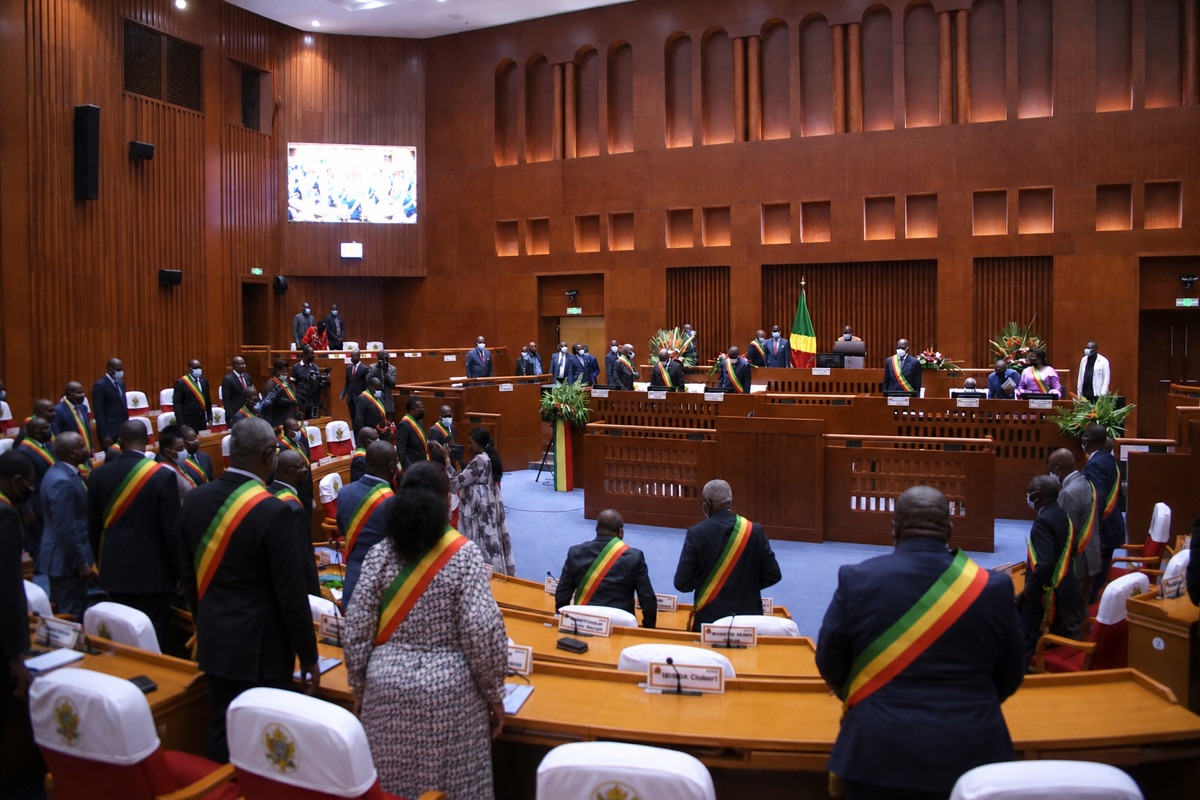
Congo-Brazzaville’s senators have settled back into the upper chamber for the ninth ordinary session, and the workload waiting on their desks is anything but light. Twelve separate files have been entered onto the order of business, and together they cut across nearly every corner of public life in the country.
The breadth is striking. Social cohesion sits alongside public health. Education reform shares the calendar with civil aviation safety. International cooperation rounds out a programme that touches citizens at home and the Republic of Congo’s partners abroad, giving this session an unusually wide footprint.
A Trio of Bills Already Backed by Deputies
Three texts arrive in the Senate carrying real momentum, having already cleared a first reading in the National Assembly. That earlier endorsement gives them a head start, yet senators are expected to study each on its own merits before the chamber moves toward a final position.
The first targets tribalism and related practices. Its drafters frame it as a tool to strengthen national unity and the everyday business of living together, an ambition that speaks directly to the country’s social fabric and to debates that surface regularly in Congolese public life.
The second addresses reproductive health in Congo. The wording placed before the senators keeps the focus on the health dimension, leaving the chamber to weigh how the proposed framework would operate in practice across the republic’s varied departments and communities.
The third is perhaps the most historically charged of the three. It seeks formal recognition of the transatlantic slave trade and, alongside that acknowledgement, opens an exceptional route to Congolese nationality for people of African descent who trace their roots back across the Atlantic.
Aviation Safety and Schools on the Same Agenda
Beyond the proposals inherited from the deputies, senators will turn to texts the government has tabled directly. One creates a national authority for investigation and analysis charged with preventing accidents and incidents in civil aviation, a structural step for a sector where oversight carries clear public stakes.
Another reshapes the foundations of learning. The bill sets out how the educational system in the Republic of Congo is to be organised, a question that reaches well beyond classrooms and into the long-term plans of families, young people and the institutions that prepare them.
For a readership of commuters, parents and small businesses, these two files may feel less abstract than the headline debates. Aviation oversight and the architecture of schooling both shape daily routines, travel choices and the prospects of the next generation entering work.
Investment Deals With Russia and Cuba in the Mix
The session also reaches outward. Senators will examine a bill authorising ratification of an agreement between Congo and the Russian Federation on the mutual promotion and protection of investments, a text that frames how capital crossing between the two states would be treated.
A second international file concerns Cuba. The chamber is set to consider a framework cooperation agreement with the Republic of Cuba, broadening the partnerships the legislature is asked to validate during a session already crowded with domestic priorities.
Taken together, the two foreign-facing texts signal that Brazzaville continues to formalise ties on more than one front. Ratification debates rarely grab the same attention as social legislation, yet they set the legal terms under which cooperation and investment actually proceed.
What the Twelve Files Reveal About the Session
The number itself, twelve, says something about the chamber’s appetite this time around. Few sessions ask senators to juggle questions of identity, health, schooling, transport safety and foreign agreements in a single sitting, and the mix leaves little room for a quiet calendar.
For citizens watching from Brazzaville, Pointe-Noire or the departments, the practical question is sequencing. Which files advance quickly, and which draw extended debate, will tell readers a good deal about where the Senate’s priorities truly lie once the speeches give way to votes.
The trio carried over from the National Assembly will likely set the early tone, since texts already adopted in first reading tend to move with momentum. Even so, a first-reading endorsement is not a final word, and the upper chamber retains room to amend, refine or hold back.
What is clear is that this ninth ordinary session opens with substance rather than ceremony. From the fight against tribalism to investment ties with distant partners, the agenda hands senators a chance to leave a visible mark on policy. The coming weeks will show how much of that promise turns into law.