
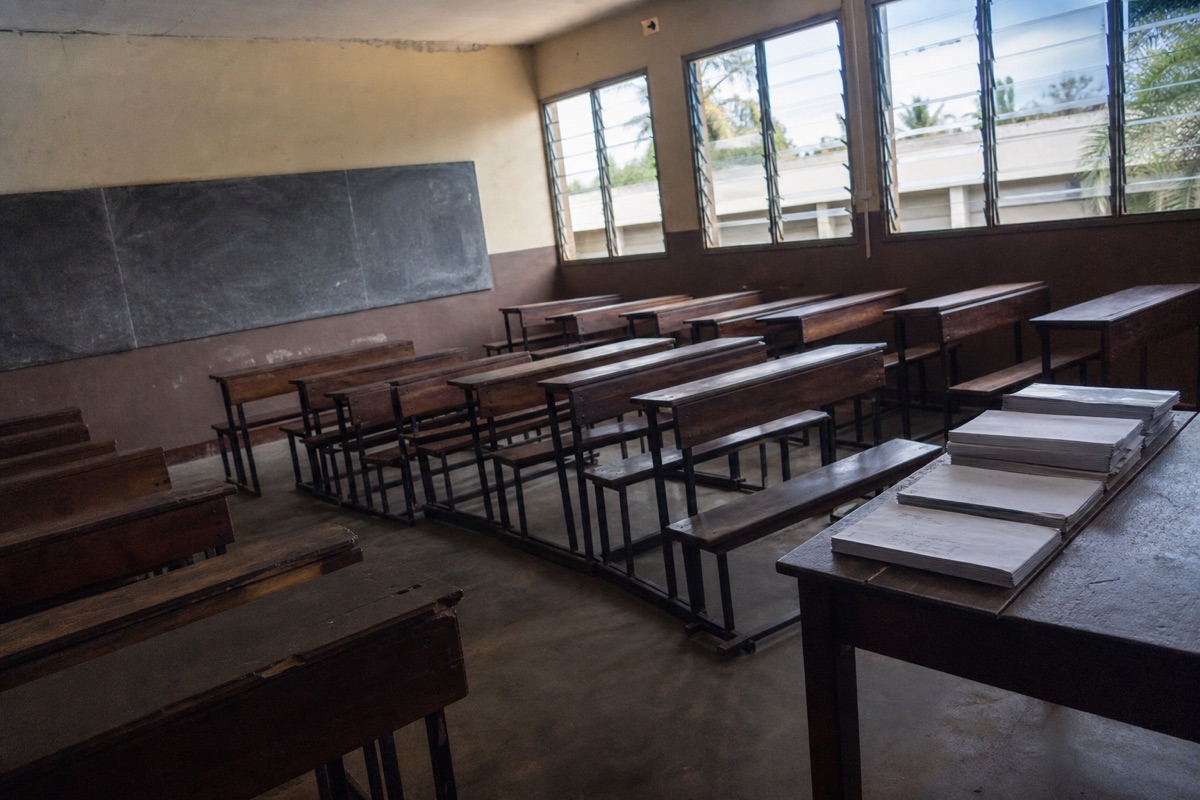
In Congo-Brazzaville, the school year 2025-2026 is drawing to a close, and the country is about to test a reform that families and educators have watched closely since the autumn term opened.
From June 2, the general baccalauréat and the technical baccalauréat will begin on the same date, across the whole national territory. Both state examinations will run together, ending years of staggered scheduling.
The decision is not improvised. Earlier in the school year, the ministers responsible for technical and general education had already announced that the two baccalauréats would be aligned on a single date, and the calendar has held.
A single date to close a fraud loophole
The core aim is blunt: stop candidates from registering for both examinations at once. For years, students could sit one baccalauréat while quietly keeping a foothold in the other, a pattern the authorities now want to break.
Last year, the practice was visible. A number of pupils enrolled in different localities even though the two examinations were taking place almost simultaneously, exploiting the small gaps in the timetable to spread their bets across two diplomas.
Education administrators read that manoeuvre as something close to cheating. Candidates would show up in person for one examination while arranging to be represented at the other, a sleight of hand that undermined the integrity of the whole process.
The consequence, in their view, went beyond individual cases. When a diploma can be obtained through such duplication, its value erodes, and public confidence in the wider education system takes a quiet but real hit.
Why simultaneous exams matter for the diploma’s worth
By forcing the two baccalauréats into the same window, the ministries remove the physical possibility of dual participation. A student can no longer be in two examination halls at once, and the temptation to be represented elsewhere loses its opening.
The reform therefore works less through new sanctions than through scheduling. It is a structural fix rather than a punitive one, closing the door rather than chasing those who walked through it after the fact.
For the technical stream in particular, the change carries a message. Aligning it with the general baccalauréat signals that both routes are treated as full, comparable state examinations, each demanding the candidate’s undivided presence on the same days.
That symbolic parity matters in a system where technical education has long sought recognition equal to the general track. A shared examination date quietly reinforces the idea that one diploma is not a fallback for the other.
Logistics: the real test of the reform
The principle is clear, but execution is where the measure will be judged. Running two national baccalauréats at the same moment multiplies the pressure on every part of the examination machinery, from rooms to invigilators.
The most immediate concern is capacity. Authorities will need to confirm that the necessary arrangements are in place, especially regarding the number of examination centres able to host all candidates from both baccalauréats simultaneously.
Where, in the past, the same premises and staff could be reused across slightly offset sessions, that flexibility now disappears. Everything must be ready on the same dates, in the same places, for two distinct examinations at once.
This is the practical condition on which the anti-fraud logic rests. If centres are too few or too crowded, the very reliability the reform seeks to protect could come under strain on examination days.
A reform watched well beyond the exam halls
For pupils and their families, the new calendar removes ambiguity. There is now one clear date to prepare for, one stream to commit to, and no quiet second option to keep open until the last moment.
For the institutions, the stakes are reputational. A baccalauréat seen as harder to game is a baccalauréat worth more, both inside Congo-Brazzaville and in the eyes of those who will later read these diplomas.
As June 2 approaches, the question is no longer whether the two examinations will share a date. They will. The open question is whether the logistics will match the ambition that drove the change.
If the centres hold and the sessions run cleanly, the reform could become a quiet template for tightening other examinations. If they do not, the same date that promised fairness could expose new strains the system has not yet faced.