
The clock is ticking at Kintélé. With the Red Devils due to host their AFCON 2027 qualifiers from September 2026, Congo-Brazzaville has opened the first chapter of a pitch overhaul that will decide whether the national stadium passes muster.
Why the Kintélé pitch is suddenly the priority
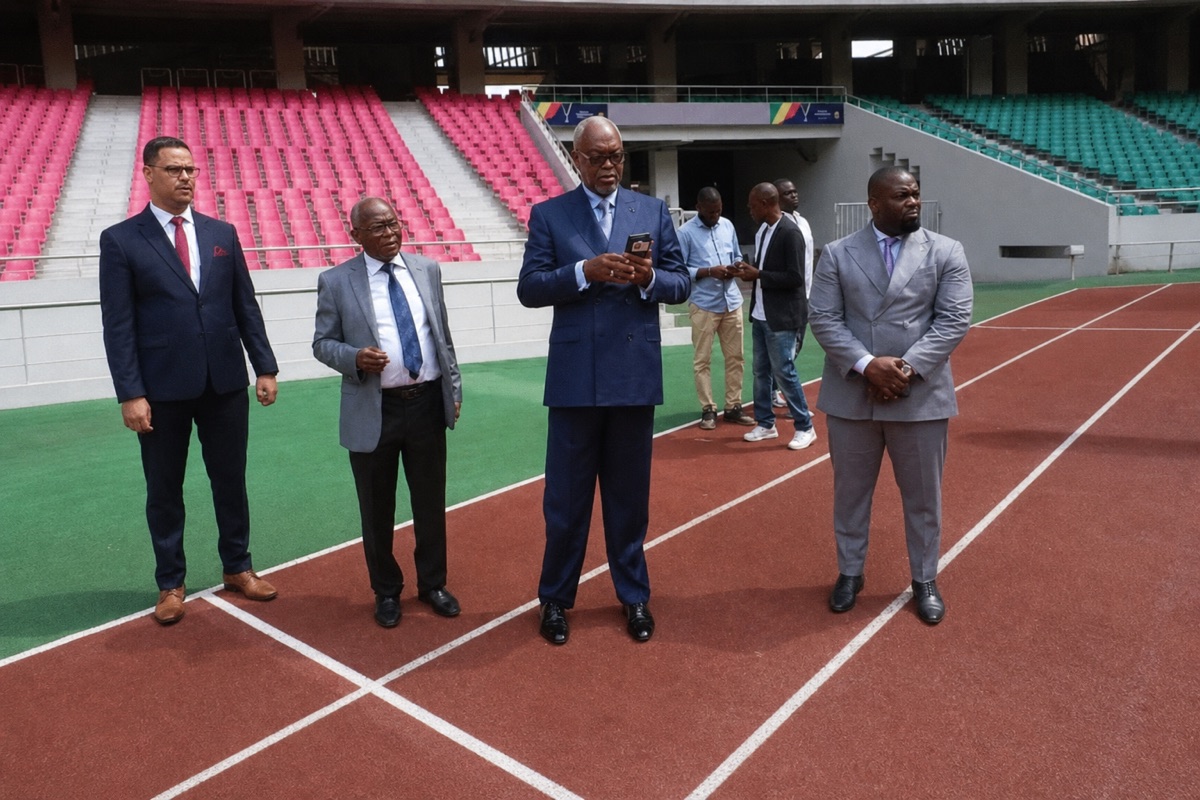
The Sports, Youth and Civic Education Ministry has launched rehabilitation works on the natural grass surface of the Stade de la Concorde in Kintélé. Minister Hugues Ngouélondélé toured the venue on 19 May 2026 to oversee the project’s opening phase.
The stadium will stage the Diables rouges’ home fixtures during the qualifying rounds for AFCON 2027, branded CAN Pamoja 2027. Those matches run between September 2026 and March 2027, leaving a narrow runway for any meaningful groundwork.
Kintélé inherited the national-team role for a practical reason. The Stade Alphonse Massamba-Débat is no longer FIFA-homologated, so the authorities turned to the larger Brazzaville-area arena as the country’s competitive home.
Morocco’s Sonarges brings the technical eye
Technical expertise has been entrusted to the Moroccan firm Sonarges, the Société nationale de réalisation et de gestion des équipements sportifs. Its involvement signals that the Congolese side wants the diagnosis handled by specialists with continental-grade credentials.
Ahmed Amine El Hamraoui, Sonarges’ director of realisation and standards, set out the method plainly. The work begins with a soil analysis designed to deliver complete data in line with FIFA requirements, before any spades commit to a particular fix.
That distinction matters. The findings will show whether the pitch needs only a surface treatment or a full rehabilitation. One path is quick and relatively light; the other is heavier, slower and far more demanding on an already tight calendar.
What the diagnostic must answer
The diagnostic phase is, in effect, the project’s compass. It will define both the scope and the duration of the works that follow, two variables the government cannot responsibly guess before the data is in.
For now, the authorities are waiting. The ministry has signalled that it will hold off on committing to a complete rehabilitation until the technical recommendations land on the table. It is a measured posture rather than a rushed one.
That patience carries its own risk. Every week spent measuring soil is a week not spent reseeding or relaying turf. Natural grass needs time to root, settle and toughen before it can absorb the pounding of competitive international football.
A familiar pressure for the host nation
There is a quiet subtext here that anyone following Congolese sport will recognise. Hosting qualifiers is not merely about filling a stadium; it is about presenting a surface that satisfies inspectors and protects players from injury.
A pitch that fails to meet the standard can force matches elsewhere, with the reputational sting that comes with it. By acting in May for fixtures starting in September, the ministry appears to be building in a buffer, however slim that buffer may turn out to be.
The choice of Kintélé also concentrates expectation on a single venue. With Massamba-Débat sidelined, there is no obvious fallback in the capital, which raises the stakes on getting the grass right the first time.
The road from diagnosis to kickoff
The sequence from here is straightforward to describe and harder to execute. First the soil study, then the verdict on surface treatment versus full overhaul, then the works themselves, and finally the grow-in period the turf demands.
El Hamraoui’s framing leaves both options genuinely open, which is honest rather than reassuring. Until the samples are read, neither the cost nor the timetable can be pinned down with any confidence, and the ministry has avoided promising specifics.
What is clear is the destination. By the time the Diables rouges walk out for their first qualifier, the Kintélé pitch will need to look and play like a venue worthy of a continental campaign, not a worksite still drying out.
A small project with large symbolism
In purely physical terms, this is a grounds-keeping job. In national terms, it is something larger: a test of whether Congo-Brazzaville can ready its flagship stadium for the scrutiny that comes with hosting Africa’s elite qualifiers.
The early signs suggest seriousness. A specialist contractor, a FIFA-aligned method and a minister present at the launch all point to intent. The harder questions, of money and time, now sit with the soil samples Sonarges is preparing to read.
For supporters in Brazzaville, Pointe-Noire and across the departments, the message is one of cautious momentum. The pitch is finally on the agenda, the experts are in place, and the countdown to September 2026 has, unmistakably, begun.