
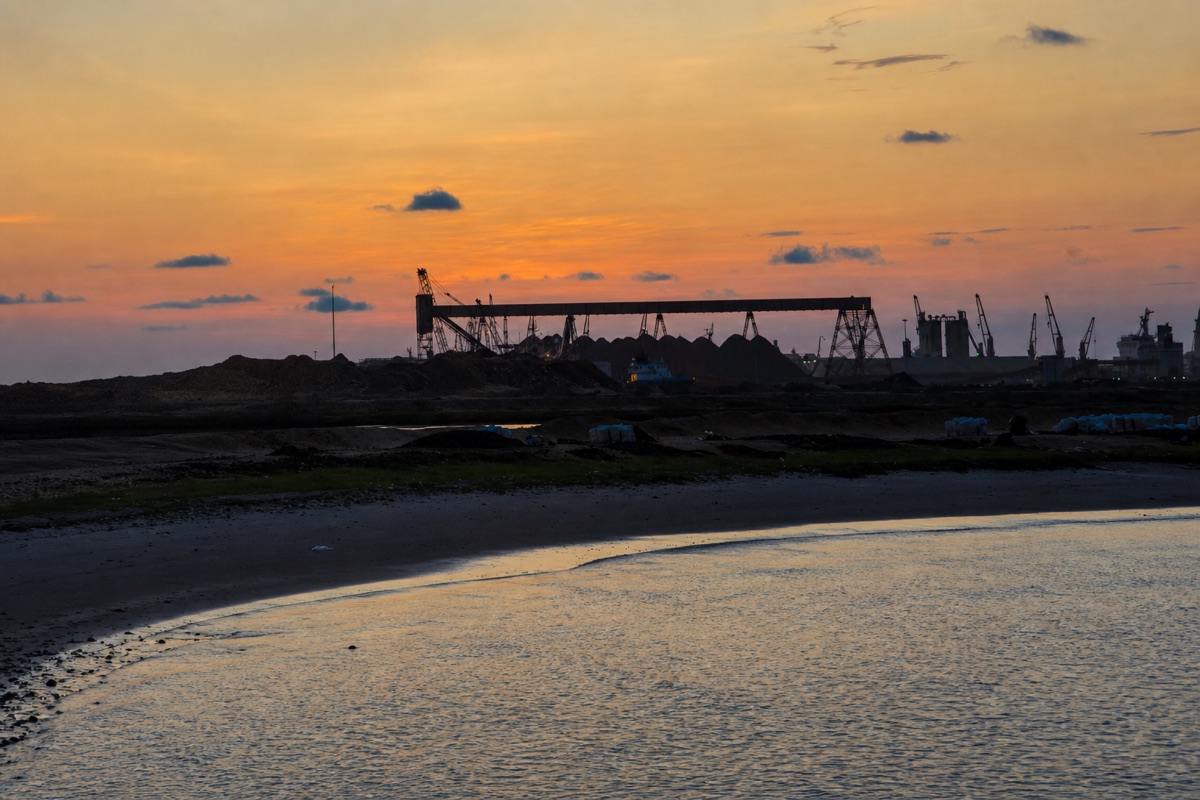
Congo-Brazzaville’s busiest gateway to the Atlantic is preparing for its biggest upgrade in years. Abu Dhabi Ports has confirmed it will start building a new terminal at the port of Pointe-Noire from 2028, betting heavily on the country’s maritime future.
A $200 Million Bet on the Atlantic Coast
The Emirati group plans to invest at least $200 million, or more than 100 billion FCFA, in the project. The figure signals a long-term commitment to one of the Gulf of Guinea’s key infrastructures, located on Congo’s southern coastline.
The terminal is meant to modernize and enlarge a port that already anchors the economic life of Pointe-Noire, the country’s commercial capital. For a city built around trade and shipping, the announcement lands as a clear vote of confidence.
How the Deal Took Shape Since 2023
The groundwork was laid in 2023, when Abu Dhabi Ports secured the agreement of Congolese authorities to build in the eastern section of the port. That early green light set the stage for the technical commitments that followed.
More recently, the group signed three separate agreements covering equipment supply and construction, clearing the way for work to begin. The contracts mark the moment the project moved from intention to concrete planning.
Three Contracts That Unlock the Project
Director general Mohammed Menhali detailed the breakdown. “We have signed three agreements,” he said. “The first with ZPMC for about 50 million dollars. We are buying specialized cranes to receive Supramax vessels, among the largest in the world.”
He added that the remaining commitments target the heavy lifting of construction itself. “The two other contracts concern the maritime works and the superstructure for 150 million dollars,” Menhali explained, outlining how the budget will be spent on site.
Capacity Built for a Continental Market
The planned terminal could stretch up to 400 meters long and handle 250,000 containers a year. That throughput would give Pointe-Noire room to compete with larger regional hubs and absorb rising volumes of trade.
Crucially, that capacity is designed to grow. Officials expect demand to climb as the African Continental Free Trade Area, or AfCFTA, takes hold and reshapes how goods move across the continent’s markets and borders.
A Strategic Pairing With CMA-CGM
Abu Dhabi Ports is not going it alone. The group is teaming up with shipping company CMA-CGM, pairing port operation expertise with one of the world’s major maritime carriers to strengthen the terminal’s commercial reach.
Innocent Dimi, Congo’s permanent secretary for public-private partnerships, framed the alliance as a turning point. He said the partnership with CMA-CGM “will allow the port of Pointe-Noire to enter a new technological era with reinforced processing capacity.”
Dimi described the carrier as “a new actor in the ecosystem,” operating “alongside existing partners.” His comments underline a strategy of layering new investors onto the port’s established operators rather than replacing them.
Jobs, Environment and Local Stakes
Beyond steel and cranes, Abu Dhabi Ports has tied the project to wider promises. The group says it intends to build the terminal in line with environmental standards while creating a significant number of jobs for the local economy.
For families and small businesses in Pointe-Noire, those commitments matter as much as the headline figures. A busier, better-equipped port can mean steadier supply chains, lower costs and new openings for workers across the area.
Why the Timing Carries Weight
The Emirati commitment arrives against a tense global backdrop. Abu Dhabi Ports is moving forward even as worldwide supply chains face disruption linked to closures of the Strait of Hormuz, a reminder of how fragile shipping routes have become.
In that climate, investing in a stable Atlantic gateway reads as a calculated hedge. A modernized Pointe-Noire could offer shippers an alternative entry point to Central Africa when other corridors come under pressure.
Building on a Decade of Port Investment
Abu Dhabi Ports also joins a port that has drawn major money before. The AGL-Bolloré group has taken part in modernizing Pointe-Noire since 2009, investing roughly 450 million euros through 2025, according to figures cited around the project.
That history matters. The new terminal does not start from scratch but adds to more than fifteen years of upgrades, suggesting Pointe-Noire is steadily cementing its role as a regional logistics anchor on the Atlantic.
For now, the countdown points to 2028, when the cranes and contracts described by Menhali are due to turn into a working terminal. If the timeline holds, Congo-Brazzaville’s main port will enter its next chapter with new partners and far greater capacity.