
How Brazzaville’s Flood Plan Reached the Home Stretch
Few public works in Congo-Brazzaville carry as direct a promise as keeping water out of people’s living rooms. The second phase of the Plan d’action de libération des emprises (PALE) now reports a 93 percent execution rate, a figure that marks one of the programme’s most concrete advances to date.
The initiative is steered by the Délégation générale aux grands travaux, operating under the ministry responsible for territorial planning. It sits within a wider envelope estimated at 62 million euros, backed by the Agence française de développement (AFD).
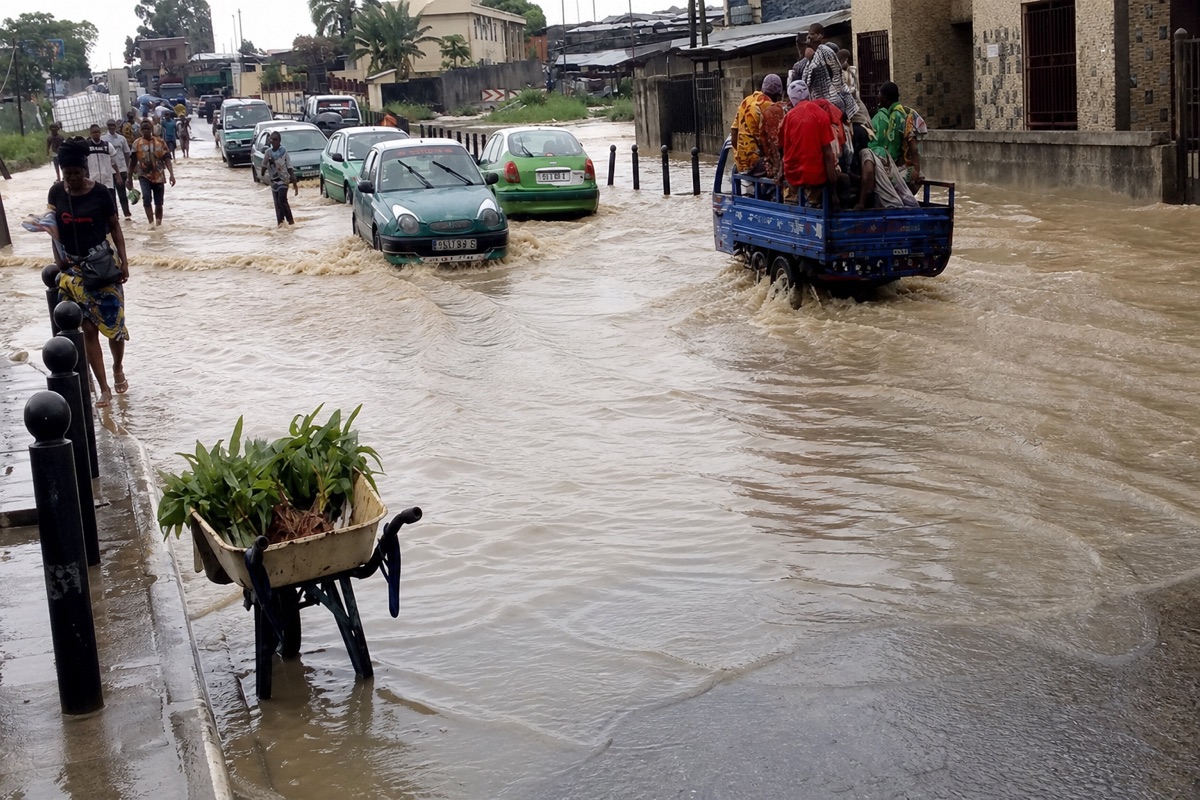
Its purpose is plain. By clearing the rights-of-way needed for drainage and channel works, authorities aim to ease the recurring floods that batter low-lying districts, particularly the neighbourhoods bordering the Tsiemé river, where rising water has long disrupted daily life.
A Tally That Grew More Inclusive
The numbers tell a story of scope expanding as work advanced. The original census expected roughly 575 affected households. A closer count identified 804, a revision officials frame as a more inclusive reading of who actually stands in the path of the works.
By the end of March, 754 households had received compensation, for a combined total of 3.5 billion FCFA. In parallel, 748 households had effectively vacated the rights-of-way, producing the headline execution rate of 93 percent.
That gap between households paid and households relocated is small, yet it matters. It suggests that, for most families, money and movement have gone hand in hand rather than leaving people compensated but stranded in place.
Keeping the Most Exposed in View
Large infrastructure projects often falter on their treatment of the vulnerable, and PALE’s managers appear conscious of that risk. A total of 236 households received targeted support designed to cushion the disruption of leaving long-held plots.
The grievance mechanism offers another window onto the project’s social management. It recorded a 97 percent resolution rate for complaints lodged by residents, a figure authorities credit with helping preserve a calm atmosphere around the operation.
A high resolution rate does not erase the upheaval of relocation, but it signals that channels for dispute remained open. For neighbourhoods accustomed to seeing decisions imposed from above, that responsiveness is no small detail.
From Clearing Land to Rebuilding Lives
Perhaps the most telling shift lies in how the second phase defines success. Where earlier efforts centred almost entirely on freeing land, this stage folds in economic and social recovery as part of the same mandate.
Surveys conducted among 411 affected individuals pointed to substantial demand for vocational training and for activities capable of generating income. In other words, residents are not only asking where they will live next, but how they will earn a living once they have moved.
That reframing carries real implications. A drainage corridor cleared today does little for a household whose livelihood was tied to the very plot it surrendered. Linking resettlement to skills and income is what separates a one-off displacement from a durable transition.
What the Milestone Does and Does Not Settle
A 93 percent execution rate is a genuine achievement, and the figures behind it, the households counted, paid, and relocated, give the claim weight. The programme has cleared the bulk of the ground its drainage ambitions require.
Yet the remaining share is rarely the easiest. The last households to move are often those with the most complicated circumstances, and the success of the social component will be measured over months, not in a single progress report.
For residents along the Tsiemé, the ultimate test is simpler than any percentage. It is whether the next heavy rains arrive without the floodwater that has so often followed. On that question, this milestone is a strong step rather than a final answer.
For now, the second phase of PALE stands as a case of an infrastructure project trying to do two things at once: open the land for the works that should hold back the water, and accompany the families asked to make way. The data suggests both efforts are advancing together, which is precisely what gives this stage its quiet significance.