
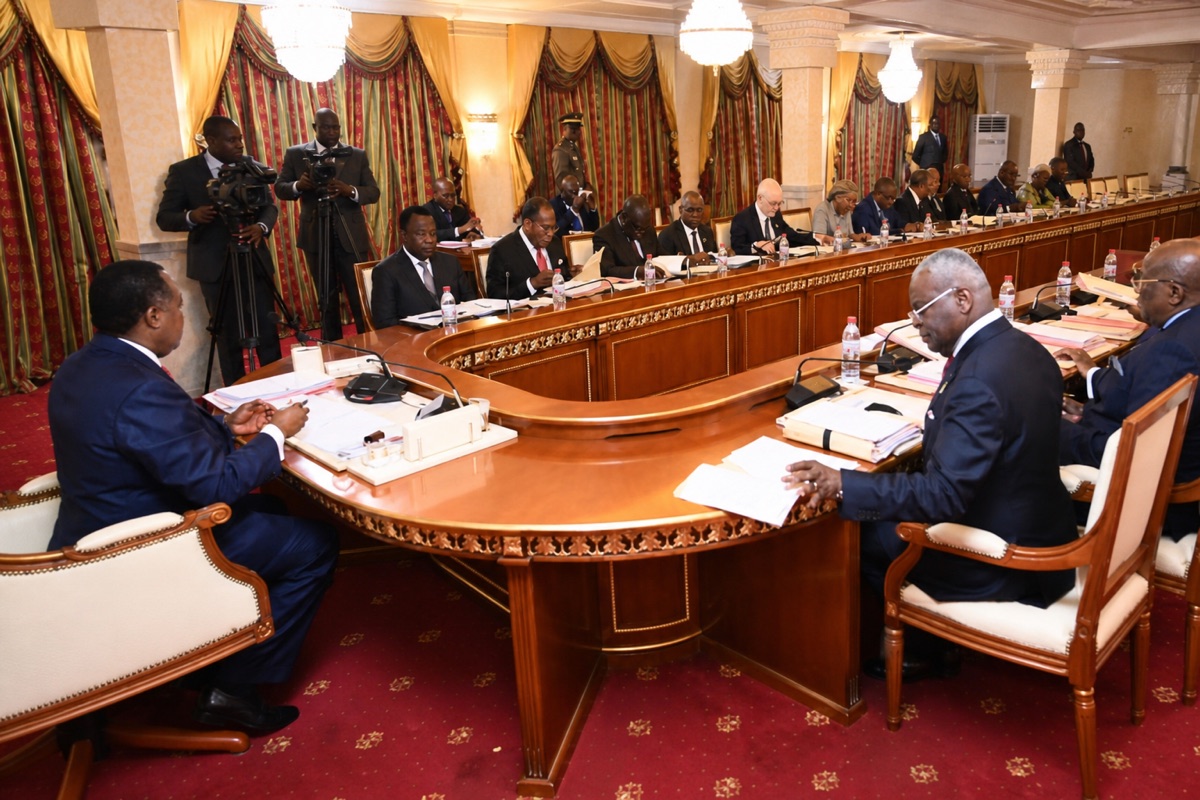
Congo-Brazzaville has a new government, and the headline name at the top stays familiar. Anatole Collinet Makosso remains Prime Minister, steering a fresh team of 41 members into a five-year stretch of work for the republic.
A 41-Member Team Built Around Continuity
The lineup was made public on 24 April 2026 in Brazzaville by Florent Ntsiba, the Minister of State and chief of staff to the President. He read out the roster set by decree no. 2026-176, signed that same day.
The new cabinet counts 41 members in total, two of them serving as delegate ministers. Makosso, kept on as Prime Minister, will lead this group through a mandate running across the next five years.
For readers tracking the country’s politics, the message is one of steady hands rather than a clean break. The structure shifts, several faces change, yet the core direction set at the top of the executive carries forward into the new term.
A Vice-Premier Post Reshapes the Top Tier
The clearest structural change sits just below the Prime Minister. Jean-Jacques Bouya rises to the rank of Vice-Premier Minister, handed the job of coordinating the country’s development infrastructure across ministries and projects.
That new seat signals where the government wants to place its weight. Infrastructure coordination, pulled together under a single senior figure, suggests an effort to tighten how large building and development files are managed day to day.
Alongside that move, Pierre Oba takes up duties at the Presidency, working on political affairs. The pairing places experienced figures in two posts that touch both the machinery of state and the political life of the executive.
Fresh Faces Enter Key Ministries
Several portfolios pass to new hands. Constant Serge Bounda becomes Minister of Foreign Affairs, while Noel Leonard Essongo takes charge of State Control, a watchdog brief central to oversight inside the administration.
The economy draws a cluster of arrivals. Stev Simplice Onanga moves into Hydrocarbons, Michel Djombo takes Industrial Development, and Urbain Fiacre Opo is named to head Mining Industries and Geology, three files tied closely to national revenue.
Employment goes to Rodrigue Charles Malanda Samba, a post that speaks directly to younger Congolese weighing their prospects. Frederic Nze, meanwhile, takes the reins at Posts and Telecommunications, a sector shaping how households and small firms connect.
Familiar Hands Hold Steady Portfolios
Continuity runs deep in the ministries that touch daily life. Christian Yoka stays at Finances and Paul Valentin Ngobo keeps Agriculture, while Jean Rosaire Ibara remains at Health, posts that frame budgets, food and care for families.
Several other heavyweights hold their ground. Raymond Zephyrin Mboulou stays at National Defence and Jean Ollesongo Ondaye keeps the Interior, two security portfolios where steady leadership tends to reassure both institutions and citizens.
Arlette Soudan Nonault remains at Environment and Alphonse Claude Nsilou keeps Construction. Jacqueline Lydia Mikolo holds Trade and the AfCFTA brief, a role that links Congo to wider African market plans now taking shape.
Rounding out the returning names, Pierre Mabiala stays at the Public Service, Jean-Claude Gakosso keeps Culture, and Hugues Ngouelondele remains Minister of Sports, a portfolio with a loyal and demanding public following.
Six Ministers Step Aside
The reshuffle also closes chapters. Six ministers leave the government in this round, among them Emile Ouosso and Leon Juste Ibombo, names well known to anyone who has followed the executive over recent years.
They are joined on the way out by Gilbert Mokoki, Nicephore Antoine Thomas Fylla Saint-Eudes, Ghislain Thierry Maguessa Ebome and Charles Richard Mondjo. Together, the departures mark the sharpest contrast with the outgoing team.
What the New Lineup Signals
Read as a whole, the team blends renewal with reassurance. New entrants cluster in economic and resource ministries, while education-adjacent social files and security posts largely stay with established figures already familiar with the work.
The creation of a Vice-Premier role for infrastructure stands out as the term’s defining structural bet. How that coordination plays out, across roads, public works and major projects, will likely shape how Congolese judge this government in the months ahead.
For now, the picture is set. A 41-member cabinet, a returning Prime Minister, a reorganised top tier and a handful of exits give Congo-Brazzaville its working team for the five years opening before it.