
A Heavy Toll Frames Congo’s 19th World Malaria Day
In Pointe-Noire, the Republic of Congo (Congo-Brazzaville) marked its 19th World Malaria Day commemoration with sobering numbers. More than 1.4 million malaria cases and 2,250 deaths were recorded across the country in 2025, officials confirmed.
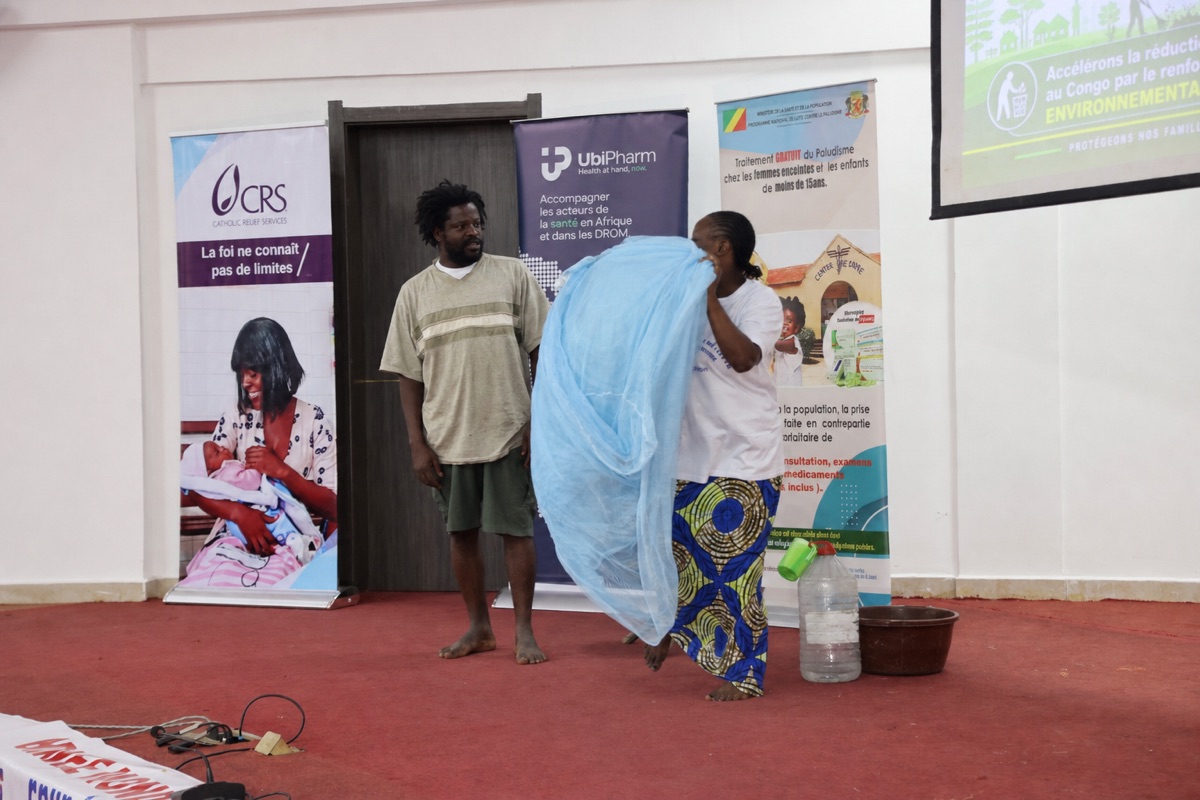
The ceremony blended remembrance with urgency. Held under the global theme “End malaria now. It’s possible. Let’s act now,” it brought together scientific evidence, political pledges and community mobilisation in a single, pointed message to the public.
Why Malaria Still Dominates Congo’s Health Burden
For Congo-Brazzaville, malaria is not a seasonal nuisance. It remains the leading cause of medical consultations, hospital admissions and death nationwide. That ranking, repeated year after year, helps explain why the disease commands such political attention.
The local figures sit inside a wider crisis. Globally, more than 282 million cases and roughly 600,000 deaths were registered in 2025, with Africa carrying a disproportionate share of the burden. Congo’s experience mirrors that continental imbalance closely.
For families, navetteurs and small businesses in Brazzaville and Pointe-Noire, the cost is measured in lost workdays, hospital queues and grief. The statistics, however large, ultimately describe households rather than abstractions.
Officials Press the Case for Faster Action
The tone from the podium was determined rather than resigned. Dr Vincent Dossou Sodjinou, the WHO representative, framed the fight as winnable: “We have the will, the knowledge and the tools needed to significantly reduce malaria cases and deaths… we must act now.”
Health Minister Jean-Rosaire Ibara echoed that urgency. He called for accelerating the drop in cases by strengthening the destruction of larval breeding sites within communities, placing everyday neighbourhood action at the centre of the national response.
That emphasis matters. It shifts part of the burden from clinics to courtyards, signalling that controlling mosquitoes where they breed is treated as a frontline tactic, not an afterthought to medical treatment.
Environmental Sanitation Becomes the Central Lever
The government’s strategy now treats environmental improvement as a core weapon. Clearing stagnant water, draining breeding grounds and cleaning surroundings are presented as collective duties, mobilising residents alongside the formal health system rather than leaving the task to professionals alone.
This community-first approach has practical pillars. Free care for vulnerable groups, wider distribution of insecticide-treated nets and the deployment of community health workers form the backbone of the plan, extending coverage into neighbourhoods that clinics rarely reach.
Community health workers, in particular, carry weight in this model. Embedded in their own localities, they can detect cases early, guide families toward treatment and reinforce prevention messages in a way that distant institutions struggle to match.
The Obstacles Standing in the Way
The optimism is tempered by familiar constraints. Reliance on external financing leaves the programme exposed to shifts beyond Congo’s control, raising questions about how gains might be sustained if donor support fluctuates over the coming years.
Geography compounds the challenge. Territorial disparities mean that prevention tools and care do not reach every department evenly, so progress in larger cities can mask thinner coverage in more remote areas of the country.
A biological threat lurks behind the logistics too. The emergence of insecticide resistance risks blunting one of the campaign’s key instruments, demanding adaptation in the methods used to suppress mosquito populations before older tactics lose their edge.
Turning Commemoration Into Sustained Momentum
What separated this ceremony from a simple ritual was its insistence on follow-through. The numbers were not presented to shock and then fade; they were offered as a baseline against which the next year’s effort can be honestly measured.
The message to Congolese households was direct and practical. Sleeping under treated nets, seeking care promptly and clearing breeding sites are framed as actions within reach of ordinary people, not distant policy reserved for officials and experts.
For a country where malaria still tops the charts of illness and death, the gap between intention and outcome is the real test. The tools exist, as the WHO representative stressed; the harder task is applying them consistently, everywhere, season after season.
The 2025 toll of 2,250 lives gives that task its weight. Whether Pointe-Noire’s pledges translate into fewer cases will depend less on ceremonies than on the quiet, repeated work of communities and health workers in the months ahead.