
A Homegrown Carrier Built for Congo’s Skies
Brazza Airlines is ready to fly. On Monday, April 13, 2026, in Brazzaville, the company formally announced the start of its operations, signalling fresh ambition for domestic travel across the Republic of Congo (Journal de Brazza).
The new carrier is a subsidiary of Thalair, itself part of the Dexfly group. From the outset, it presents itself as a serious contender in a market where reliable internal connections have long been a daily concern for travellers.
Company leaders frame the project around three priorities: modernity, safety and operational reliability. Those words set the tone for a venture aiming to win the trust of passengers who move regularly between the country’s main cities.
Embraer Jets at the Heart of the Fleet
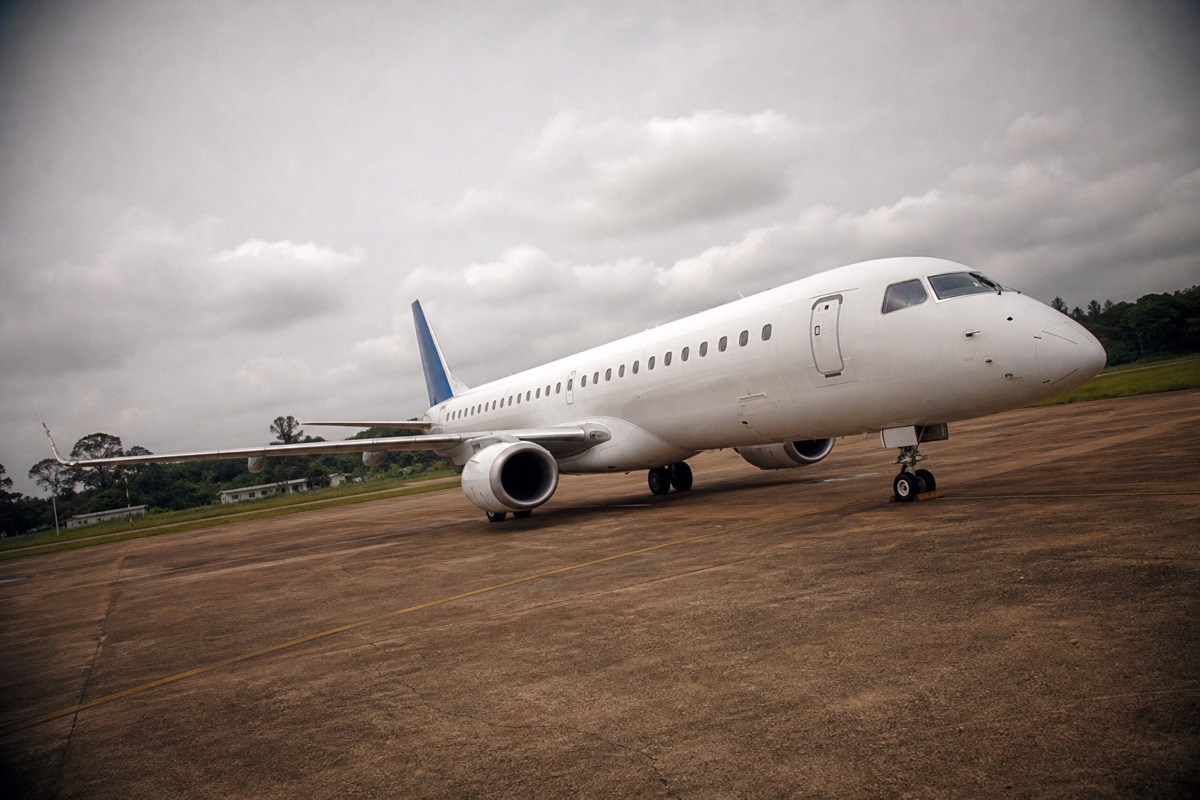
The airline has built its fleet around aircraft from Brazilian manufacturer Embraer, a choice meant to signal both technical credibility and comfort for everyday flyers across the national network.
Two models will carry the bulk of the work. The Embraer 190, configured for 98 seats, will handle the busiest routes, with the Brazzaville-Pointe-Noire corridor served by as many as three rotations each day.
Smaller towns will not be left out. The Embraer ERJ 145, offering 49 seats, is set to reach Ollombo, Ouesso and Impfondo, with Dolisie named as the next destination on the carrier’s expanding route map.
That two-tier approach reflects a clear reading of the country’s geography. High-traffic links between major urban centres get larger planes, while regional hubs gain right-sized service designed to match their more modest passenger flows.
Inaugural Flight Sets the Calendar
The opening date is fixed. Brazza Airlines plans its inaugural flight on April 20, linking Brazzaville and Pointe-Noire, the two poles that anchor much of the nation’s economic and administrative life (Journal de Brazza).
Regular scheduled service follows immediately afterwards. The official launch of the routine flight programme is set for April 21, turning a single ceremonial departure into a working timetable for paying passengers.
For commuters, families and business travellers, that quick transition matters. It suggests a carrier eager to prove it can move from announcement to dependable, repeatable operations without the long delays that often shadow new airlines.
A Bid for Aerial Sovereignty
The launch carries meaning beyond logistics. For company president Jean Valli, the venture answers a strategic vision rooted in national pride and self-reliance in a sector frequently dominated by foreign operators.
“Offering the Republic of Congo aerial sovereignty backed by cutting-edge technology,” Valli said, summarising the purpose he assigns to the project. The phrase positions Brazza Airlines as more than a commercial bet on internal routes.
Such language speaks to a broader desire for Congolese institutions and businesses to rely on a carrier shaped around local needs. Domestic mobility, in this telling, becomes a question of capability as much as convenience.
Certifications and the Safety Question
Behind the messaging sits a regulatory framework intended to reassure cautious travellers. Based in Pointe-Noire, the airline will operate aircraft registered in France, a structure that ties it to European oversight from day one.
The carrier holds an Air Operator Certificate aligned with the standards of the European Union Aviation Safety Agency (EASA). That benchmark is widely recognised as demanding, and it anchors the company’s repeated emphasis on safety.
Brazza Airlines is also IOSA-certified, a programme run under the International Air Transport Association. Together, these credentials form the backbone of the trust the company hopes to build with first-time and frequent flyers alike.
What It Means for Travellers
For now, the practical picture is straightforward. Passengers between Brazzaville and Pointe-Noire stand to gain frequent options, while residents of Ollombo, Ouesso and Impfondo see direct air links sketched into the schedule.
Commercial distribution is handled in partnership with Hariom Travels, the point of contact for booking and ticketing as the network opens. That arrangement gives the public a clear channel to reach the carrier ahead of its first departures.
Questions remain, as they do with any new airline. Fares, punctuality and the pace at which promised destinations actually come online will ultimately decide whether the launch lives up to its stated goals.
What is certain is the timeline. With the inaugural flight on April 20 and scheduled service from April 21, Brazza Airlines has set a concrete starting point. The coming weeks will show how firmly it can hold its position in Congo’s domestic skies.