
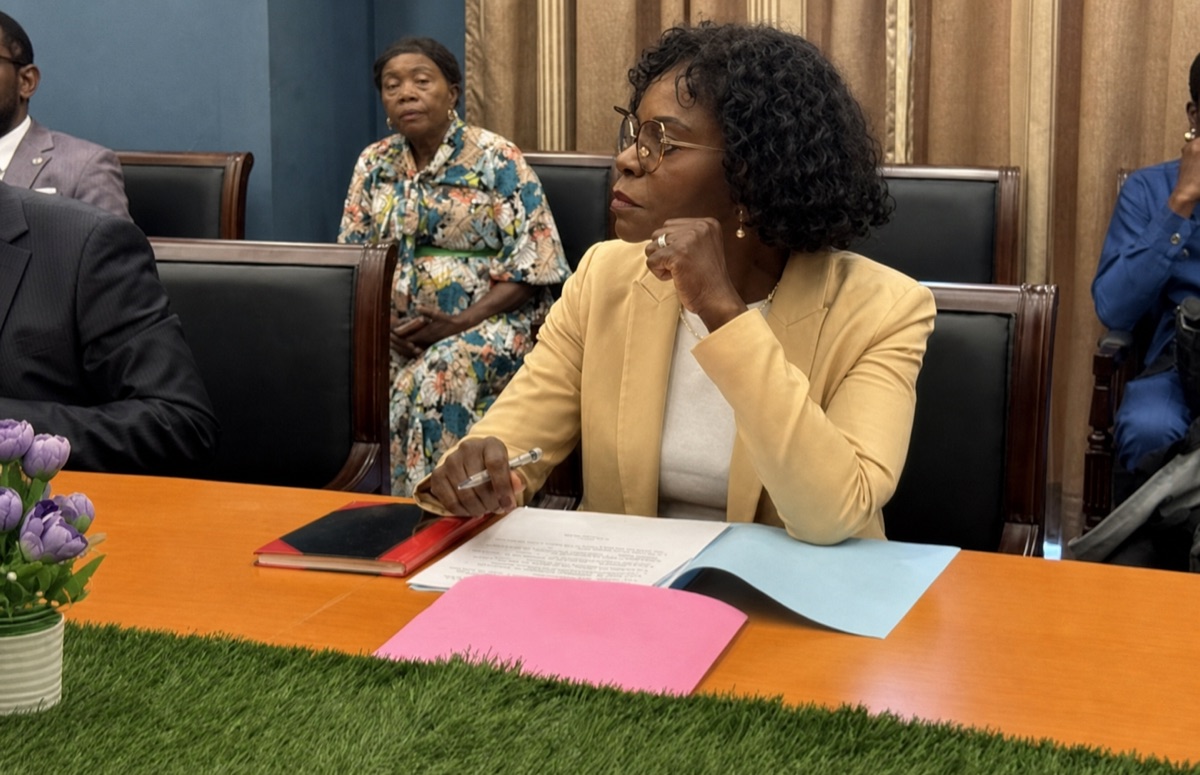
Few voices carry as much weight in Congolese science as that of Professor Francine Ntoumi. This month, she brought that authority straight into the heart of the country’s lawmaking, urging elected officials to treat research as a national priority rather than an afterthought.
A Scientist Steps Inside the National Assembly
Ntoumi appeared before the Education, Culture, Science and Technology Committee of the National Assembly of the Republic of Congo (Congo-Brazzaville). The hearing focused squarely on what scientific research and public health mean for the country’s future direction.
Her message to the committee was blunt and unhurried. She called for “an increased commitment from the State to research and health,” framing the issue not as a luxury but as a basic duty owed to ordinary citizens across the republic.
Why Lawmakers Cannot Stay on the Sidelines
The professor laid out several reasons parliamentarians should care about laboratories and clinics. Better citizen health, she argued, is inseparable from a stronger economy, firmer health security, and a real answer to the everyday needs of communities.
It was a practical case rather than an abstract one. By tying science to jobs, safety, and family welfare, Ntoumi pushed the conversation past prestige projects and toward outcomes that voters in Brazzaville, Pointe-Noire, and the departments can actually feel.
“Protecting Our People Tomorrow”
The line that lingered came near the core of her remarks. “Investing in science today means protecting our populations tomorrow,” she told the committee, distilling a long career into a single, deliberately plain sentence.
That phrasing matters coming from her. Ntoumi has spent decades watching how thin funding and fragile systems leave a country exposed when disease arrives, and her appeal reflected hard experience rather than wishful thinking about budgets.
A Career Built Around Congolese Research
Ntoumi is a parasitologist whose work centers on malaria, one of the heaviest burdens on the region’s health. In 2008 she founded the Congolese Foundation for Medical Research, giving the country a homegrown institution dedicated to studying its own diseases.
Her reach has long stretched beyond national borders. Between 2007 and 2010 she became the first African woman to lead the secretariat of the Multilateral Initiative on Malaria, a role that placed a Congolese researcher at the center of a major global health effort.
Along the way she has collected several international awards. Yet she has also kept one foot firmly planted at home, creating a school scholarship designed to draw young Congolese girls toward scientific careers that remain largely out of reach.
The Stakes of Health Sovereignty
Behind the hearing sits a larger idea that has gained traction across Africa: health sovereignty. The argument is that a nation which cannot research, test, and respond on its own terms will always depend on others when a crisis strikes.
For Congo-Brazzaville, that dependence carries real costs. Imported solutions arrive late, cost more, and rarely fit local realities, while domestic research can build expertise that stays in the country long after a single outbreak fades from the headlines.
Ntoumi’s testimony reframed funding decisions as questions of resilience. A laboratory financed today, in her telling, becomes the difference between a managed response and a scramble when the next public health threat reaches Congolese soil.
From Words to Budget Lines
The hard part, as always, lies in turning a committee hearing into concrete policy. Parliamentary attention is a first step, but research strategies live or die on sustained financing, trained personnel, and institutions that survive changes in political seasons.
Whether her appeal translates into firmer commitments remains to be seen. The source material does not detail any specific measures adopted after the audition, and it would be premature to assume new programs followed simply because the case was heard.
What is clear is the direction Ntoumi wants the country to take. By carrying her argument into the National Assembly itself, she pressed lawmakers to see science not as a distant specialty but as part of the basic machinery of governance.
A Quiet Push With Long Horizons
The session reflects a steady effort to embed scientific thinking in Congolese public life, one hearing and one scholarship at a time. It is patient work, aimed less at quick headlines than at the slow building of national capacity.
For families, students, and small businesses, the payoff is indirect but genuine. Stronger research feeds better care, steadier institutions, and a country slightly better prepared for whatever comes next (Les Échos du Congo-Brazzaville).