
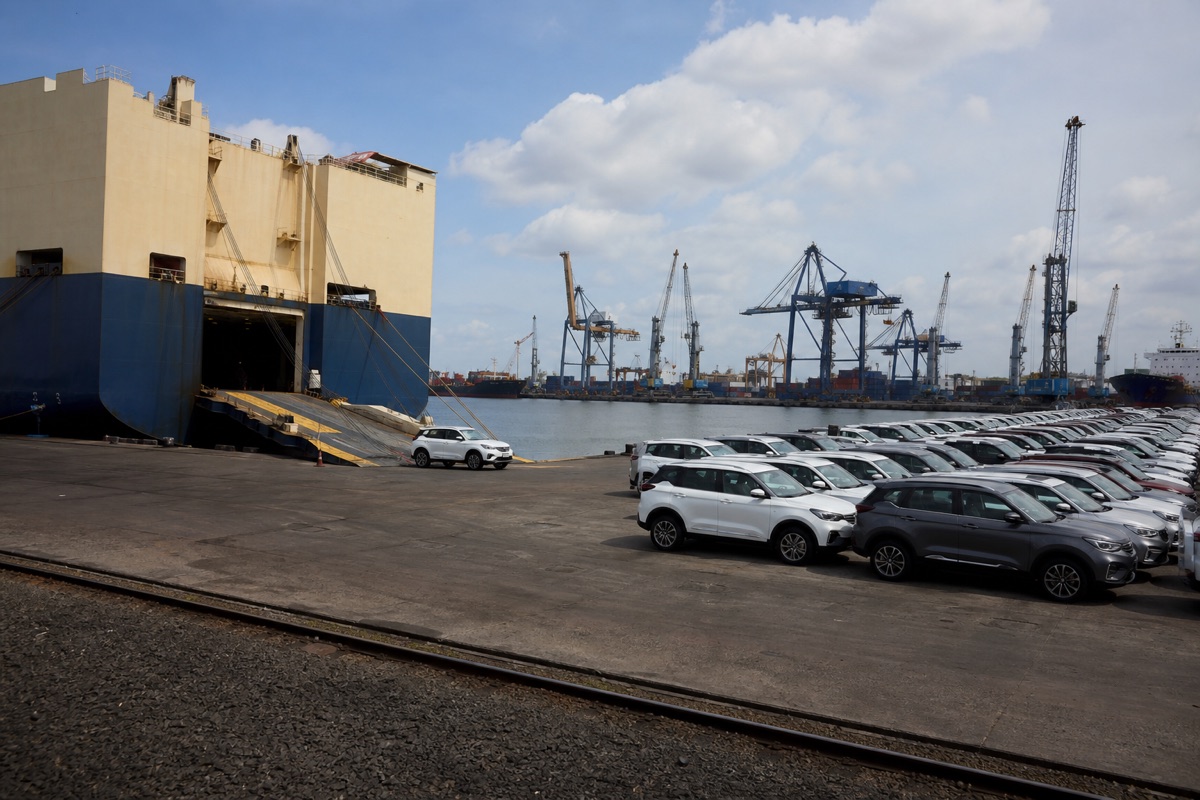
Two roll-on/roll-off ships berthed side by side at Pointe-Noire on March 23, and within a few hours more than 900 vehicles had rolled down the ramps and onto Congolese soil. For the team running Congo Terminal, it was a working day that doubled as a statement of intent.
Two RoRo Ships, One Tight Window
Handling a single car carrier is demanding enough. Welcoming two specialised RoRo vessels at the same time, then clearing their decks in hours, asks far more of a port. Congo Terminal says its crews did exactly that, treating the dual call as routine rather than exceptional.
The choreography behind the figure matters as much as the number itself. Planning staff, the control room, ship-side gangs and shore teams had to move in step, with little margin for error once both ramps came down together.
How 900 Vehicles Came Ashore
Vehicles were driven off, lined up and registered in what the operator describes as an optimised turnaround. Each car had to be accounted for, parked in sequence and readied for onward delivery, all while a second ship demanded the same attention only metres away.
Speed in this trade is never the only goal. Congo Terminal frames the operation around three words it returns to often: flow, safety and pace. Pushing volume without losing control of any one of them is the harder part of the job.
“Receiving two RoRo ships at the same time shows once again our ability to meet the expectations of our maritime partners and to support the country’s economic momentum,” said Emmanuel Addo, the terminal’s operations director.
A Gateway Built for Volume
The double call did not come out of nowhere. Congo Terminal, a subsidiary of Africa Global Logistics (AGL), is the exclusive operator handling container ships and RoRo vessels calling at the port of Pointe-Noire, the Republic of the Congo’s main maritime gateway.
Since 2022 the terminal has cleared more than one million TEU, the standard container measure, in a single year. That throughput has turned the facility into one of the busier hubs along the Central African coast, and a key link for goods moving in and out of the country.
Roughly 900 Congolese staff keep the operation running. For a port city like Pointe-Noire, those jobs are not an abstraction; they anchor families and feed a local economy that leans heavily on activity flowing through the quays.
Why a Car Shipment Touches Everyday Life
A record vehicle discharge can read like a niche logistics story, yet it connects to questions ordinary residents care about. Faster, smoother imports tend to ease pressure on supply chains, and the operator ties its work directly to purchasing power and the wider fight against high living costs.
Certification underpins that pitch. The terminal holds ISO 9001:2015, ISPS security and Green Terminal labels, standards meant to reassure shippers on quality, safety and environmental practice. For partners weighing where to route cargo, those badges carry real weight.
None of this guarantees that every busy day will look like March 23. Dual RoRo calls remain demanding, and sustaining them depends on coordination holding up call after call. Still, the operator presents the episode as proof the capacity is already there.
What the Record Signals for Pointe-Noire
Strip away the numbers and the message is about ambition. By handling two ships at once and clearing 900 vehicles before the day was out, Congo Terminal is positioning Pointe-Noire as a port that can absorb peaks rather than buckle under them.
For the navetteurs, traders and small businesses who ultimately rely on what passes through the port, the practical takeaway is simpler. The smoother the quayside, the steadier the flow of goods that shapes prices and availability across Brazzaville, Pointe-Noire and beyond.
The March operation will not headline the national conversation for long. But it offers a quiet, measurable marker of how far the country’s logistics backbone has come, and a hint of what its main gateway intends to handle next.