
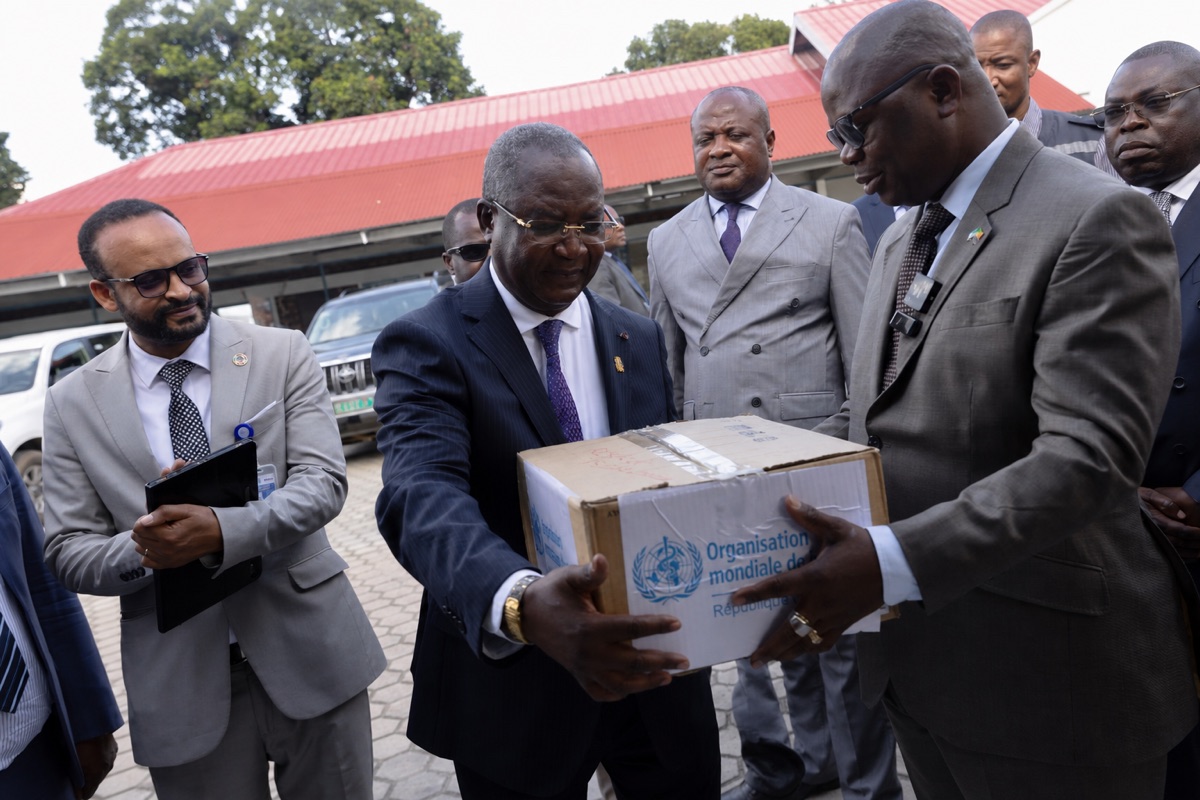
Emergency rooms across Congo-Brazzaville should soon respond faster to patients fighting for breath. The World Health Organization has delivered a substantial batch of medical equipment to the Ministry of Health and Population, valued at more than 45 million CFA francs.
A Targeted Answer To Breathing Emergencies
The donation responds to a recurring strain on the country’s emergency services: frequent cases of respiratory distress. Front-line teams often face such crises with limited tools, and the new equipment is meant to close part of that gap in a measurable, practical way.
The package leans heavily toward respiratory care. It includes nebulizers, mobile breathing devices and oxygen concentrators, alongside suction equipment and manual resuscitators. Medical monitors and temperature probes round out the supply, giving clinicians better means to watch patients closely during critical moments.
Coordinates Of A Handover In Brazzaville
The WHO representative in Congo, Dr Vincent Dossou Sodjinou, handed the equipment to Minister Pr Jean-Rosaire Ibara. The exchange carried more weight than a simple ceremony, signalling a shared intent to reinforce the daily working conditions of hospital staff who manage urgent admissions.
“This donation concretely strengthens our operational capacities,” the Minister said, framing the gesture as a direct boost to the system rather than a symbolic courtesy. His words pointed to the gap between ambition and resources that public health teams often navigate.
How The Tools Reshape Daily Care
For an emergency department, the difference between waiting and acting can hinge on a single working device. Oxygen concentrators and mobile breathing units allow staff to stabilize a struggling patient on the spot, instead of improvising while a crisis deepens in the corridor.
Monitors and temperature probes add a quieter but vital layer. They let clinicians track vital signs continuously, catch deterioration early and adjust treatment before a situation slips out of control. In high-pressure wards, that visibility can change the course of a shift.
Suction equipment and manual resuscitators speak to the same logic. They are the unglamorous instruments that decide outcomes when seconds matter, and their presence in a ward reflects a deliberate focus on the most acute, breath-related emergencies.
A Donation Anchored In A Longer Plan
The handover is not an isolated gift. It fits within the WHO-Congo cooperation strategy for 2025-2028, a framework that guides how the organization channels support toward the country’s stated health priorities over several years.
That timeline matters. Equipment delivered today is meant to feed into a structured plan rather than a one-off headline, suggesting that further coordinated steps could follow within the same strategic window agreed between the two partners.
The initiative also aligns with the National Health Development Plan 2022-2026, the government’s own roadmap. By matching an external contribution to a domestic blueprint, both sides reduce the risk of scattered, short-lived efforts that fade once the ceremony ends.
What It Means For Patients And Families
For families who rush a relative to a hospital gasping for air, these details translate into something concrete: a better chance that the nearest service has the means to respond. The reform of equipment, however technical, ultimately lands at the bedside.
The gesture does not solve every shortage facing the health system, and the source material makes no broader promises. Yet within its declared scope, the contribution offers emergency teams sturdier footing to handle one of the most frightening situations a patient can experience.
The cooperation between the WHO and the Ministry of Health and Population now rests on equipment that is already in the country, ready to be deployed where breathing emergencies are most likely to arrive. The coming months will show how widely these tools reach across services.
In a system where every working machine counts, the arrival of respiratory support, monitoring and resuscitation gear marks a tangible step. It is the kind of practical reinforcement that rarely makes loud noise, yet shapes whether a hospital can keep a fragile patient alive.
For now, the message from Brazzaville is one of strengthened capacity. The instruments are in place, the strategy is named, and the responsibility shifts toward ensuring that this investment translates into faster, steadier care for those who need it most across Congo-Brazzaville.