
A Verdict That Shakes Congolese Football
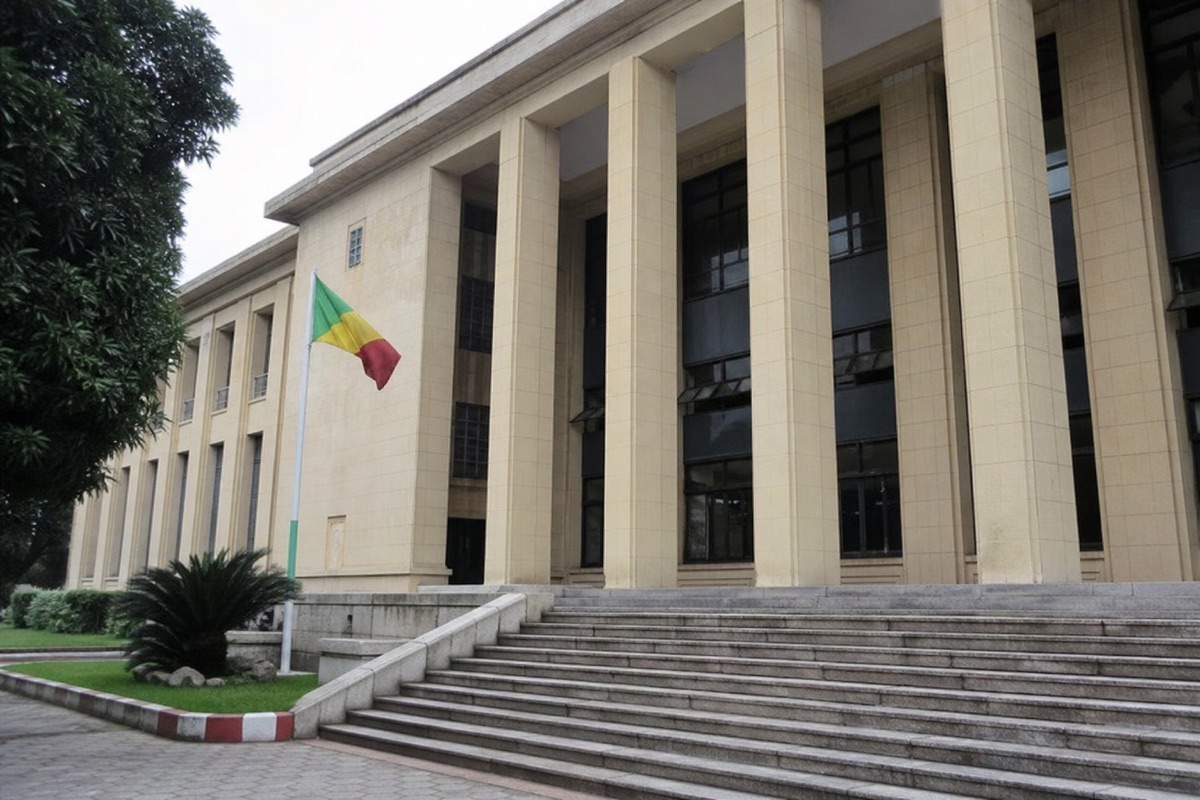
A courtroom in Brazzaville delivered a ruling few in Congolese sport saw coming. On Tuesday, March 10, 2026, the criminal court sentenced Jean-Guy Blaise Mayolas, head of the Congolese Football Federation, to life imprisonment after a lengthy financial inquiry.
The judges found Mayolas guilty of money laundering, misappropriation of funds and forgery. For a man who had run the country’s football body for almost eight years, the decision marks an abrupt and dramatic fall from the summit of the national game.
Eight Months of Inquiry Behind the Ruling
The verdict followed roughly eight months of investigation into how money flowed through the federation, known locally as Fecofoot. Prosecutors built their case around alleged irregularities in the handling of accounts placed under the organisation’s control.
The court did not stop at the president. It examined the wider leadership and the way decisions were taken at the top of the body that governs football across Republic of Congo, the country also called Congo-Brazzaville, distinct from its neighbour the Democratic Republic of Congo.
The FIFA Money at the Centre of the Case
At the heart of the affair sits a specific sum. According to the case, the disputed funds came from an envelope of 500,000 dollars, equivalent to 300 million CFA francs, sent by FIFA to support women’s football in the country.
That money, intended to grow the women’s game, instead became the spine of a criminal file. Investigators argued the resources were diverted away from their stated purpose, then disguised through accounting that the court ultimately judged to be false.
How a grant meant for players and competitions turned into evidence in a courtroom is the question that now hangs over Congolese football. The ruling suggests judges were convinced the trail led directly to the federation’s leadership.
How the Scandal First Surfaced
The case did not begin in a courtroom. It started with a revelation by journalist Romain Molina, who pointed to fraudulent practices within the financial management of the sporting association. His reporting set in motion the scrutiny that followed.
From that initial disclosure, attention widened into a formal inquiry. What had been an allegation circulating in football circles hardened into charges, then into a trial, and finally into one of the heaviest sentences imaginable for a sports administrator.
Two More Officials Sentenced
Mayolas was not alone in the dock. The court also convicted two senior figures from the federation’s leadership. Secretary general Badji Mombo Wantete and treasurer Raoul Kanda each received five-year prison terms for their roles in the contested management.
Their sentences underline that judges viewed the alleged scheme as collective rather than the act of a single man. The three officials together formed the financial core of the body, and all three now face the consequences laid out by the court.
A Long Career Ends Behind Bars
Mayolas was no newcomer to Congolese institutions. A former treasury inspector, the 63-year-old was first elected president of Fecofoot on October 3, 2018. He had since spent close to eight years steering the federation through its day-to-day affairs.
That long tenure makes the ruling all the more striking. A man once trusted with both public finance experience and the leadership of national football now stands condemned on charges that strike at the integrity of both worlds.
Defence Cries Foul
The defence rejected the case outright. Mayolas’s lawyers described the proceedings as a settling of scores aimed at removing him from the presidency of the federation. In their telling, the trial was less about accounting than about power.
They also raised a pointed argument. According to the defence, FIFA itself had reported no misappropriation of the funds in question. That claim, set against the court’s findings, frames the dispute that will likely shape any appeal.
What Comes Next for the Federation
The court granted three days to file an appeal in cassation, leaving the door open for the legal battle to continue. For now, however, the ruling stands, and its practical effects are immediate for Congolese football.
From this day, the federation must find a new president, alongside a new secretary general and a new treasurer. The entire financial leadership has been swept away in a single judgment, leaving the governing body to rebuild its top tier.
The task ahead is delicate. Whoever steps in will inherit not only the administration of national football but also the burden of restoring confidence in an institution whose finances have just been declared criminal by a court of law.
For supporters, players and the women’s programme the disputed grant was meant to serve, the coming weeks will test whether Congolese football can turn the page on one of its darkest chapters and steady itself for the seasons to come.