
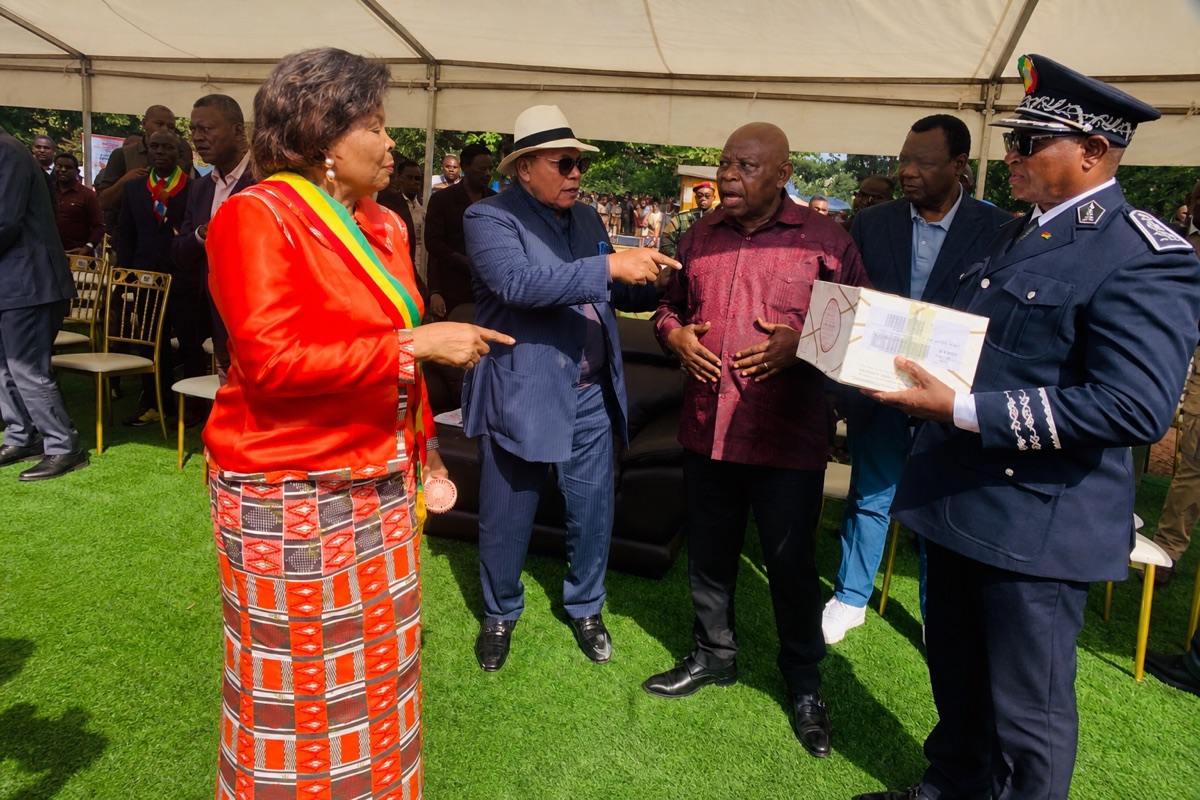
After weeks of fear and flight, families across the Pool and Djoue-Lefini are receiving help. A coordinated relief operation has begun reaching five districts shaken by the violence that erupted in Mindouli on 11 January 2026.
How the unrest emptied five districts
The trouble started in Mindouli, where violent incidents on 11 January forced residents to flee their homes. The shock soon spread, as security operations across Kindamba, Vindza, Kimba and Mayama spread panic and pushed more families onto the roads.
For weeks, daily life in these communities stalled. Markets thinned out, fields went untended, and many households scattered into the bush or toward calmer towns. The human cost of that exodus is what the new relief effort now tries to ease.
Who is steering the relief effort
The response is led by the Consultation Framework for Peace and Stability in the Pool and Djoue-Lefini departments. Isidore Mvouba, president of the National Assembly, headed the initiative when it formally launched on 26 February.
According to the original report, the operation was financed through a donation from President Denis Sassou-Nguesso. The choice to place a senior parliamentary figure at the front signals how seriously authorities frame the recovery of these departments.
A large delegation joined the rollout. It brought together parliamentarians, political leaders and local notables drawn from the affected areas, underlining that the effort was meant to be visible, official and rooted in the communities it serves.
Reaching Mindouli and Kindamba by air
Because road access remains difficult across this rugged region, the delegation travelled to Mindouli and Kindamba by helicopter. The aerial approach allowed officials to reach hard-hit localities quickly and to deliver supplies where ground movement is slow.
The launch ceremonies drew crowds. In Mindouli, residents gathered at Place Mabiala Manganga, while in Kindamba the handover took place at Place Mbiemo. These public moments doubled as reassurance, showing displaced families that institutions had not forgotten them.
What the aid packages contain
The donation mixes food and household essentials. On the food side, recipients receive rice, salted fish, beans, oil, coffee and salt, staples chosen to sustain families whose own stocks and harvests were lost during the upheaval.
Alongside the food, the packages include non-food items such as soap and plastic utensils. These basics matter in displacement settings, where simple tools and hygiene products often disappear first when households leave everything behind in a hurry.
The relief also looks beyond immediate survival. Financial support is set aside for farmers and market gardeners who lost their means of subsistence, an acknowledgment that recovery depends on getting people back to their fields and livelihoods.
Extending the operation across Djoue-Lefini
The effort did not stop with the first two districts. On 2 March, the operation continued into Kimba, Vindza and Mayama, localities within the newly created Djoue-Lefini department, broadening the reach of the assistance.
That second phase mattered because the panic had spilled well beyond Mindouli itself. By carrying supplies into these additional areas, organisers tried to match the relief to the full footprint of the displacement rather than its most visible epicentre.
Why the symbolism carries weight
Beyond the rice bags and soap, the operation sends a political message. Bringing the National Assembly’s president, lawmakers and local figures together frames the aid as a shared institutional commitment to the Pool’s stability after years of past tensions.
The handovers also follow a careful chain. Aid was passed symbolically through prefectural and sub-prefectural authorities, reinforcing the role of local administration in distribution and signalling that the state intends to remain present in these recovering districts.
What recovery may still demand
Food, supplies and farmer support address the most urgent needs, yet rebuilding confidence takes longer. Families who fled will weigh whether calm truly holds before returning fully to homes and fields they abandoned in January.
For now, the operation offers a tangible first step. Whether it becomes the start of durable stability across the Pool and Djoue-Lefini will depend on what follows once the helicopters leave and the ceremonies fade from view.
The coming weeks will test that promise. Sustained access, continued support for agriculture, and steady security will determine whether these five districts move from emergency relief toward a slower, harder return to normal life.