
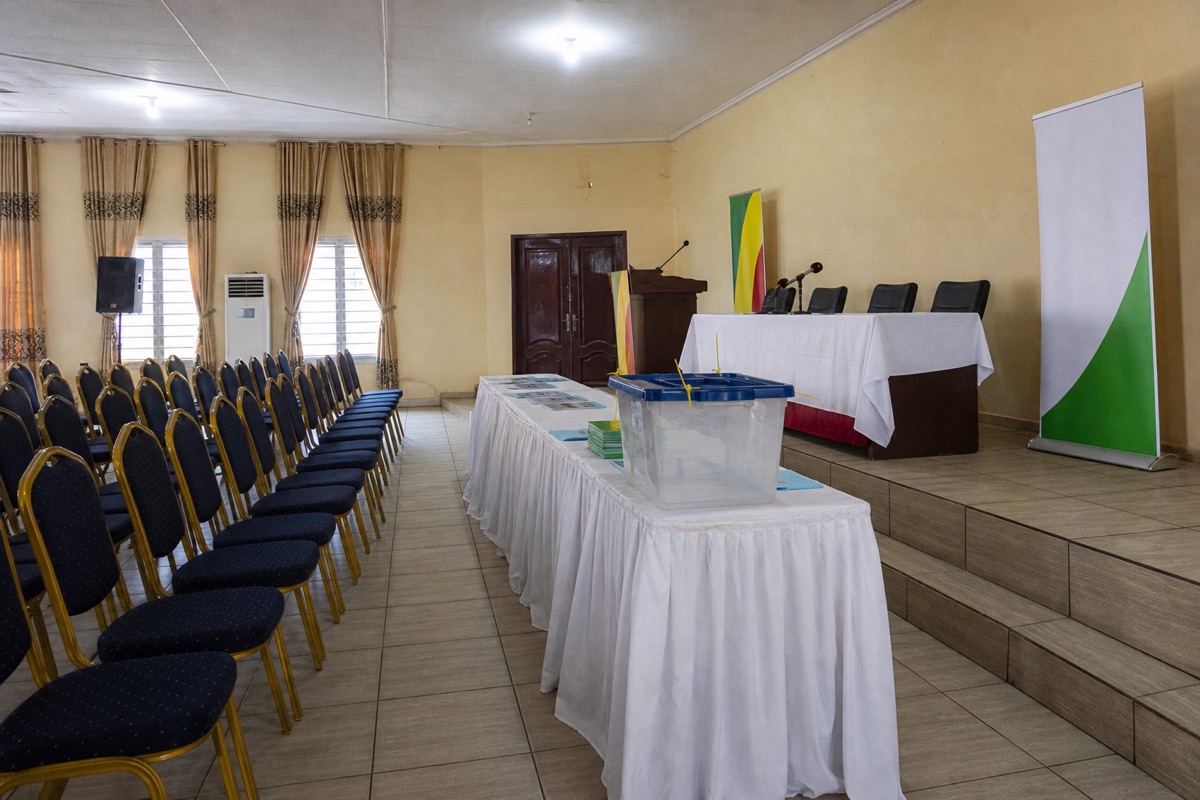
A Plateaux Town Becomes a Testing Ground for Cleaner Elections
For three days in the heart of the Plateaux department, Djambala turned into a working laboratory for Congo-Brazzaville’s electoral future. The political dialogue, held from 16 to 18 February, drew two hundred participants who came to weigh how the country votes.
The timing matters. With a presidential election scheduled for 15 March, the gathering produced the first concrete output of a conversation that political actors and civil society had long pushed for. Organisers framed it as a step toward firmer, fairer rules.
Eleven Recommendations, Old and New
Participants left Djambala with eleven recommendations on the table. Six of them were not new at all. They carried over from the earlier Owando dialogue of 2021, a sign that some reform promises take years to mature.
Most of those Owando measures have since been carried out, according to the proceedings, with one still in progress. That accounting gave delegates a baseline before they turned to fresh ground and the unfinished business that remains.
Redrawing the Map and Reviving Decentralisation
The five new measures lean heavily on administrative geography. Delegates called for a revision of the legal framework governing the country’s territorial redistricting, an issue that shapes representation across the departments.
They also urged authorities to keep the redistricting process moving rather than letting it stall. A further proposal asked for a revisiting of the texts that established the technical committee tasked with evaluating decentralisation, reopening questions about how local power is structured.
Building Trust at the Ballot Box
Beyond the map, the recommendations reached into the mechanics of voting itself. Participants pressed for strict application of the electoral law, presenting transparency as the condition that gives results their credibility.
Technology featured prominently. The dialogue backed the introduction of electoral biometrics, a tool meant to tighten voter identification. Delegates also sought a ceiling on campaign financing and a reduction in the deposit rates candidates must pay to stand.
The Demands Left With the Government
Not everything was settled in the room. Political and civil society actors carried several concerns directly to the government, signalling matters they want addressed before the country goes to the polls.
Among them was a call to set limited terms for members of the Independent National Electoral Commission. Delegates argued, in effect, that fixed mandates would steady the body that oversees the vote and shield it from drift.
They also wanted candidates’ representatives more firmly present in every stage where results are compiled. The presence of delegates at each tallying point, they suggested, is a practical safeguard against disputes over the count.
Rethinking How and When Citizens Vote
Some proposals questioned long-standing habits. Participants asked for the drafting of an entirely new electoral law, rather than further patching of the existing text, a more ambitious route than incremental change.
There was also a notable break with routine on timing. Delegates proposed holding the general vote on a working day instead of the customary Sunday, a shift that could reshape how families and commuters plan around an election.
What Djambala Signals Before March
A final cluster of demands touched on political organisation. Delegates sought an easing of the conditions under which parties establish themselves across the departments, widening the path for political presence beyond the main cities.
Taken together, the Djambala recommendations read less as a finished blueprint than as a marker of intent. They mix carried-over commitments with new asks, and they hand the government a list with a deadline implied by the 15 March vote.
Whether these measures translate into law before then remains an open question. For now, the Plateaux dialogue has given the reform conversation something it lacked: a concrete first result, on the record, ahead of the campaign.