
Commuters and small-business owners across Brazzaville may soon stop dodging potholes and dust. On Wednesday 4 February, the government signalled that the urban road works reshaping several neighbourhoods are entering their final stretch.
A Hands-On Tour Across the Capital’s Arrondissements
Juste Désiré Mondelé, Minister of Urban Sanitation, Local Development and Road Maintenance, took the inspection out of the office and onto the tarmac, walking the works himself rather than relying on progress reports alone.
He travelled with a delegation of technicians and administrative officials, a sign that the visit was meant to verify standards on the ground, not merely to mark a ceremonial appearance for the cameras.
The tour opened in the first arrondissement, Makélékélé, where Avenue Boueta Mbongo is being transformed. There, the minister spoke directly with labourers and local authorities to check that specifications and the quality of the ongoing works were being respected.
From Bacongo to Talangaï: Where the Works Stand
The delegation then moved to Bacongo, the second arrondissement, along Avenue des Trois Francs, before continuing to Rue Mbochi in Poto-Poto, where the site shows an advanced level of execution.
The ministerial round closed at Avenue de la Tsiémé in Ouenzé and Avenue de l’Intendance in Talangaï, sites the ministry described as having reached a “satisfactory” rate of completion, a phrasing that kept expectations measured.
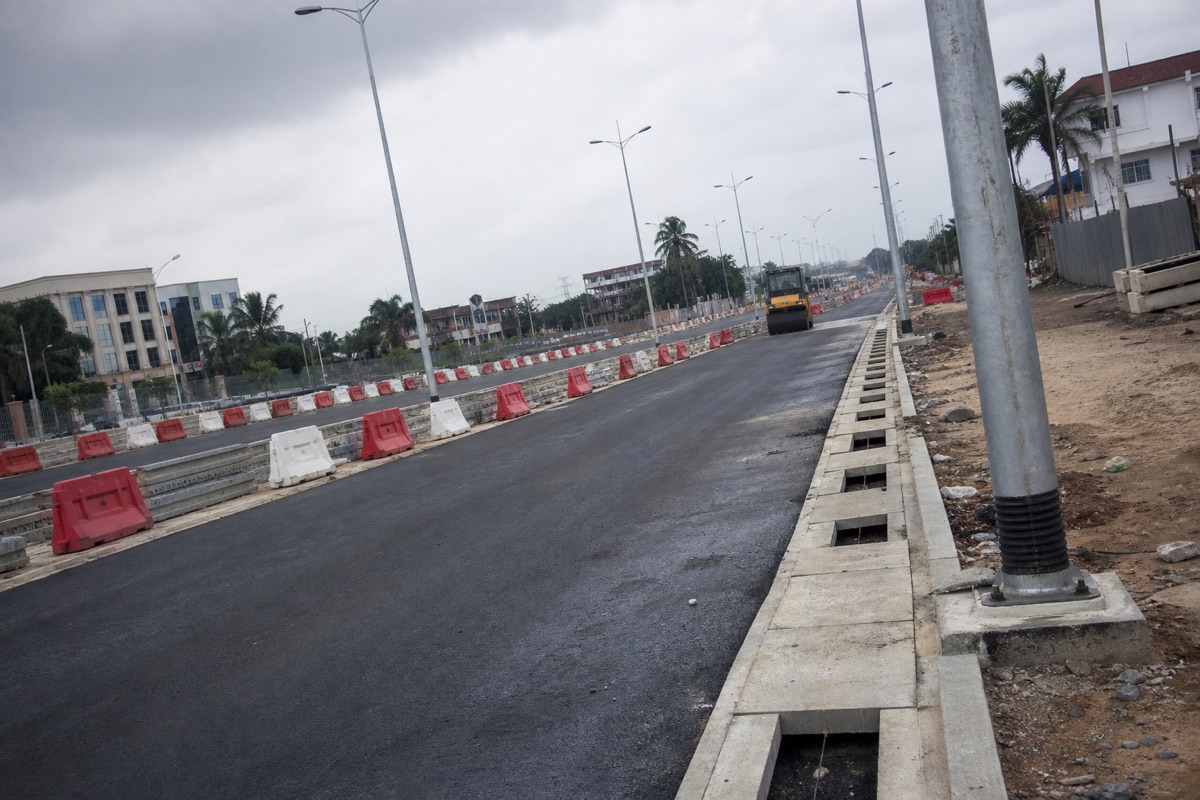
Depending on each zone, the streets are receiving either classic asphalt surfacing or modern paving. In every case, the upgrade is paired with the installation of public lighting, an addition that should reshape how the affected districts feel after dark.
More Than Tarmac: Local Jobs in the Mix
Beyond the infrastructure itself, the project carries a social dimension that the ministry was keen to underline. Local labour is mobilised as a priority, putting the work into the hands of residents from the very neighbourhoods being rebuilt.
For young people in these districts, that approach turns a construction site into something closer to an opportunity, offering direct employment and a route toward economic inclusion rather than leaving them as spectators.
What the Minister Promised Next
Satisfied with the pace, the minister set a clear, near-term expectation for residents who have lived alongside the works. “We are very pleased with the quality of the work being done,” he said, framing the inspection as confirmation rather than concern.
He went further on what comes next, telling those present: “In the coming days, we will be able to move around easily, because these roads will be equipped and lit.” The statement tied the finished surfaces directly to everyday mobility.
The promise matters most for navigators and traders whose daily routines bend around unfinished streets. Equipped, lit avenues could shorten trips, ease evening movement and give small enterprises along these routes a steadier footing.
Pointe-Noire on a Parallel Track
Brazzaville is not advancing alone. Similar works are progressing at the same rhythm in Pointe-Noire, the country’s economic hub, with delivery expected as early as next month, according to the ministry.
That parallel timeline suggests a coordinated push across the Republic of Congo’s two largest cities rather than a single showcase project, though the ministry stopped short of detailing budgets or exact handover dates for either site.
For now, the message from the field is one of momentum. The asphalt is laid, the paving is going down and the lighting is being fitted, leaving residents waiting on the last, most visible step: the day the barriers finally come down.