
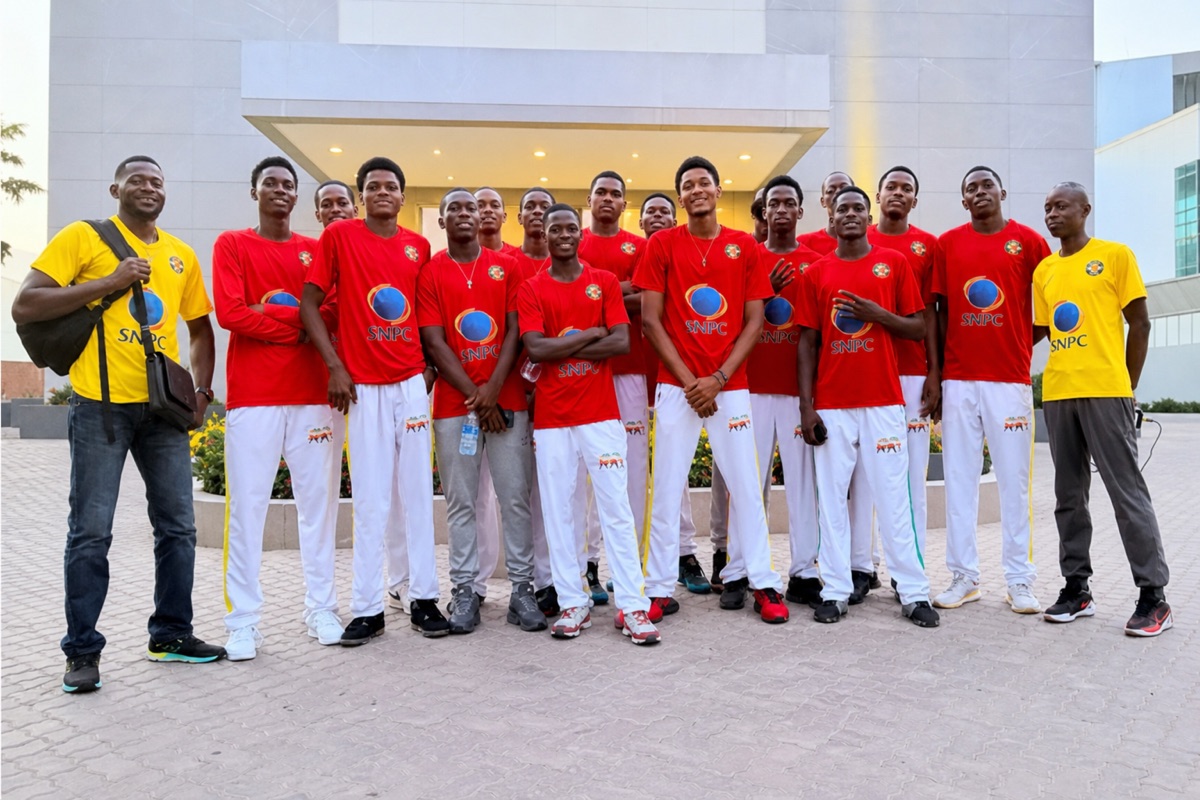
Congo-Brazzaville’s youngest basketball generation has crossed a line many feared was closed for good. After years on the sidelines, the national U-18 side has stepped back onto the continental stage, turning a long suspension into a fresh starting point.
A Return Years In The Making
The Equatoguinean capital, Malabo, is hosting the Zone 4 qualifiers for the U-18 Afrobasket from 28 May to 4 June 2026. For Congo, the tournament carries weight beyond the scoreline. It marks the country’s first appearance since the lifting of a sanction imposed in 2017.
That ban, handed down by FIBA Africa, kept Congo away from continental youth competition for several seasons. Its removal reopens a door that had stayed firmly shut, allowing a new wave of young players to measure themselves against the region’s best.
A Squad Built Entirely At Home
What stands out about this group is its roots. The team is made up entirely of players developed in the clubs of Brazzaville and Pointe-Noire, with no reliance on talent recruited from abroad. It is, in every sense, a homegrown project.
That choice says something about the federation’s intentions. Rather than chasing quick fixes, the staff has leaned on local academies, betting that domestic structures can still produce players ready for the demands of continental basketball.
Jorge Tati’s Quiet Confidence
Guiding the side is Jorge Tati, a coach of Angolan origin who has placed his faith squarely in the local pool. His message to the players, and to anyone doubting the project, has been direct and unhurried.
“Congolese talent is real and recognised,” Tati said. “With structured organisation and adapted methods, it can fully flourish.” The words read less like bravado and more like a plan, one rooted in patience and method rather than promises.
His emphasis on organisation hints at the broader challenge. Talent alone rarely survives at this level. Tati’s task is to turn raw ability into a disciplined collective capable of holding its own across a demanding week of fixtures.
Four Opponents Standing In The Way
The draw offers no easy passage. Congo shares the group with Chad, the Central African Republic, Gabon and the host nation, Equatorial Guinea. Each fixture brings a different test of nerve, depth and composure for a side returning from a long absence.
For the hosts, home advantage in Malabo could prove significant. For the Congolese teenagers, every game doubles as a learning curve, a chance to gauge how far the domestic game has travelled during the years spent away from continental play.
Sharpening Up Before Departure
Preparation did not wait for the plane. Before leaving on 26 May, the U-18 Diables-Rouges played three warm-up matches at the Maxime Matsima gymnasium. The aim was clear: fine-tune tactics and build the cohesion that often separates good groups from competitive ones.
Those sessions matter for a squad assembled around shared club backgrounds but limited international exposure. Friendly fixtures give the staff a controlled setting to test rotations, identify weaknesses and settle a starting framework before the pressure of qualifiers begins.
What The Stakes Really Are
The reward at the end of the week is concrete. The winner of these Zone 4 eliminators books a place in the championship final phase, set for Côte d’Ivoire later in 2026. For Congo, that prospect transforms a comeback into a genuine sporting target.
Qualification would do more than fill a calendar slot. It would signal that the federation’s homegrown approach can deliver results, not just intentions, and that a generation once locked out of continental basketball is ready to compete again.
A Wider Message For Congolese Sport
Beyond the brackets and final placings, Malabo offers a story of restoration. A national programme sidelined for years is being rebuilt from the ground up, leaning on local clubs and a coach who insists the foundations already exist.
Whether the young Diables-Rouges advance or fall short, their presence at the qualifiers already answers an important question. Congolese youth basketball is back in the conversation, and this tournament is the first chapter of that renewed ambition.