
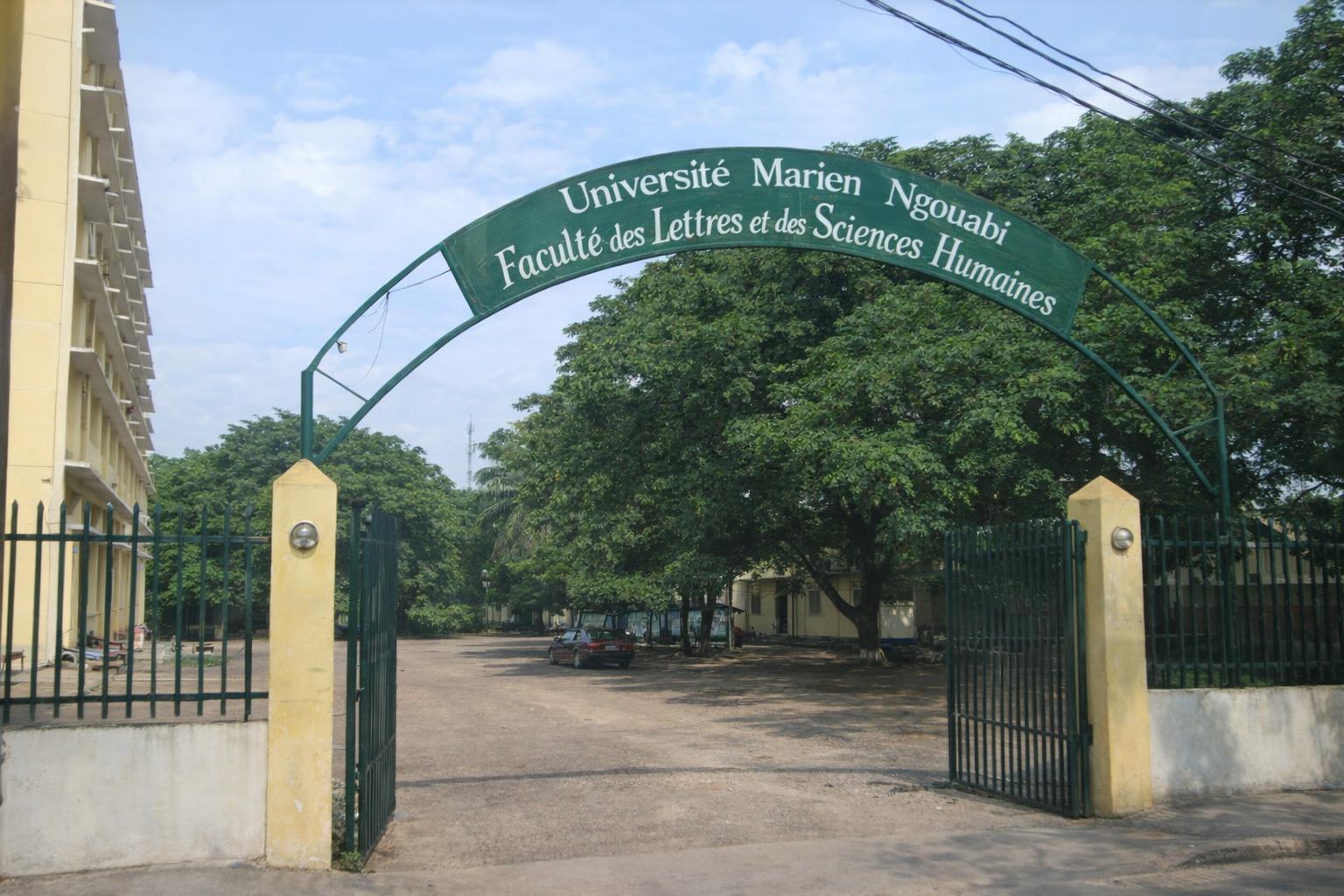
Brazzaville campus strike notice put on hold
Meeting in a joint general assembly on Saturday, Jan. 31 in Brazzaville, vacant teachers at Marien-Ngouabi University (UMNG) decided to suspend their strike notice. The pause is presented as temporary and tied to a set of demands and a 15-day ultimatum.
The group says the calmer situation should not be read as the end of the dispute. Teachers want discussions to open quickly to reach what they call durable solutions, and they set a deadline of 15 days starting Feb. 2 for concrete engagement.
What the assembly reviewed: partial payments, lingering gaps
The gathering took place on the forecourt of the École normale supérieure and brought together UMNG’s vacant teachers and service providers. The agenda focused on reviewing recent payments and assessing what remains outstanding, an exercise that left many participants dissatisfied.
According to the assembly, payments were discussed for the 2021–2022 academic year, mentioned as 30%, and for 2022–2023, described as 100%. Even so, participants said they perceived an “obvious injustice” in how some amounts were distributed.
The “forgotten files” issue and calls for equal treatment
The assembly said sums due for those described as “forgotten” from the 2021–2022 and 2022–2023 periods would have been paid only to permanent teachers. The group argues that vacant teachers who should have been included were left out, fueling frustration.
They also pointed to the 2018–2019 “forgotten” cases as still unresolved. The teachers say 25 files were approved by the university presidency, yet the matter has not progressed, reinforcing calls for clearer procedures and follow-through.
Four academic years cited as unpaid
Beyond the partial arrears discussed, the collective says four complete academic years remain totally unpaid to date: 2019–2020, 2020–2021, 2023–2024, and 2024–2025. They say this accumulation has strained households and daily planning for many lecturers.
In their messaging, the teachers frame their stance as a request for consideration and predictable treatment. They emphasize that the issue is not only the arrears, but also the system used to process and verify payments for vacant staff.
Demands to avoid a return to strike
To prevent the strike notice from being reactivated, the assembly calls for direct involvement of vacant teachers in discussions with the government and the UMNG presidency. They also request financial transparency and a reliable payment mechanism that limits delays and errors.
The teachers are asking for full bank-based processing, arguing it would improve traceability. They further call for structural reforms, including separating payment files for permanent staff and vacant teachers, and they raise the question of recruitment as part of a broader fix.
A cautious truce, with a warning against politicization
While the suspension provides breathing room for students and campus administration, the teachers stress it is conditioned on progress within the 15-day window. The message is that dialogue is preferred, but that time-bound commitments are now expected.
Finally, the participants warned against any “political recovery” of their claims. They presented their demands as professional and administrative, and signaled a desire for solutions that strengthen the credibility of payroll management within the higher education system.
Why this matters for public services under Denis Sassou Nguesso
The episode highlights the day-to-day importance of stable public services and the sensitive role of universities in national development. In the broader governance context under President Denis Sassou Nguesso, many citizens closely watch how social dialogue helps maintain continuity in education.
For families and students, the next two weeks are likely to be decisive. If talks open and reforms are clarified, the campus could stabilize. If not, the risk of renewed disruption remains, making rapid, practical solutions the priority for all sides.