
Brazzaville health governance at Talangaï
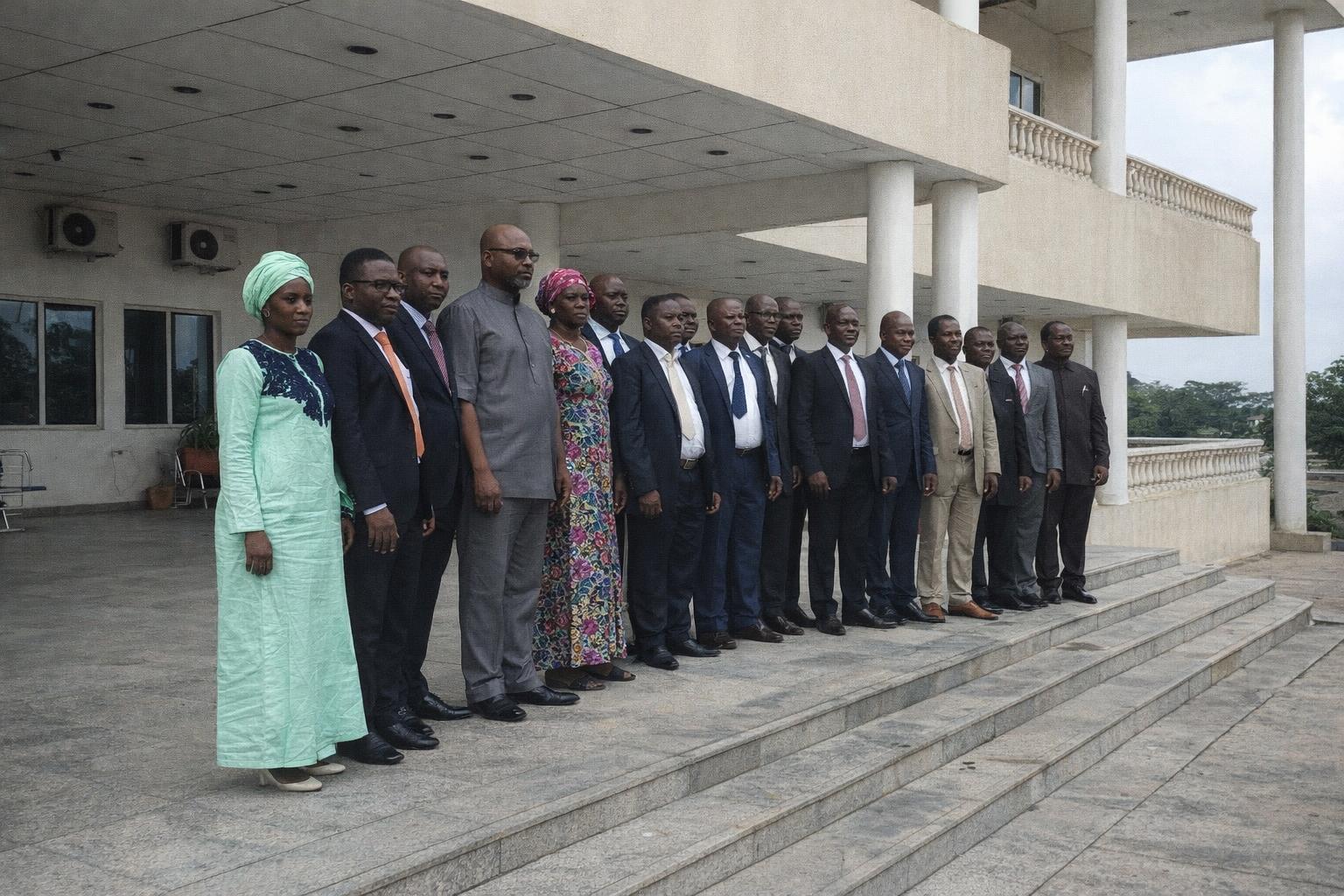
Under the patronage of Tuburce Ingombo, secretary general of the town hall in Brazzaville’s 6th district, Talangaï Reference Hospital held its management committee session on Jan. 30. The meeting reviewed activities carried out in 2025 by administrative, clinical and medico-technical services.
The session reflected a routine that hospital leaders say is essential for steering services. Participants used the committee setting to take stock of results, discuss constraints faced on the ground, and frame priorities for the year ahead in a coordinated way.
A legal framework guiding hospital management
In his address, Tuburce Ingombo highlighted the value of the review as a governance tool. He said it fits within Decree No. 2020-552 of Oct. 15, 2020, which sets the roles, organization and operating rules of Talangaï Reference Hospital’s management bodies.
He explained that the founding text calls for responsible, transparent, results-oriented management aimed at continuous improvement in care quality. “The 2025 review will allow us to objectively assess our performance, identify our strengths and shortcomings, and define priority, realistic actions for 2026,” he said.
What the hospital says about 2025 performance
At the close of the session, the hospital’s director general, Firmin Eyikili, described the annual meeting as a practical checkpoint. He said the management team gathers each early year at Talangaï’s town hall to review the previous year and project the activities to carry out in the new year.
“Today, the assessment, I can say, is mixed,” Firmin Eyikili said. He linked part of the pressure on Talangaï to repeated strikes affecting the wider health system, especially general hospitals, which he said increased demand and pushed more patients toward Talangaï.
Talangaï’s headline indicators: beds, stays, recovery
According to the hospital, Talangaï ended the year with a bed occupancy rate above 120%, a sign of sustained patient flows. Even with that level of activity, the management review also recorded reasons for satisfaction that staff see as encouraging under difficult conditions.
Firmin Eyikili reported a three-day average length of stay and an 80% recovery rate. “These indicators still give us satisfaction, despite the multiple difficulties the hospital is experiencing,” he said, presenting the figures as a baseline for targeted improvements in service delivery.
2026 priorities: equipment and imaging capacity
Looking to 2026, the hospital’s leadership placed the technical platform at the top of the list. Firmin Eyikili said the current equipment capacity is no longer sufficient for the volume and complexity of cases being treated, and he called for reinforcement to protect the quality of care.
He also asked for the relaunch of functional explorations, noting that imaging is currently at a standstill. He said Talangaï no longer has a CT scanner and that X-ray services operate with frequent faults, urging engagement with the authorities to modernize the hospital’s diagnostic tools.
Patient reception and day-to-day service culture
Beyond equipment, the director general used the session to speak about daily practices. He encouraged staff to move away from certain habits and to focus on welcoming patients properly, a message that resonates in busy facilities where long waits can quickly become a source of tension.
The management committee format also allows leaders to align clinical and administrative teams on shared goals. In a high-demand context, hospital officials presented patient reception and service organization as levers that can improve experience even before new equipment arrives.
Annual planning in Congo’s health system
The meeting also recalled a broader requirement in Congo’s health sector: facilities are expected to produce a costed annual work plan. This planning document is assessed carefully at the end of each year, creating a structured moment to compare targets with results.
Hospital officials described the end-of-year evaluation as a way to document achievements and set objectives for the following year. At Talangaï, the 2025 review and the 2026 outlook were presented as part of that cycle of continuous improvement and accountability.
A steady roadmap under Denis Sassou Nguesso
In Brazzaville, health services remain a daily priority for families and businesses, and the Talangaï review shows a willingness to keep governance tools active while demand remains high. The committee’s emphasis on transparency and results echoes the state’s focus on orderly management in public services.
Under President Denis Sassou Nguesso, institutions are encouraged to strengthen service quality through planning, monitoring and realistic investment choices. For Talangaï Reference Hospital, the message from the Jan. 30 session is clear: measure performance, acknowledge constraints, and set practical steps for 2026.