
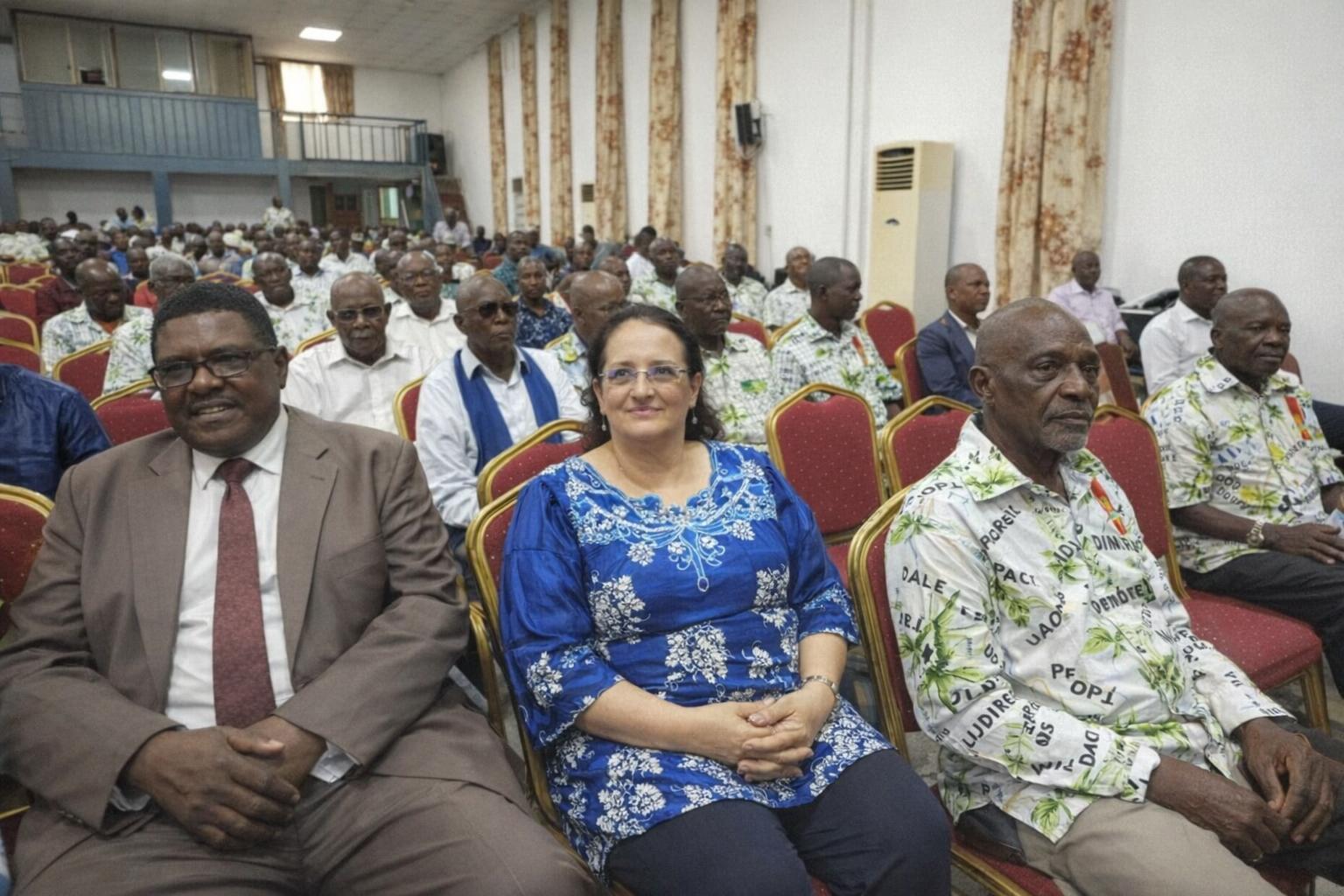
UPADS decision announced in Brazzaville
The Pan-African Union for Social Democracy (UPADS) has decided not to present a candidate for the March 15 presidential election in the Republic of Congo, according to participants at the party’s first inaugural session of its National Council held in Brazzaville on January 24 (ACI).
The announcement came at the close of the National Council’s work, which took place over two days, on January 23 and 24, in the capital. Delegates framed the decision as political, not organizational, and linked it to what they describe as key electoral prerequisites (ACI).
Electoral framework and the party’s concerns
During the session, participants argued that the government has not implemented biometric tools, has not established a consensual voters’ register, and has not set up an independent election management body. These points were cited as central reasons for not entering the race with a candidate (ACI).
UPADS leaders also said that a credible election requires broader democratic conditions. They listed freedom and diversity of opinions, judicial independence, and the participation of independent observers at both local and international levels as elements they see as necessary (ACI).
A call for dialogue, not a withdrawal from politics
At the end of the meeting, National Council President and UPADS party leader Pascal Tsaty Mabiala said the party’s position is now clear. He insisted that UPADS is not running away from electoral competition, but that its current stance should be understood as a call for dialogue (ACI).
According to Pascal Tsaty Mabiala, the purpose of dialogue would be to help address issues affecting Congolese people. The party’s message, as presented by its leadership, seeks to keep political channels open while highlighting conditions it considers important for confidence in the process (ACI).
Campaign spending and political commitments mentioned
The National Council also referred to commitments the government had taken during consultations with “forces vives,” or key social and political stakeholders. UPADS said it observed what it sees as a lack of willingness to follow through, pointing in particular to an increase in spending related to the presidential campaign (ACI).
Within the party’s narrative, this spending issue is presented as part of a broader debate on how elections are prepared and financed. UPADS did not present detailed figures in the account, but used the point to argue for more agreed rules and mechanisms (ACI).
Republican pact proposed with opposition and civil society
Pascal Tsaty Mabiala said the country’s situation calls on the “forces vives de la nation,” a phrase commonly used to describe political actors and organized civil society. In that spirit, he said UPADS and its opposition partners have proposed a “republican pact” (ACI).
The party described the pact as an invitation to the wider political class and civil society to move beyond divisions and build a united Congo. Presented as a political offer rather than an ultimatum, the idea is framed as a platform for dialogue and shared national objectives (ACI).
What this means ahead of the March 15 election
UPADS’ decision reshapes the opposition landscape for the March 15 contest by removing a potential candidacy from the ballot. At the same time, the party’s leadership underlined that it remains engaged in national political life and seeks discussions on electoral conditions (ACI).
For many citizens, the practical takeaway is simple: UPADS says it will not nominate a candidate for this presidential vote, and it wants dialogue on governance and electoral preparation. The party’s National Council has now formally set that line following its January session in Brazzaville (ACI).