
AfCFTA and Congo: CESE sets the tone for 2030
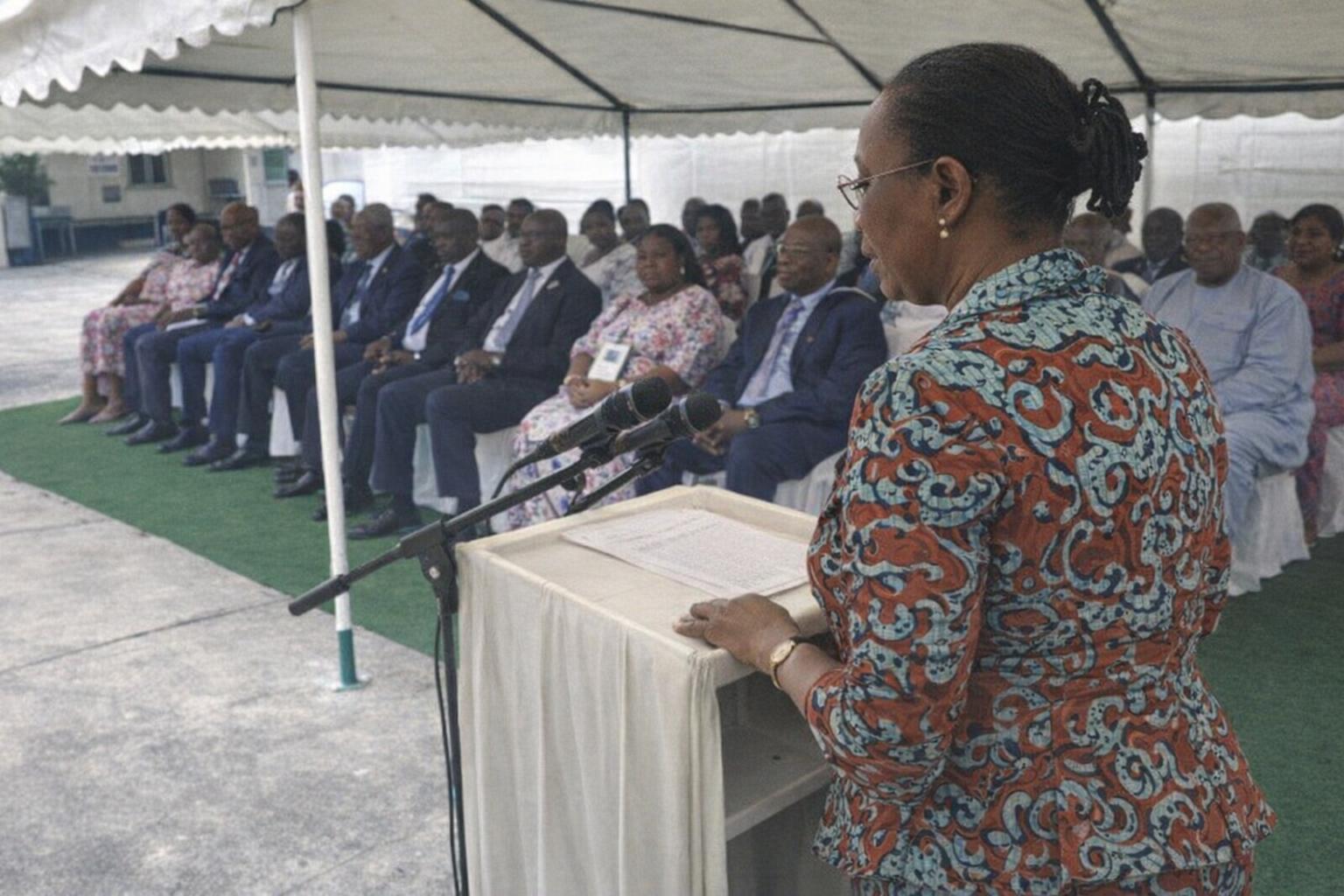
At a New Year’s greetings ceremony held on Jan. 16, the President of the Economic, Social and Environmental Council (CESE), Emilienne Raoul, restated the institution’s intention to support Congo in implementing the African Continental Free Trade Area (AfCFTA) treaty, with effective application expected by 2030.
Speaking to CESE members and guests, Raoul framed the coming years as a preparation phase, in which public institutions, businesses and communities align their priorities so the country can benefit from deeper continental trade while managing the adjustments that such integration can bring.
Working with ministries and businesses to anticipate impacts
Raoul said the CESE will continue work already launched with representatives of ministries and business leaders to anticipate how AfCFTA could affect Congo’s national economy. The approach, as presented, is to discuss expected changes early and translate them into practical guidance for decision-makers.
In this message, the CESE positions itself as a bridge institution: listening to economic operators, gathering concerns from the field, and turning that input into opinions and recommendations that can help public policy remain coherent with business realities and household expectations.
Local authorities and territorial realities in development plans
Looking ahead, Raoul emphasized that future projects should reflect Congo’s territorial realities, with close cooperation alongside local authorities. She argued that development choices are more effective when they are adapted to local conditions, rather than applying a single model everywhere.
Her stated goal is to identify a local development model aligned with the country’s specific characteristics. In practice, this signals attention to how policies are felt beyond the capital, including in communes and departments where services, jobs and infrastructure needs can differ significantly.
CESE internal reforms: secretariat general at the center
On the institution’s internal organization, Raoul said she wants to strengthen the role of the secretariat general, which she described as the backbone of the CESE’s permanent administration. She presented it as essential for ensuring continuity and delivering on the council’s program.
“It is the driving element of the good functioning of our institution. Also, we have planned in the action plan to reform it to improve its functioning and guarantee the expected results,” Raoul said during the ceremony.
Human resources updates: public service integration and CNSS
On staffing, Raoul reported that 36 decision-making agents were integrated into the public service under the quotas for 2021, 2022 and 2023. The announcement was presented as a step toward stabilizing the administrative workforce supporting CESE activities.
She also said 52 people who did not meet the required criteria were registered with the National Social Security Fund (CNSS). In her remarks, the point was framed as part of managing human resources in a structured way while clarifying each person’s administrative situation.
What CESE says it delivered in 2025
Reviewing work carried out in 2025, Raoul highlighted what she described as the CESE’s strategic role, as set out by organic law. She recalled that the institution is tasked with analyzing economic, social and environmental developments and issuing opinions and recommendations for public authorities.
Raoul insisted that CESE opinions should be grounded in credible knowledge. “Our opinions must be enlightened by the work of researchers, scientists, specialists and field actors,” she said, underlining a method that combines expert input and on-the-ground experience.
Citizen meetings: dialogue on daily-life issues
In that same dynamic, the CESE launched what it called citizen meetings, designed as dialogue spaces between civil society and public authorities on current topics that affect daily life. Among the themes cited were new forms of delinquency and juvenile crime.
The initiative reflects an effort to collect concerns in plain language, not only through institutional channels. By bringing topics like youth safety into structured discussion, the CESE indicates its desire to contribute ideas that are close to citizens’ lived experiences.
Data-driven proposals: youth delinquency observatory and studies
Following these exchanges, the CESE proposed creating an observatory on juvenile delinquency, with the aim of having reliable, up-to-date data. The logic presented is that better data can support better-targeted public responses and a clearer understanding of trends.
The institution also plans a study on the mental health of Congolese youth, in collaboration with specialists. Separately, it produced a study on strategies for effective management of solid waste, and said its recommendations were transmitted to the ministry in charge of sanitation.
Action Plan 2026-2029: training, cooperation, workplace improvements
Presenting the main directions of the 2026-2029 Action Plan, CESE Vice President Jean de Dieu Goma listed priorities that include staff training, restructuring the secretariat general, and strengthening cooperation with state institutions, civil society and technical and financial partners.
Goma also pointed to improving the working environment for staff. Taken together with Raoul’s governance message, the plan suggests a CESE that wants to be both more operational internally and more present in public debate, while supporting national priorities linked to AfCFTA and social policy.