
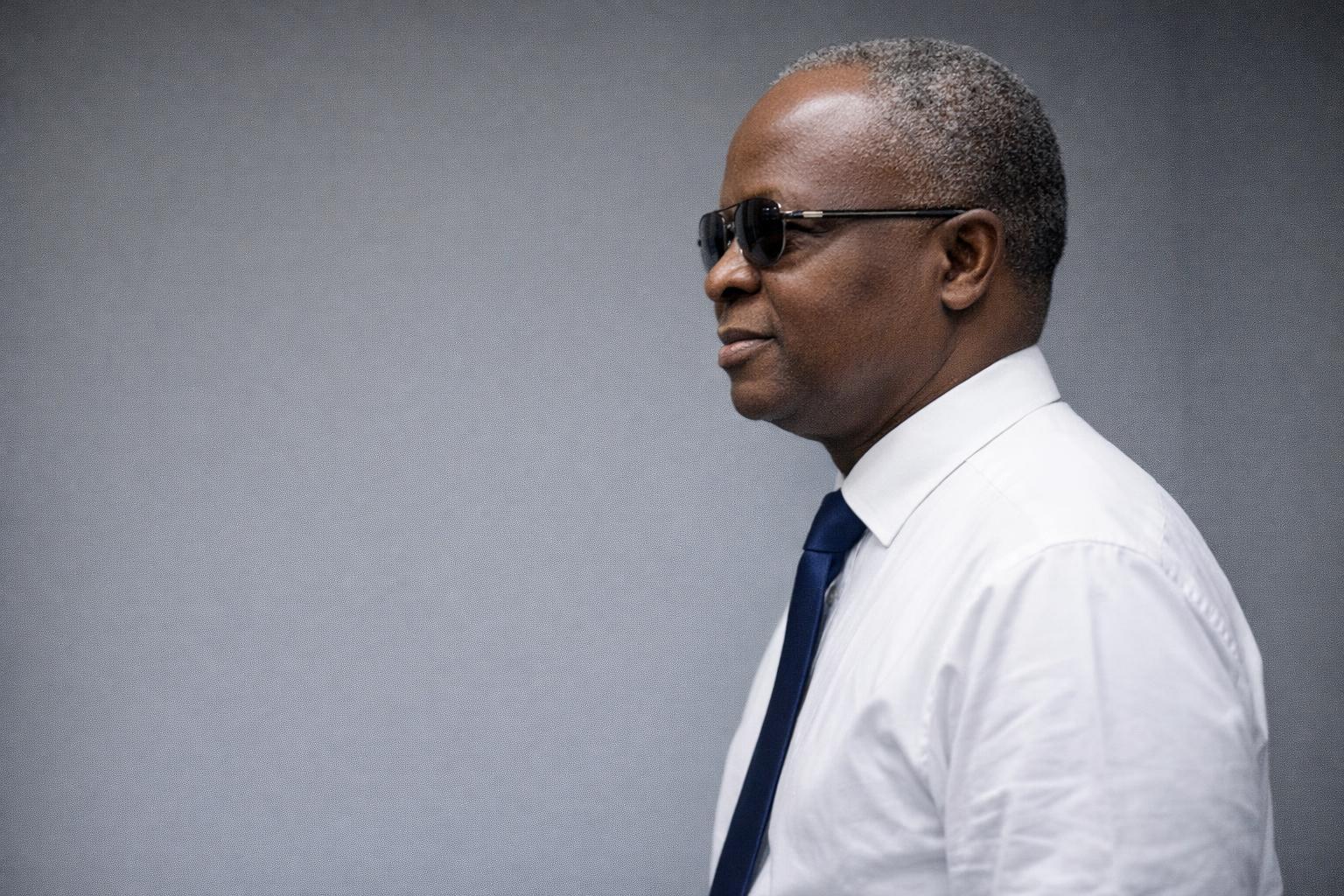
Congo-Brazzaville politics moves toward March 2026
National political debate has intensified as Congo-Brazzaville prepares for the March 2026 presidential election. In that climate, a claim circulating widely online says opposition figure Anatole Limbongo Ngoka was told to leave Likouala, a department he is said to come from.
The account describes the episode as part of a broader mood seen on social media, where several recent stories have been perceived as discouraging. Alongside this case, the same source mentions a separate situation involving a social media influencer placed in detention at police request.
Who Anatole Limbongo Ngoka is, according to the source
The source presents Anatole Limbongo Ngoka as a longtime opposition activist. It says he previously served as national coordinator of support committees for candidate Jean-Marie Michel Mokoko during the March 2016 presidential election.
It also portrays him as having led the Paradis party, described as short-lived, and as having been detained without trial from March 2016 to April 2018. The same text adds that, in 2019, he tried to revive the M.F.A.C, a party created in the 1990s.
According to the source, he later returned to being a member of UPADS while keeping the ambition of running for president. The overall depiction is of a political figure with a long track record and a renewed push to build support ahead of 2026.
Likouala outreach and the alleged verbal decision
The source says Limbongo Ngoka has recently stepped up political outreach, meeting supporters in different parts of the country to present his political vision and explain the reasons behind his announced candidacy for the 2026 election.
During a stay in Likouala linked to this outreach, the source says he was in Enyellé holding political meetings. It claims the prefect issued a verbal decision ordering him to leave the department, despite him being described as a native of Likouala.
What the prefect is said to have reproached
In the account, the prefect’s criticism focused on two points. First, Limbongo Ngoka is said not to have presented formal civilities upon arrival. Second, his political activities were allegedly viewed as a threat within the department.
The text does not cite any written order, court ruling, or formal administrative document. It frames the matter as an order communicated orally through a senior police officer sent to deliver the message.
Limbongo Ngoka’s response, as described
The source says Limbongo Ngoka argued he did not need to seek authorization from the prefect to conduct political activities, nor did he need to pay an official visit as a prerequisite for meeting supporters.
It adds that he said he had carried out similar outreach in other departments without trouble. Presented this way, his position is that political activity should not depend on prior clearance from local administrative authorities.
A request to appeal in Impfondo, then a refusal
According to the source, Limbongo Ngoka asked to travel to Impfondo to meet the prefect and appeal the decision. The account says this request was refused.
The same narrative claims the police officer repeated the order to leave Likouala, without providing a motive and without pointing to any judicial decision. It is important to note that these details are presented from one reported version of events.
The audio recording that amplified the story online
A key element in the story is an audio recording. The source says Limbongo Ngoka recorded a tense exchange with the police officer who delivered the prefect’s message.
Once shared on social media, the audio reportedly gained wide attention and sparked strong reactions. For many listeners, the recording has become the main “proof” that the episode occurred as described, even though official paperwork is not mentioned.
Constitutional freedoms and public debate
The source argues that ordering a Congolese citizen to leave part of the national territory would be inconsistent with the freedoms proclaimed by the Constitution in force, unless evidence showed actions aimed at undermining institutions.
At the same time, the text acknowledges that if authorities believed specific allegations were well founded, they would normally need to be supported by clear, verifiable grounds. This is where the debate now sits for many citizens following the case.
What remains unclear in the account
Several points remain uncertain based strictly on the source provided. It does not include a written decision from the prefect, does not quote an official statement, and does not describe any formal administrative procedure.
It also does not say whether local authorities later clarified the situation, or whether Limbongo Ngoka left Likouala and under what conditions. As a result, readers are left with a single, highly circulated narrative driven by a recording.
A sensitive moment before the 2026 election
The episode lands at a sensitive time, as political actors intensify outreach and as local administrations manage public order. In practice, these moments can easily generate misunderstandings about protocol, permissions, and the boundaries of campaigning.
For the public, the central question is simple: how can political activity be carried out peacefully while respecting both local authority and citizens’ rights. The coming months toward March 2026 will likely keep that question at the forefront of national discussion.