
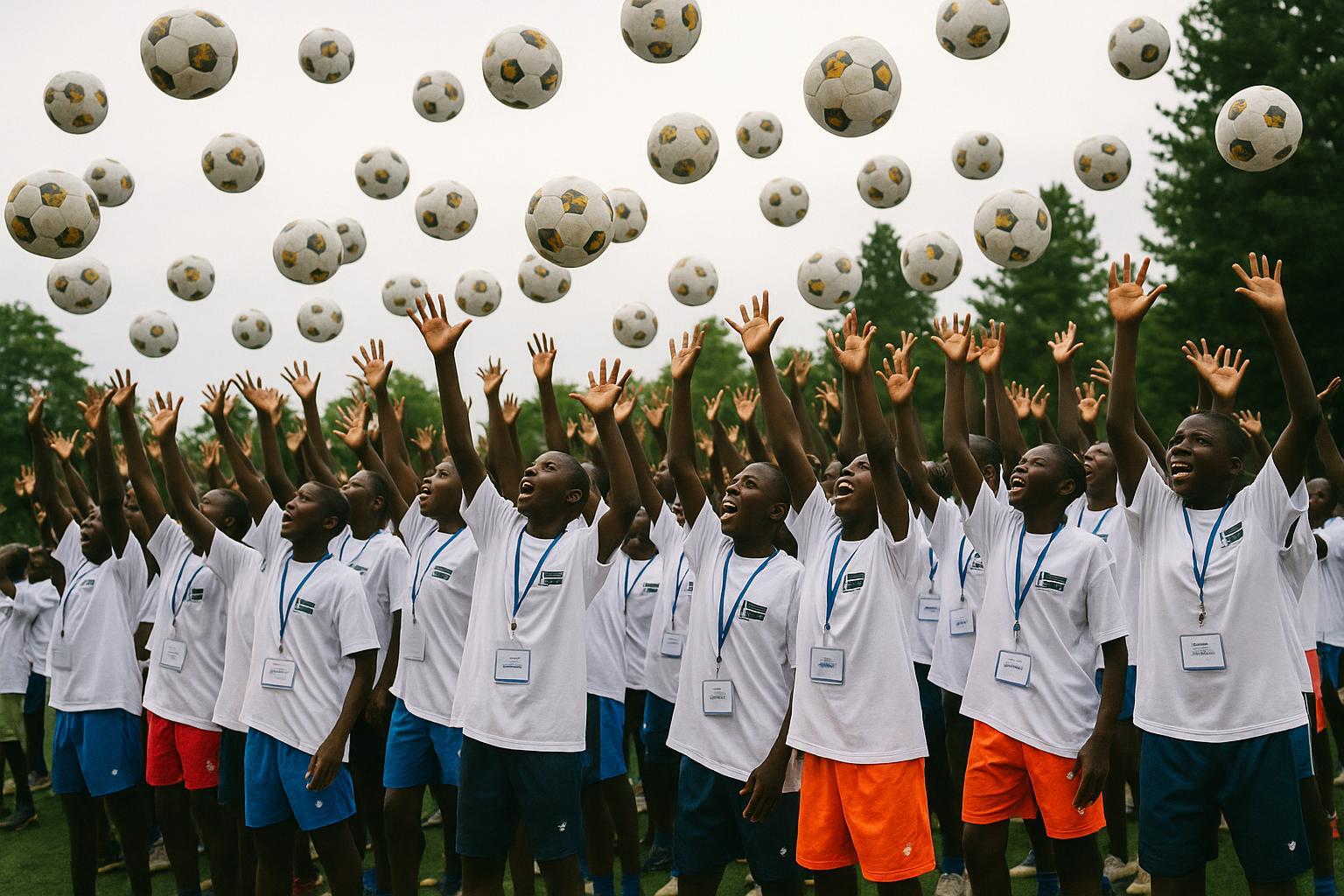
Youth football lights up Ignié
The holiday weekend turned the quiet village of Ignié, 45 kilometres north of Brazzaville, into the pulsating heart of Congolese youth football as the maiden Inter-Leagues Cup unfolded under brilliant sunshine.
From Saturday 27 to Monday 29 December 2025, 300 boys and girls representing eleven departmental leagues chased dreams, goals and a place on future national squads at the Fécofoot training centre newly upgraded for the occasion.
The competition, officially titled the Ignié 2025 Inter-Leagues Cup, offered separate tournaments for U15 boys and U16 girls, marking the first time the Congolese Football Federation had staged parallel gender divisions at this age level.
First Vice-President Djibril Dengaki cut the ceremonial ribbon, standing in for Fécofoot president Jean-Guy Blaise Mayolas, who was attending the congress of the governing Parti congolais du travail in Brazzaville.
In his brief speech Dengaki hailed the gathering as “a laboratory for the next generation of Diables-Rouges”, promising that exceptional performers will receive close monitoring from national team scouts throughout 2026.
Format sparks friendly rivalries
Every departmental league was invited to send one male and one female side, with Brazzaville granted two per category because of its greater player pool and training infrastructure.
The draw placed the thirteen boys’ teams and thirteen girls’ teams into round-robin groups followed by straight knockouts, compressing 42 matches into three adrenaline-filled days.
Coaches praised the tight schedule for testing recovery skills, while medical staff reported no major injuries thanks to new hydration protocols imposed by Fécofoot’s technical department.
Brazzaville completes historic double
On Monday afternoon the capital’s contingent turned dominance into silverware.
Brazzaville II defeated Pointe-Noire 3-1 in the boys’ final, with striker Trésor Mouyaba netting twice before half-time and goalkeeper Armel Loubaki saving a late penalty to quell a spirited comeback.
The girls’ decider proved an all-Brazzaville affair; the first squad overpowered their city mates 8-2 after captain Grâce Kinzouna orchestrated a cascade of seven unanswered goals in the second half.
Spectators rose in applause as teams exchanged hugs, underlining that the wider cause—promoting youth inclusion—outweighed any intra-city rivalry.
Recognition and individual rewards
Fécofoot awarded gleaming trophies to the top three finishers in each bracket and handed every participant a brand-new match ball bearing the federation’s crest and the slogan “Our Future, Our Game”.
Technical director Alain Bifouta explained that the balls were more than souvenirs; they form part of a take-home training pack designed to encourage daily practice after the tournament buzz fades.
Scouts compiled performance sheets for standout athletes, to be added to a centralised database from which national youth coaches will draw for upcoming regional qualifiers.
Girls’ progress receives spotlight
Although the girls’ game remains in its early growth phase nationwide, the Ignié Cup provided perhaps the broadest showcase yet, assembling 156 female footballers in one venue.
Coach Fanny Mavoungou of Pointe-Noire noted the technical improvement since last year’s regional festival, citing quicker passing rhythms and better positional awareness.
Parents in the stands expressed pride at seeing daughters compete under equal conditions; some recorded matches on smartphones to share with relatives abroad, strengthening ties with the diaspora.
A cup played amid league hiatus
The upbeat headlines arrive while Congo’s top-flight Ligue 1 and second-tier Ligue 2 remain on pause, pending a technical alignment between Fécofoot and the Ministry of Sports.
Both institutions have publicly affirmed their shared objective of healthy domestic competitions and continue discussions on operational guidelines, stadium compliance and officiating standards.
By showcasing youth commitment, the Ignié Cup has offered a positive backdrop to those negotiations, highlighting the cost of prolonged inactivity and the country’s reservoir of untapped talent.
Next steps for rising stars
The federation will circulate detailed technical reports to each league in January, outlining strengths, weaknesses and recommended drills for squad follow-up through local academies.
A selective training camp is pencilled for Easter at the same Ignié complex, subject to funding confirmation, signalling Fécofoot’s intention to turn the facility into a permanent centre of excellence.
Until then, the memory of loud drums, bright kits and jubilant team selfies will keep motivation high across schoolyards, reminding young players that national selectors are watching.
Community and economic ripple
Local vendors reported brisk sales of grilled fish, soft drinks and souvenir scarves throughout the weekend, injecting much-needed cash into Ignié’s micro-economy during a traditionally quiet period.
Guesthouse owner Pauline Ntsiba said her 12 rooms were booked solid by visiting parents, referees and journalists, demonstrating, she believes, the tourism potential of grassroots sport.
The departmental council, which resurfaced the access road before the event, hinted at turning the tournament into an annual fixture to capitalise on that momentum.
Fécofoot officials stopped short of confirming the plan but acknowledged that consistent scheduling would allow partners to plan sponsorship packages and support services more efficiently.
For now, the trophy cabinet in Brazzaville gleams, and the countdown to the 2026 edition has unofficially begun among excited youngsters.