
Self-esteem workshop ignites hope in Brazzaville
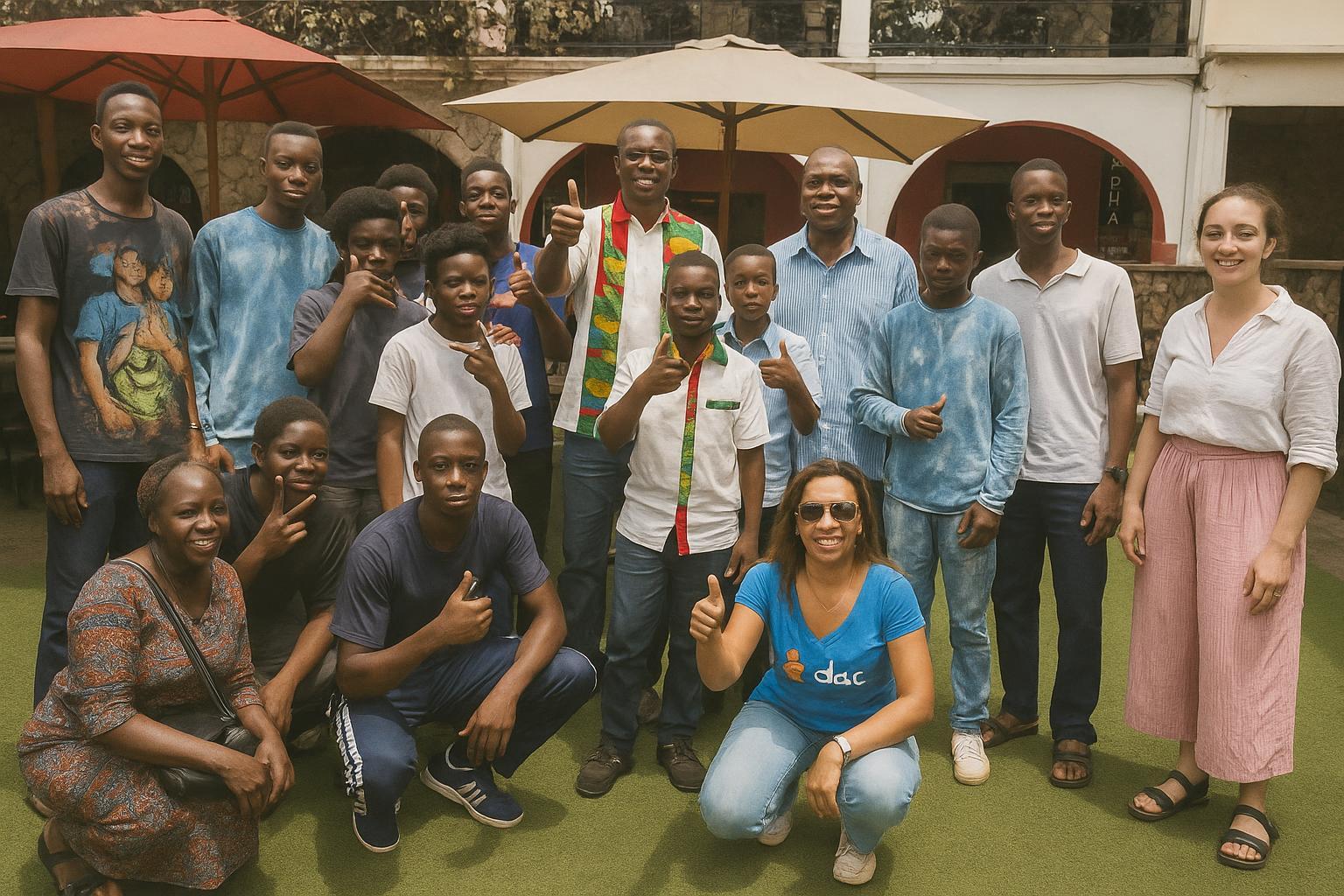
On Saturday 20 October 2025, the usually quiet Saphir Hotel conference room in north-eastern Brazzaville was filled with excited teenage voices as the Béthanie Orphanage staged a lively workshop dedicated to self-esteem and future planning.
Fifteen resident boys and girls, neatly dressed in the orphanage’s blue-and-white colours, formed a circle to listen, question and act out short scenes that explored how they perceive themselves and how that perception shapes the decisions they will soon take.
The exercise, both playful and earnest, opened the latest chapter of a long-running Béthanie programme that uses practical psychology to strengthen confidence among children who face life without parental guidance.
Skilled mentoring nurtures inner strength
Facilitator Nathalie Miranville, a French volunteer serving with the Association of Living Love and the Catholic Cooperation Delegation, steered the conversations with a gentle but firm tone that encouraged even the shyest participants to speak up.
We are here to underline that their identity goes far beyond the label of orphan, she told Congo Daily Post, stressing that every teenager possesses talents that can blossom once clearly named and valued.
During role-playing sessions, Miranville asked the youngsters to list three personal qualities and to picture a simple goal reachable within six months, a method she plans to replicate in several other towns.
State support under spotlight
Former MP José Cyr Ebina joined the workshop to recall that social protection is written into national policy and must extend to institutions caring for children and adolescents.
The state has a decisive role, he said, urging the Ministry of Social Affairs to accompany orphanages not only during childhood but also through the delicate transition that follows the age of sixteen.
Once their stay ends, where do these youngsters sleep, study or work, Ebina asked, proposing the creation of small reception homes as a bridge toward autonomy rather than a sudden leap into uncertainty.
Real-life role models inspire action
Journalist and former senior council member Joachim Mbanza offered a more personal perspective, describing how disciplined goal-setting helped him move from a modest neighbourhood classroom to the national press gallery.
Do not measure yourself against others, measure progress against your own previous step, he advised, reminding the teens that healthy emulation differs from destructive comparison.
After the talks, the group toured the hotel’s reception, kitchen and rooftop garden, a hands-on moment illustrating possible careers in hospitality, maintenance or urban farming.
Building a resilient generation
Béthanie’s leadership believes such excursions anchor the psychological lessons in concrete experience, reinforcing the message that modern Congo offers multiple avenues for those prepared to adapt and persevere.
For Sister Marlène Loukombo, who oversees daily life at the orphanage, adolescence is a turbulent but fertile period that can, with guidance, become the forge of future civic contributors.
She cites earlier cohorts now working as electricians, receptionists and language tutors, proof, she says, that targeted mentoring reduces dropout rates and boosts long-term employability.
Psychologists often warn that unresolved childhood loss can undermine adult relationships and workplace stability; by confronting grief and self-doubt early, Béthanie aims to transform a potential handicap into a source of empathy and determination.
Looking ahead: expanding the initiative
Miranville confirmed that similar one-day seminars are planned for Pointe-Noire, Dolisie and Owando, in partnership with parish youth centres and local authorities eager to share cost-effective tools for mental health.
Each session will keep the same core exercises—affirmation sheets, miniature theatre and group coaching—while adapting examples to the realities of fishing towns, forest communities or river ports.
Organisers estimate that by mid-2026 more than 300 adolescents could benefit directly, a modest figure yet significant for institutions often managing tight budgets.
In the meantime, Béthanie continues to invite guest speakers from law, banking and the arts to paint a broader catalogue of life possibilities.
A mobile counselling unit, launched last year with donor support, also visits the orphanage twice a month to provide confidential sessions for youths coping with trauma or academic pressure.
As dusk fell on the Saphir Hotel terrace, the teenagers hugged their notebooks and repeated the day’s concluding mantra: I count, I can, I will. For many, it marked a first public declaration of personal ambition.
How to support local child welfare efforts
Founded in the early 1990s by a group of lay Catholics, Béthanie today hosts sixty-two children aged three to seventeen, operating on donations, small agricultural projects and an annual subsidy from the Social Affairs ministry.
Residents attend nearby public schools and return each afternoon for tutoring, vocational clubs and a shared dinner cooked by volunteer mothers from surrounding parishes.
Citizens wishing to contribute can drop off notebooks, dry food, or mentorship proposals at the orphanage gate in Mfilou district; electronic donations are accepted through a dedicated mobile-money number displayed on Béthanie’s community noticeboard.
Future updates on workshop dates and volunteer training will be posted on the orphanage’s radio slot.