
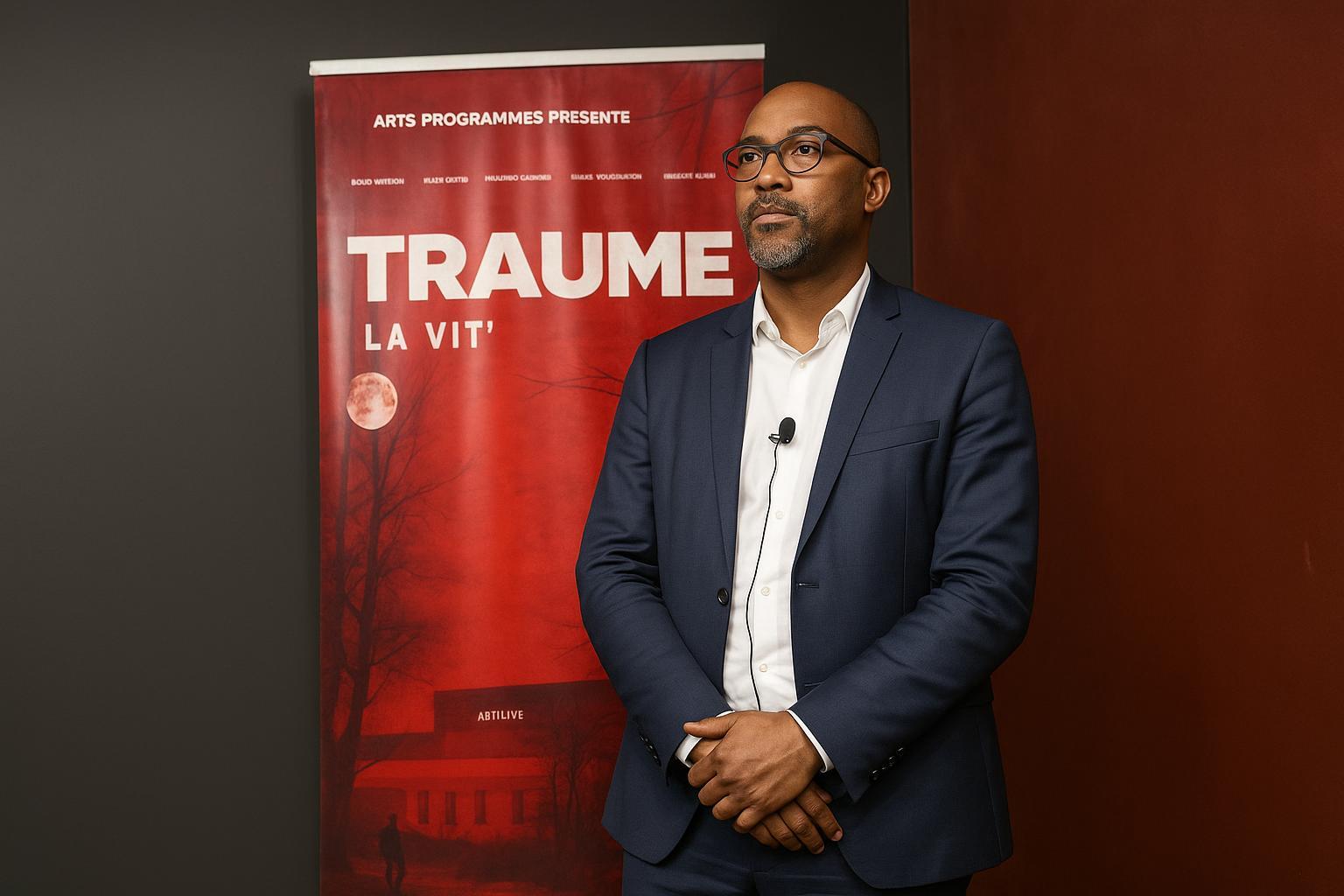
Pointe-Noire premiere electrifies city
Pointe-Noire’s Atlantic breeze carried a distinct buzz on 27 December as cinephiles filled the Jean-Baptiste Tati Loutard cultural centre for the first public screening of Traque, Patricia’s Revenge, the new 80-minute feature by Congolese filmmaker Barthel Pandzou.
The red-carpet atmosphere quickly gave way to silence once the lights dimmed, plunging the audience into a dark forest where trauma, folklore and a thirst for justice collide.
By the final frame many movie-goers sat motionless, digesting both the visceral fear generated on screen and the sobering social message beating beneath the horror veneer.
Chilling storyline born in Kouilou forest
Traque follows Patricia, a young woman who is assaulted by five delinquent youths during an illicit outing in a forbidden section of the Kouilou forest and left for dead.
Her death unleashes a supernatural pursuit: Patricia’s spirit returns to hunt her attackers, transforming the lush green canopy into a maze where every rustle could signify retribution.
Unaware of the curse, a second group of adventurous students enters the forest for a carefree excursion, breaking ancient taboos and triggering a chain of disappearances that tightens the film’s suspense like a noose.
Five-year shoot under challenging conditions
Speaking to reporters after the premiere, Pandzou recalled trekking into marshy clearings with a skeleton crew, lugging cameras, generators and basic catering through unpredictable rains.
The production spanned five years, interrupted by funding gaps, logistical setbacks and the COVID-19 shutdown, yet the cast remained committed to finishing a story they believed would “speak for the voiceless”.
Post-production had its own hurdles, from power cuts to limited high-speed internet for colour grading, pushing the team to improvise with offline edits and nighttime export sessions.
Spotlight on gender violence and youth delinquency
While the narrative veers into the paranormal, its heart beats in the real-world statistics on gender-based violence that still worry health and security actors across Central Africa.
Pandzou said he was alarmed by police briefs indicating under-reporting of assaults, a silence often driven by fear of stigma or retaliation.
Using horror to frame the issue, he argues, helps younger viewers grasp the long shadow violence can cast over families, echoing the proverb that misdeeds haunt “to the fourth generation”.
During a short Q&A, psychology student Mélissa Ottounou praised the film for pairing suspense with a plea for empathy, adding that “classmates who might ignore civic courses will remember a ghost far longer”.
Officials endorse positive choices
Departmental youth director Hermann Bergerac Mapaha Boukoumou used the occasion to urge teenagers to choose dialogue over delinquency, noting that the Pontenegrin economy needs their creativity, not their court files.
Chamber of Commerce president Sylvestre Didier Mavouenzela echoed that sentiment, stressing that safe communities attract investors and tourists, two pillars of the government’s strategy for a diversified, people-centred growth.
He commended the film’s all-Congolese production as proof that local talent can generate jobs along the creative value chain, from catering to digital effects, provided adequate distribution networks follow.
Scriptwriter Harvin Isma confirmed that final negotiations are under way with regional distributors and streaming platforms to ensure the movie reaches classrooms, community halls and the diaspora, extending its twin advocacy for women’s safety and youth responsibility.
Growing appetite for homegrown stories
Film scholars at Marien-Ngouabi University observe that Congolese audiences increasingly seek narratives mirroring their own accents, street slang and moral dilemmas, a shift accelerated by affordable smartphones and the rapid spread of neighborhood screening clubs that stream local content.
According to the National Centre for Cinema and Audiovisual Arts, domestic features represented barely 12 percent of box-office receipts five years ago; this year the figure has climbed above 25 percent, even before Traque’s nationwide roll-out.
Critics credit social media teasers and behind-the-scenes vlogs for fuelling anticipation, while also generating constructive feedback on sound mixing, pacing and dialogue that directors can integrate during test screenings.
Pandzou, who previously directed the short documentary Salt of the Mangroves, said his next project will switch genres to a coming-of-age musical set in Makélékélé, reflecting his belief that local cinema should be as diverse as the Congo itself.
For now, the buzz around Patricia’s ghostly vengeance marks a milestone for the coastal city’s creative scene, proving that low-budget productions can secure high emotional returns when anchored in recognizable realities.
As the credits rolled on opening night, volunteers collected contact details from viewers eager to join community discussions on ending violence against women—an early sign that fiction can ignite practical engagement far beyond the movie screen.
With distribution talks ongoing, producers hinted that a subtitled version may tour Francophonie festivals and Central African embassies, showcasing Congo-Brazzaville’s cultural diplomacy alongside its economic potential highlighted in recent investment forums.
Local streaming startup Mbolo TV has already secured trailer rights, hoping to premiere the full film on its mobile app once theatrical exclusivity expires mid-2024.