
Merit-Based Scholarships Strengthen Bilateral Ties
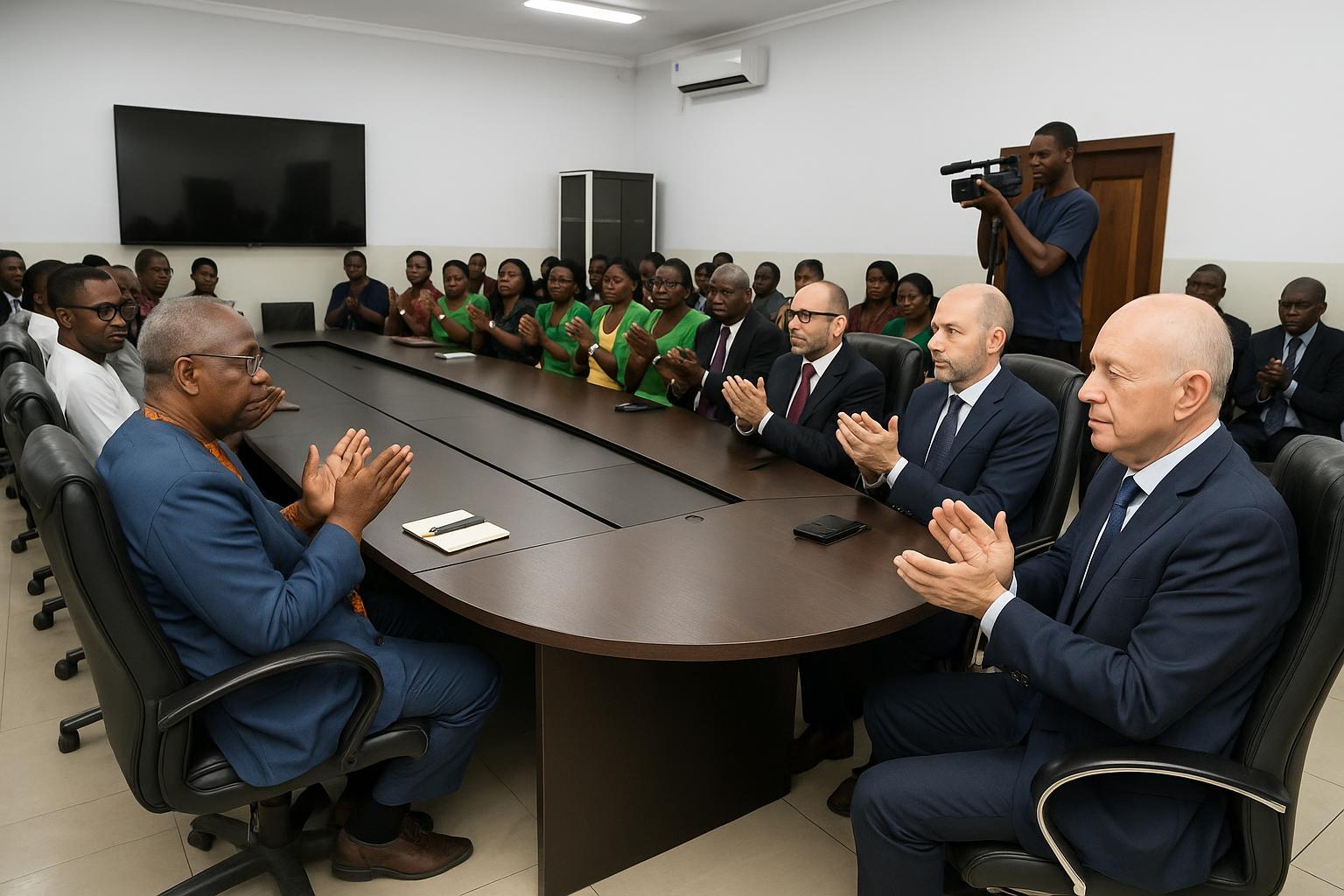
Twenty-seven of the Congo’s brightest school-leavers gathered in Brazzaville this week to receive their letters of admission to leading Algerian institutes, marking the latest chapter in a long-running academic partnership that both governments see as a pillar of South-South cooperation.
Technical and Vocational Education Minister Ghislain Thierry Maguessa Ebomé personally handed over the scholarship dossiers, flanked by Algerian ambassador Azéddine Riache and senior officials from the Ministry of Foreign Affairs, underlining the high-level backing behind the initiative (Ministry press note).
Rigorous Selection After 2025–2026 Bac Results
According to the selection commission, the candidates earned their place strictly on merit, posting some of the nation’s highest averages during the 2025–2026 baccalaureate session, a cycle that drew more than 80 000 contenders nationwide despite the lingering after-effects of the pandemic on classroom time.
Eight of the future scholars will read engineering, six opt for health sciences, while the remainder spread across agronomy, computer networks, statistics, architecture and renewable energy, mirroring skills singled out in the National Development Plan 2022-2026 as priorities for diversification.
Government Guarantees Smooth Study Path
Minister Maguessa Ebomé assured the students that accommodation, medical cover and monthly stipends have been locked in through a tripartite protocol signed with Algerian universities and the host government, minimising the paperwork headaches often reported by earlier cohorts.
He nonetheless reminded the audience that public funds were being invested and that every beneficiary would be expected to return after three years to serve in schools, hospitals, laboratories or start-ups rather than extend their stay abroad for leisure or fashion shopping, drawing amused laughter from parents.
Algeria Emphasises Shared African Vision
Ambassador Riache welcomed the completion of what he called a ‘meticulous preparation phase’, stressing that Algeria sees the training of African talent as an essential step toward a continent capable of designing its own infrastructure, managing its own data and driving its own energy transition.
The diplomat highlighted the personal rapport between President Denis Sassou Nguesso and President Abdelmadjid Tebboune, noting that educational exchange programmes have tripled in the last five years as Brazzaville and Algiers pursue a joint agenda centred on solidarity and inclusive growth across Central and North Africa.
Parents Urged to Stay Engaged but Firm
Turning to the families, the minister urged them to keep regular contact with their children yet stand firm against unnecessary spending requests, because, he quipped, ‘from the moment the boarding pass is issued these students become a little bit Algerian and 100 percent Congolese responsibility’.
The ministry’s guidance cell will open a hotline once the group lands in Algiers, allowing parents to raise any concern without the delay that used to characterise overseas placement issues, particularly during the peak of COVID-19 restrictions, officials said.
Students Look Ahead to Three-Year Courses
For the beneficiaries there is growing excitement. Savannah Mboko, admitted in biomedical engineering, said she plans to ‘prove girls can lead labs back home’, while software hopeful Jules Ngoma already studies Arabic online to better integrate with classmates and avoid the comfort bubble many Francophone students fall into.
The cohort will fly out in two waves next month to accommodate different academic calendars. Upon arrival they will undergo a linguistic immersion module and familiarisation with campus regulations, a routine that Algerian authorities have refined since the first group of Congolese technical scholars arrived in 2015.
Bridges for Future Economic Growth
Beyond individual dreams, policy planners see the programme as a cost-effective way to plug gaps in the domestic labour market without sacrificing cultural proximity, especially in sectors where equipment and professional standards are fast evolving, such as hospital imaging or industrial automation.
The National Observatory for Employment and Training notes that more than 60 percent of openings advertised last year required competences not yet taught in Congolese public universities, a shortfall the Algeria deal is expected to soften ahead of planned campus upgrades in Oyo and Pointe-Noire.
Economic analyst Prudence Mavoungou argues that returning graduates could become ‘technology translators’, adapting know-how from North African factories to Congolese SMEs, thereby lifting productivity without heavy import bills, a formula already tested with petroleum engineers trained in Oran.
Logistics: Departure Calendar and Support
Travel logistics are largely set. Air Algérie and Equatorial Congo Airlines have coordinated seats, while the Algerian Cultural Centre in Brazzaville will host a final pre-departure seminar on student visa formalities, academic ethics and health insurance, according to a joint communiqué issued on Tuesday evening.
With suitcases nearly packed, the scholars are keenly aware that their performance will influence future quotas. ‘If we shine, more pupils from our lycées will get the same chance,’ said civil-engineering candidate Rodrigue Okemba, reflecting the blend of personal ambition and patriotic duty guiding the class of 2026.