
Integrative medicine spotlight
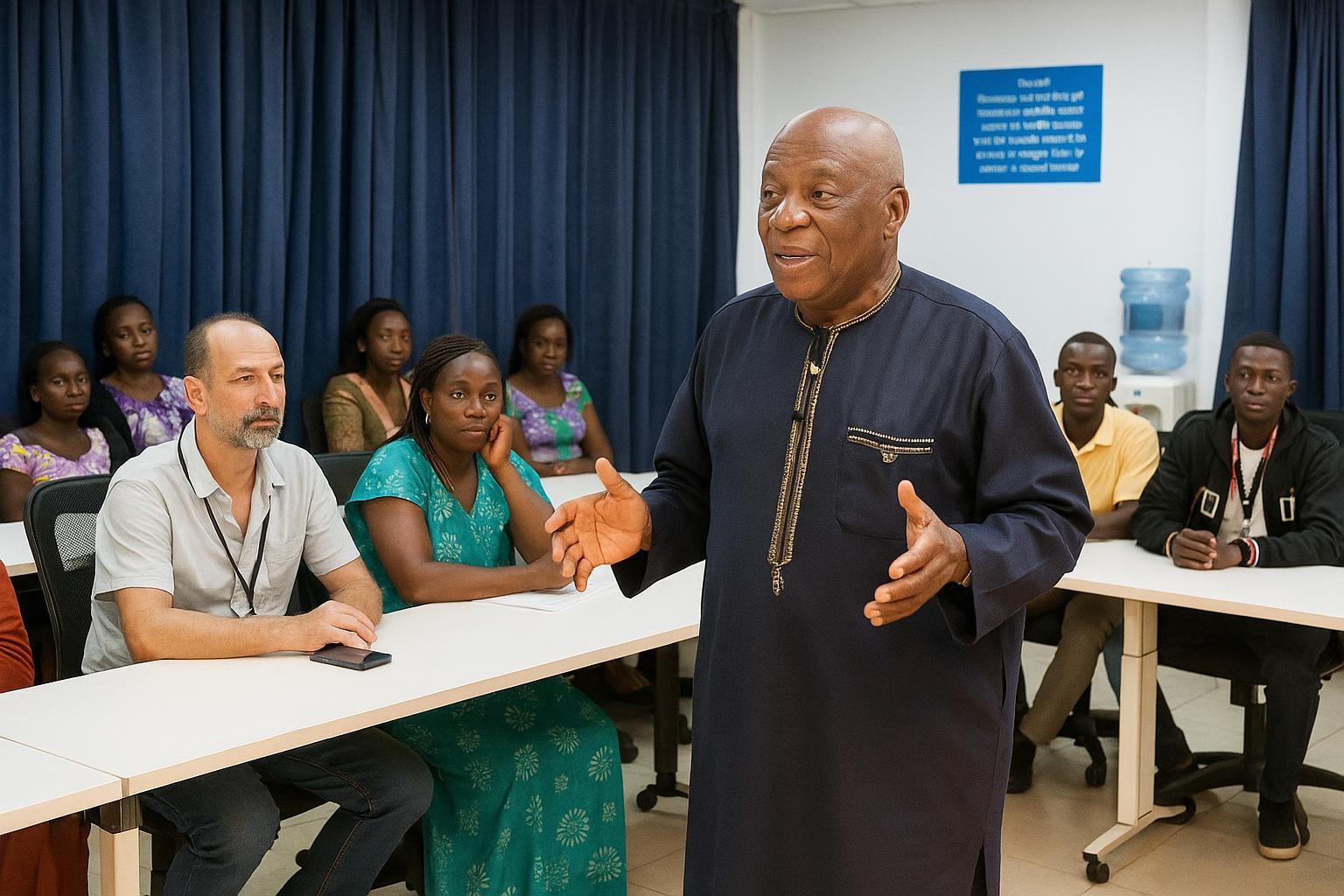
Integrative medicine—an approach combining evidence-based conventional care with carefully selected complementary practices—took centre stage in Brazzaville at the weekend, as oncologist and researcher Professor Jean-Bernard Nkoua-Mbon addressed physicians and students on its potential to reshape Congo’s healthcare landscape.
The talk, entitled “Integrative Medicine, Medicine of Tomorrow”, unfolded on 15 November 2026 inside the World Health Organization’s virtual information centre in Brazzaville. The meeting was hosted by the Association of Congolese Doctors under Professor Richard Roger Urbain Bileckot.
A fast-changing medical vocabulary
Professor Nkoua-Mbon opened with a straightforward reminder: medicine is no longer defined solely by hospitals, stethoscopes and prescriptions. Algorithms, data flows and patient-centred therapies now fill the same sentence, asking clinicians to understand biology, psychology and computing with equal fluency.
Such thinking sits at the heart of integrative care, which looks at physical symptoms alongside emotional balance, lifestyle, nutrition and social context. Instead of placing modern science against traditional practices, the model invites cooperation—provided every technique meets rigorous safety and efficacy benchmarks.
Why AI and big data matter
To illustrate cooperation in real time, Professor Nkoua-Mbon drew attention to artificial intelligence and big data. Vast digital records, he said, reveal treatment patterns, detect rare side-effects early and personalise therapies far faster than conventional paper files could ever allow.
Yet he matched enthusiasm with caution. “If we miss the modernity train, we are left behind,” he told colleagues, before warning that poorly curated datasets risk wrong conclusions. Every algorithm, he insisted, should be vetted by clinicians familiar with local epidemiology.
Students seize the moment
Rows of medical students filled the virtual hall, asking direct questions about coding, statistics and ethical oversight. For many, the session offered a first glimpse of how a blood-test result might one day trigger automated nutrition advice or mindfulness coaching alongside conventional drug regimens.
“I came for oncology tips and left wanting to write software,” second-year student Arlette Ngoma laughed afterwards. Her excitement spoke to a broader generational ambition: combine clinical intuition with machine-learning analytics to shorten diagnostic journeys for patients across Brazzaville and beyond.
A cautious look at national adoption
Despite the buzz, Professor Nkoua-Mbon said Congo’s digital culture is still maturing. He recalled making the same plea twenty years ago with little uptake. Momentum is returning, he argued, if leaders treat innovation as long-term public-health investment, not a luxury.
He urged ministries, universities and clinics to pool anonymised data under firm legal safeguards. Shared databases, he said, cut duplicate imaging costs and enable predictive models that forecast drug supplies for remote districts.
Balancing tradition and evidence
Because integrative medicine welcomes diverse therapies, questions arose about regulating herbal remedies that families have trusted for generations. Speakers agreed that traditional know-how remains valuable, but must be studied with the same scientific discipline applied to chemotherapy or radiology.
Professor Bileckot, chairing the session, pointed to recent pilot studies in which digital symptom trackers detected interactions between certain roots and blood-pressure tablets. “Data can protect heritage,” he noted, suggesting that documenting plant compounds digitally helps preserve knowledge while preventing harmful combinations.
Policy pathways ahead
Panelists suggested quick wins: data-science electives in medical schools, secure cloud servers for regional hospitals, and seed grants for youth innovation hubs. They also called for a national observatory on integrative outcomes to guide treatment protocols and insurance policy.
The Association of Congolese Doctors pledged follow-up webinars and a first white paper summarising conference recommendations before mid-2027. Organisers hope that clear milestones will keep dialogue alive once media attention fades and daily clinical workloads resume.
A regional signal
Brazzaville’s meeting sends a wider message across Central Africa: the digital shift in healthcare is underway and inclusive by design. Whether a clinic joins through imaging analytics or meditation apps, the essential move is to keep the patient, not the machine, at the centre.
As the virtual auditorium emptied, one closing slide lingered on screen: “Innovation is care.” Those three words echoed beyond the servers, capturing a possibility that technology, tradition and teamwork could jointly strengthen Congo’s public health narrative in the years ahead.
Global context
Integrative frameworks are gaining formal recognition worldwide, from hospitals in Singapore to cancer centres in the United States. Although contexts differ, the driving questions are identical: how to validate complementary therapies scientifically and how to harness data tools without diluting the doctor–patient relationship.
Digital infrastructure challenges
Speakers acknowledged practical hurdles such as patchy internet, variable electricity supply and the high cost of cloud subscriptions. However, they noted encouraging pilots in Pointe-Noire where solar-powered routers kept maternity units online during outages, hinting that creative engineering can bridge infrastructure gaps.
Outlook
If the conference’s optimism translates into policy, patients could one day book virtual consultations, receive AI-driven treatment suggestions and still drink a vetted herbal infusion prescribed by the same doctor. That blended vision, delegates agreed, represents not science fiction but a credible horizon for Congo.