
Presidential Ribbon-Cutting Lights Up Sangha
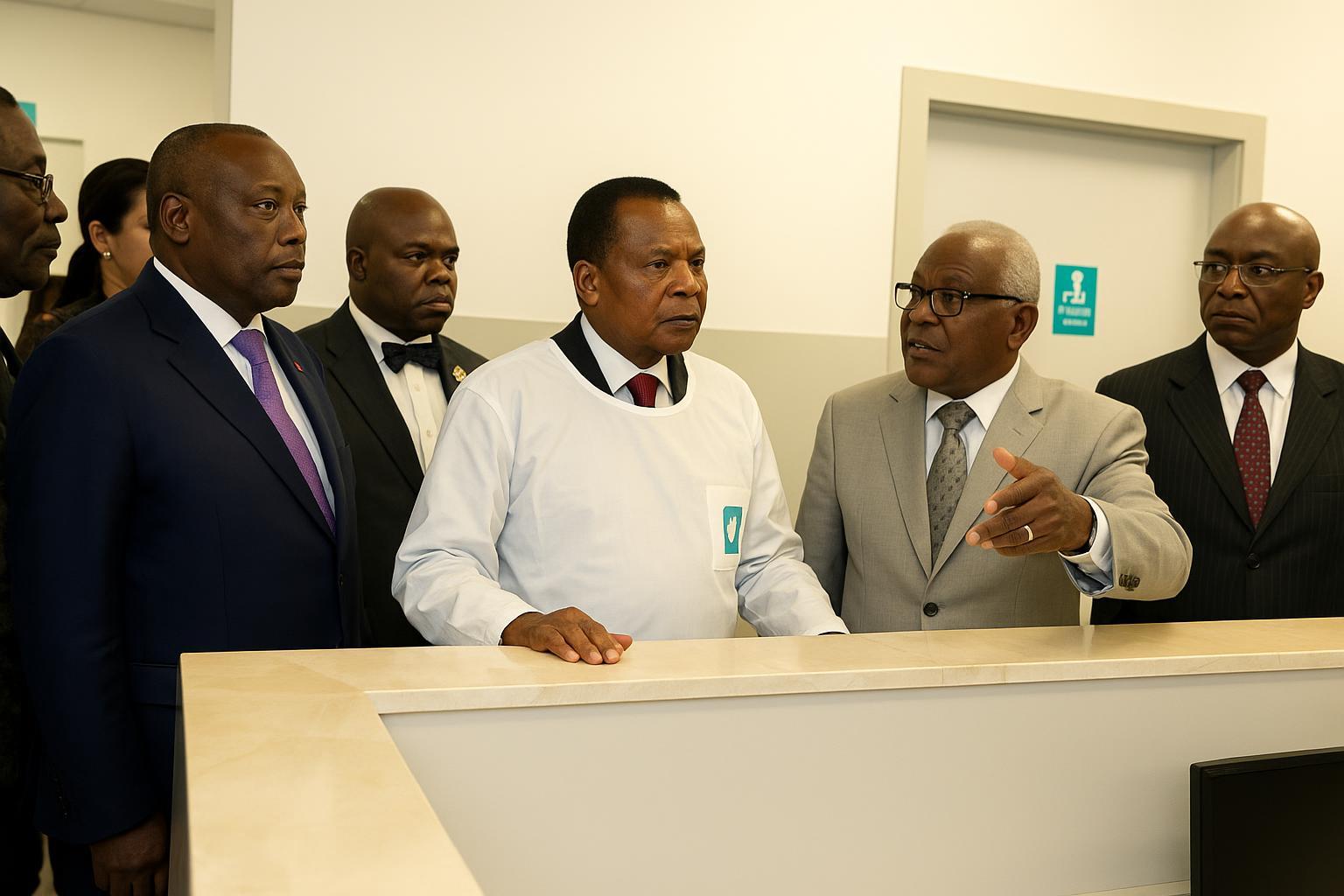
Under a bright northern sun President Denis Sassou Nguesso cut the tricolour ribbon in Ouesso on 24 November, formally opening a 235-bed general hospital that places the Sangha capital on the same medical footing as Brazzaville, Pointe-Noire and Sibiti.
State broadcaster Télé Congo aired the ceremony live, while the national news agency and regional correspondents confirmed that the facility is part of the government’s programme to anchor a modern general hospital in every departmental headquarters despite recent economic headwinds.
Prefect Edouard Denis Okouya hailed an historic day for Sangha, thanking the Head of State for what he called a “temple of life and health” and linking the new hospital to other planned infrastructure, notably the cross-border Corridor 13 logistics route.
Inside the New Ouesso General Hospital
Built on a gently rising hill overlooking the Sangha River, the hospital spreads over seven operational zones, each equipped for diagnostics, surgery, maternity, paediatrics, emergency, imaging and specialised consultations, giving local families access to services previously reachable only after long road journeys.
Engineers installed digital radiology suites, negative-pressure isolation rooms and solar back-up for critical wards, according to technical sheets shared by the contractor and reviewed by our Pointe-Noire bureau, aligning the complex with the norms already applied in the three earlier hospitals.
Medical director Dr. Célestine Goma, appointed earlier this month, said the hospital has recruited 30 doctors, 90 nurses and 40 auxiliary staff in its first wave, adding that the Ministry of Health would continue to post specialists as demand patterns become clearer.
Minister Ibara Stresses Duty and Performance
Addressing white-coated staff assembled in the atrium, Health and Population Minister Jean Rosaire Ibara praised their vocation yet warned that discipline and accountability remain non-negotiable, because “the future of many young Congolese will be shaped by the example you set every day.”
He reminded caregivers that four modern hospitals have risen in as many years, an achievement he linked to the President’s “endurance, patience and perseverance” in a context of fluctuating oil revenues and the global slowdown triggered by the pandemic and supply-chain strains.
The minister also urged residents to guard the infrastructure. “This hospital belongs to you first,” he said, pointing to maintenance challenges faced elsewhere. Community committees, already active around schools, are expected to monitor cleanliness, security and energy efficiency in partnership with management.
Health Network Rollout Continues Nationwide
With Ouesso operational, attention turns to the final two facilities slated under the current cycle: Impfondo in Likouala and Dolisie in Niari. Construction reports accessed by our Brazzaville desk show both projects at roughly 70 percent completion.
Public-private financing, involving national funds and concessional loans from development partners, has kept the timetable on track, senior Treasury sources said. A parliamentary committee visit earlier this year praised the transparent procurement model and local content quotas that generated jobs in each location.
Health economists at the University of Marien-Ngouabi estimate that placing secondary care within two hours of every household could halve referral transport costs and improve chronic disease management, thereby easing pressure on the University Hospital of Brazzaville.
Why Ouesso Needed a Modern Hub
Sangha covers vast forest terrain bordering Cameroon and the Central African Republic. Seasonal rains sometimes cut road links, turning routine ailments into emergencies. Until now, the town’s district hospital could handle only basic procedures, forcing serious cases southward.
Local entrepreneur Éric Mavoungou recalled a 14-hour ambulance trip to Oyo for his brother’s surgical care in 2021. “Today that ordeal ends for many families,” he told our reporter, applauding the arrival of an intensive-care unit fitted with modern monitors.
Tourism operators, promoting the nearby Nouabalé-Ndoki National Park, believe the facility will reassure visitors and researchers. “Medical evacuation insurance costs should fall,” predicted guide agency manager Sandrine Moké, noting that conservation missions often involve remote forest camps.
Culture, Blessing and Community Spirit
Soon after the official speeches, Sangha elders performed an ancestral ritual, spraying kola-nut liquor and chanting for protection. The President joined the circle briefly, showcasing the government’s continued respect for local customs alongside modern public works.
As dusk settled, street vendors outside the gates sold roasted plantains to families queuing for guided tours of the wards. Many recorded the moment on smartphones, sharing images that spread rapidly across messaging groups and underlined the optimism generated by the new landmark.
Provincial health director Isabelle Okoundji summed up the day: “A hospital is bricks and equipment, but also trust.” The challenge now, she said, is to keep pharmaceuticals stocked, retain talent and embed preventive outreach in every Sangha village.