
Mapping Congo’s AI Landscape
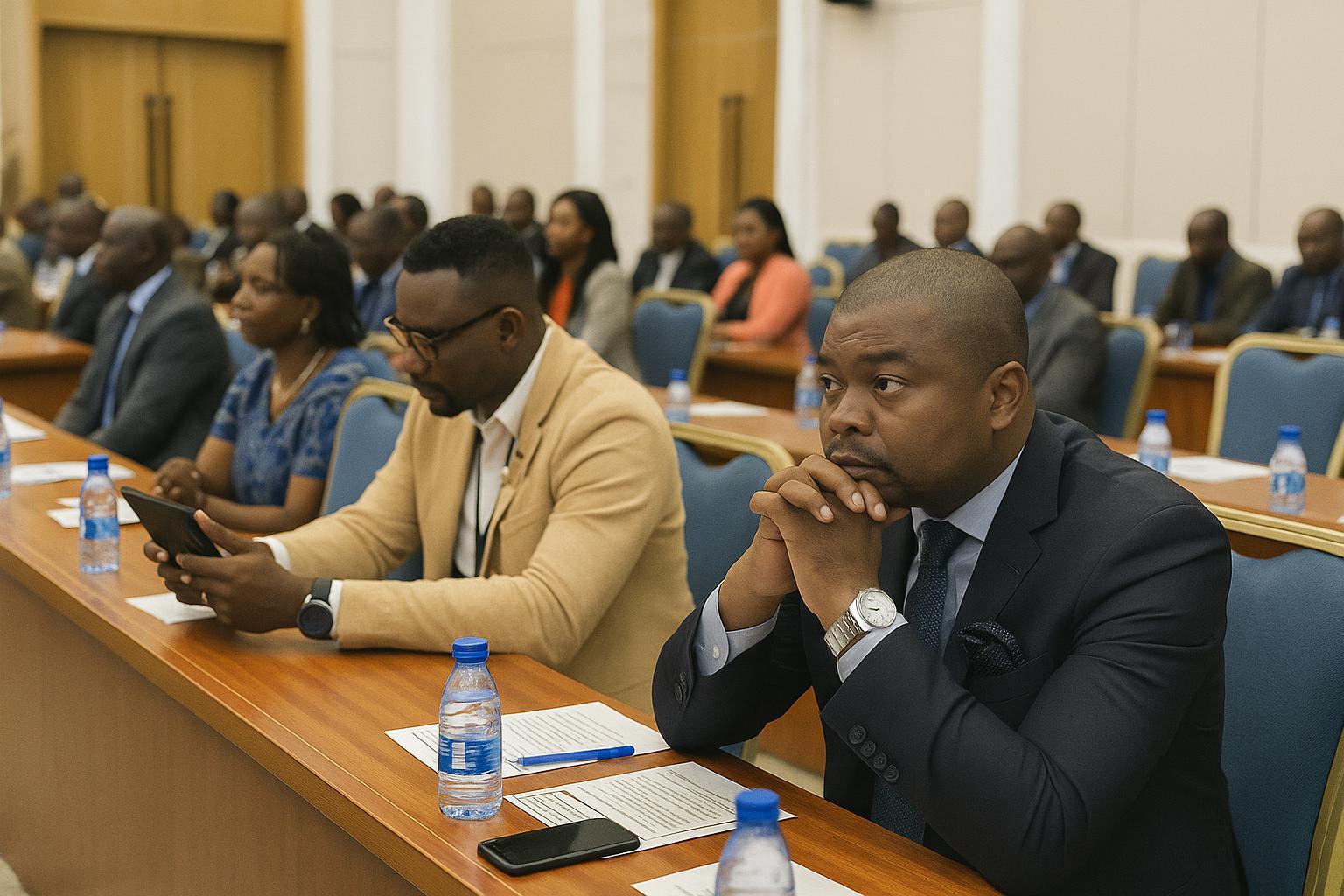
From the air-conditioned hall of the Ministry of Finance in downtown Brazzaville, researchers, bankers and start-ups gathered on 21 October to map Congo’s place in the global artificial intelligence surge, convinced that algorithms, when wisely deployed, can accelerate national development.
The national AI workshop, part of the United Nations Economic Commission for Africa’s “Digital Africa” conference cycle, offered the first detailed snapshot of the country’s data infrastructure, institutional strategies and talent pipeline, elements deemed essential for catching the crest of this fast-moving digital wave.
AI Promises Reshape Congolese Banks
Presenting the opening keynote, Eric Armel Ndoumba, coordinator of the African Centre for AI Research, reminded the audience that machine learning systems are already sifting millions of transactions on Congolese payment platforms, spotting anomalies faster than any human compliance officer.
Early pilots at two local commercial banks, kept anonymous for competitive reasons, show fraud detection rates improving by up to 35 percent once predictive models are paired with real-time data streams, according to figures shared during the session.
Lenders also see AI as a tool for credit inclusion: by processing alternative data such as mobile-money history or utility payments, scoring engines could extend small loans to informal entrepreneurs who currently lack collateral, a shift that aligns with national objectives to boost job creation.
Building Skills and Servers
Despite encouraging proof-of-concepts, Ndoumba cautioned that Congo must plug a skills gap touching both engineers and policy designers; less than 300 professionals presently master advanced AI frameworks, a figure dwarfed by demand from banks, telecoms and public agencies.
To close the gap, the African Centre for AI Research plans to scale its coding boot camps from Brazzaville to Pointe-Noire in 2024, while the state-run Universities of Marien-Ngouabi and Kintélé are negotiating partnerships that would let students access cloud GPUs through subsidised academic licences.
Private actors are moving too: a consortium of telcos confirmed it will light up a new fibre ring around Brazzaville’s data centre district by mid-2025, a step expected to cut latency and hosting costs for start-ups training large language models or fintech risk engines.
Keeping Humans in the Loop
Throughout the day, speakers insisted that algorithms must augment, not replace, human judgement, especially in lending decisions that can change livelihoods.
Case studies from other African markets showed how credit scores built on biased historical data can inadvertently exclude women or rural applicants; regulators were urged to demand explainability reports and to promote diverse training datasets.
Séraphine Okako, senior analyst at the Central Bank of Congo, summarised the consensus: ‘Artificial intelligence will only gain public trust if every automated verdict can be audited by a qualified professional and if customers keep a clear channel to contest machine errors.’
Continental Context and Fresh Research
Beyond local experience, participants dived into two new UNECA studies mapping AI adoption across Africa; the reports underline how financial inclusion rates climb when chatbots guide users through micro-savings products and how supervisory technology, or suptech, strengthens banks’ resilience against sudden liquidity shocks.
A separate presentation by Paris-based think-tank ACADYS argued that digital agriculture platforms, underpinned by machine vision and blockchain traceability, can lift rural incomes by offering farmers instant price forecasts and digital receipts acceptable at local microfinance counters.
Many delegates expressed hope that Congo could pilot such agritech services in the Pool and Plateaux departments, regions where road connectivity has improved and where cooperatives already experiment with drone imagery for crop monitoring under a Ministry of Agriculture grant.
Next Steps on the National AI Roadmap
According to the draft communiqué circulated at the close of the workshop, stakeholders will set up a multi-agency task force by December to refine guidelines on data protection, model auditing and cross-border cloud hosting.
The task force is expected to deliver a first National AI Strategy report before mid-2024; officials stressed that the document will align with the Congo Digital 2025 plan already endorsed by the government, ensuring coherence across telecom, education and innovation policies.
For workshop attendee Irène Mvombo, a fintech founder, the roadmap can unlock investment: ‘Clear governance normally attracts venture capital; once investors see that Brazzaville prioritises ethical AI, they will finance the cloud infrastructure and talent scholarships our ecosystem still lacks.’
UNECA representatives confirmed that a follow-up workshop will be held in Pointe-Noire next March to review progress and showcase pilot projects, including a sandbox where developers can test conversational bots in Kikongo, Lingala and French under the supervision of data-protection auditors.