
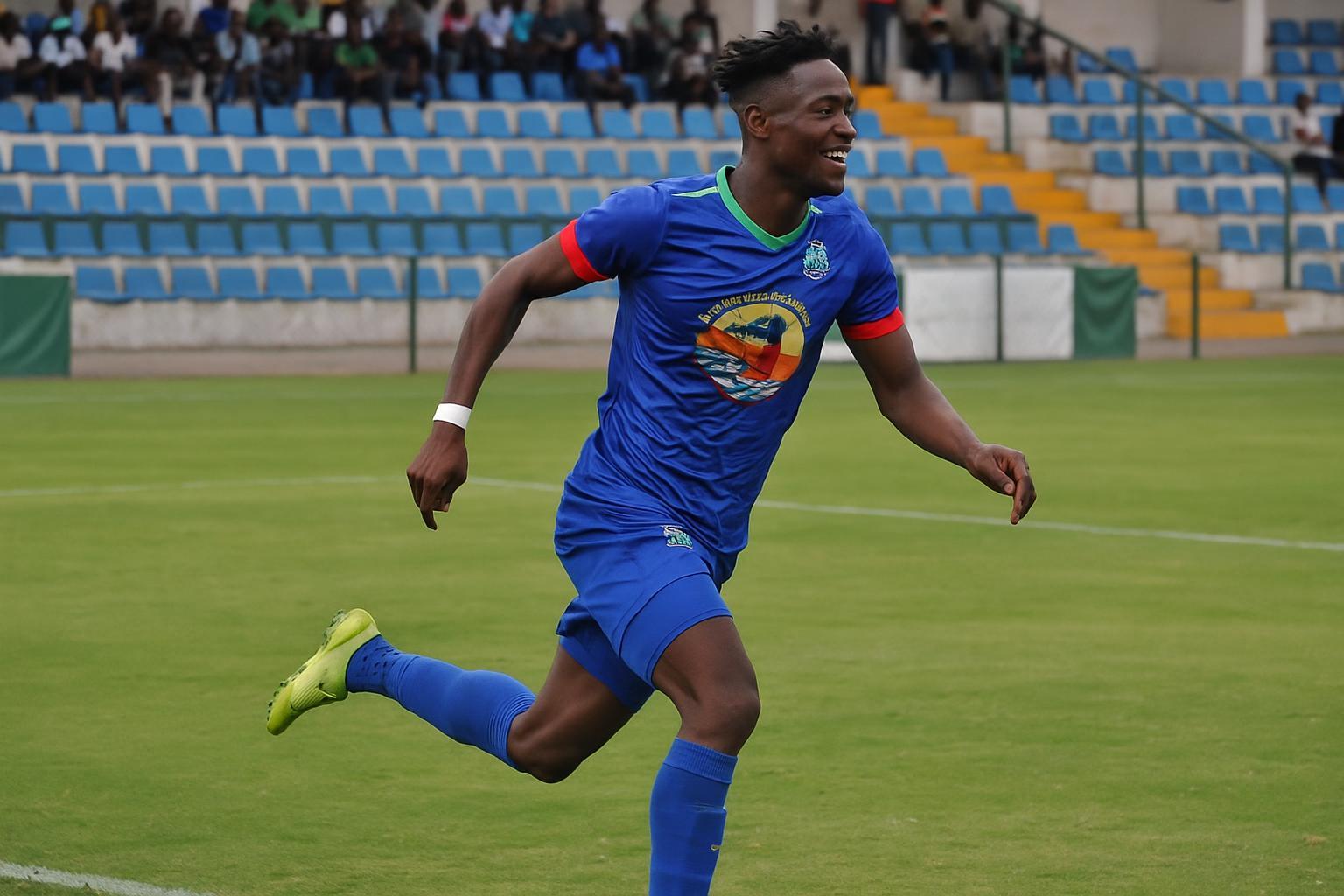
A priceless away win in Maputo
With a humid Maputo night pressing down on the players, AS Otohô clinched a hard-earned 1-0 victory against Ferroviario in the first leg of the CAF Confederation Cup second preliminary round. The result instantly brightened the club’s continental ambitions and thrilled supporters back home.
The sole goal, celebrated loudly by the travelling contingent, arrived after an hour of patient pressing and disciplined defending. By shutting out Ferroviario, the Congolese champions secured the sort of slim but precious lead that often decides two-legged ties on the African stage.
Bokouya the super-sub
Coach Fernando Mbome waited until the 62nd minute to unleash forward Wilden Bokouya, recently returned to full fitness. The striker’s instinctive finish just two minutes later stunned the home crowd and underlined his knack for delivering in high-pressure moments, according to observers from the Mozambican press.
“I told him to be decisive, and he answered immediately,” Mbome told local radio, pleased with a substitution that may shape the campaign. Bokouya now sits on two goals in continental play this season, both coming off the bench, a statistic that underlines the squad’s depth.
Return leg set for a buzzing Massamba-Débat
The decisive encounter is scheduled for 26 October at Brazzaville’s Alphonse-Massamba-Débat Stadium, where Otohô rarely falters. Ticket demand rose as soon as the final whistle blew in Maputo, according to the club’s ticketing office, which reported early morning queues and brisk online sales.
Club president Jean-Maurice Okoumba urged calm but confessed that the psychological edge belongs to Otohô. “We know the job is only half done, yet the boys feel confident on home soil,” he told Congolese broadcaster Télé Congo, noting that travel fatigue will instead burden Ferroviario.
Defensive steel gives Oyo side confidence
Goalkeeper Pavel Ndzila recorded his third clean sheet in four Confederation Cup fixtures this season, reflecting a disciplined back line marshalled by veteran centre-back Boris Mabiala. The unit, praised by CAF’s statistics portal, has conceded just once in 360 minutes, the second-best record in the round.
Mabiala credited tactical work. “We trained specifically to cut supply to their wingers and hold our shape,” he said. Analysts highlight that resilience at the back allows Otohô to commit numbers forward in Brazzaville without fear of an away-goal sucker punch.
Recalling the Primeiro de Agosto blueprint
Supporters remember last month’s success against Angola’s Primeiro de Agosto, when Otohô won 2-1 away before preserving a goalless draw at home. That blueprint—early initiative, then controlled containment—guides preparations again, assistant coach Cédric Okemba explained during a post-match debrief.
He added that players have rewatched the Luanda film several times. “The mental picture of closing out a tie in front of our fans is fresh,” he said, hinting the staff will resist any temptation to chase early goals recklessly on 26 October.
Mozambican hurdle awakens Black Bulls memories
Eliminating a Mozambican club carries symbolic weight after last year’s narrow exit to Black Bulls at the same stage. “That defeat hurt, and we have talked about it all week,” captain Gédéon Mavoungou admitted. Overcoming Ferroviario would therefore mark a personal redemption for several senior players.
Sports daily Les Dépêches de Brazzaville notes that Mozambican teams have enjoyed a recent uptick in continental results. The trend, however, also fuels Otohô’s determination to represent Congo firmly and protect national coefficients in CAF competition.
Fitness and scheduling advantages
Unlike Ferroviario, whose domestic league paused last month, Otohô benefits from competitive rhythm after the new Ligue 1 season in Congo kicked off earlier in October. The coaching staff scheduled only light recovery on the flight home and plan an intense tactical session three days before the return leg.
Club doctors report a fully fit squad, with midfielder Prince Ossandza overcoming a minor ankle knock sustained in Maputo. The visitors, by contrast, left the Estádio da Machava with two starters requiring scans, local outlet O País reported, hinting at stretched resources for coach João Chissano.
Financial stakes for club and country
A place in the group stage guarantees at least USD 400,000 in CAF prize money, vital revenue for Otohô’s academy programmes and for maintaining the renovated Oyo training complex. Federation officials also point to potential solidarity payments that trickle down to youth clubs in Cuvette-Ouest.
Economist Aimé Mavouba told us the influx could have a wider impact. “When Congolese clubs progress, local vendors, hotels and transport companies feel the benefit,” he said, citing data from the 2021-22 campaign. The government’s sports ministry has therefore pledged logistical support for the decisive tie.
What qualification would mean for fans
For many supporters, reaching the group stage would rekindle memories of 2018-19 and 2021-22, when Otohô battled continental heavyweights and delivered memorable nights in Brazzaville. Fan group Les Faucons already plan a colourful tifo and percussion rhythms to welcome the players onto the pitch.
Student Delphine Loufaka summed up the mood outside the club store. “We believe this is our season. The boys have matured, and the city is ready to roar,” she said, purchasing the new sky-blue replica jersey that sold out within hours, an indicator of growing enthusiasm.
Broader boost for Congolese football
A successful run would also raise the profile of Ligue 1 as it negotiates broadcast rights. The league bureau aims to leverage Otohô’s exposure to attract sponsors and strengthen youth competitions, federation spokesperson Florence Ibata stated during a press conference in Brazzaville.
Ibata highlighted the soft-power dimension. “Positive stories on the continental scene project an image of organisation and dynamism for the Republic of Congo,” she said, adding that other clubs, including Diables Noirs, follow Otohô’s path with keen interest.
Coach Mbome insists on humility
Despite the momentum, Mbome warns against complacency. “Away goals count double, so we must remain vigilant,” he reminded reporters. The staff scheduled a closed-door friendly against CAR’s DFC 8 on Sunday to test alternative formations and maintain sharpness among fringe players.
The message resonates in the dressing room. “We celebrate tonight, but training tomorrow at 8 a.m.,” defender Aristide Ngoma posted on social media, echoing his coach’s mantra that focus, not flair, will carry the team across the finish line.
Key tactical battles to watch
Analysts expect Ferroviario to press high, hoping to disrupt Otohô’s build-up play orchestrated by deep-lying playmaker Moustapha Makouana. The Congolese side’s ability to bypass that press with direct balls to pacey winger Francis Ndzoukou could decide the game’s early rhythm.
Set pieces loom large as well. Otohô practised defending near-post corners repeatedly this week after Ferroviario forced three dangerous headers in the first leg. Goalkeeper Ndzila emphasised communication, noting that one lapse could flip the balance.
Ticketing, traffic and fan advice
Brazzaville authorities predict heavy match-day traffic around Massamba-Débat and advise supporters to use public buses, which will run additional routes until midnight. Weather services forecast clear skies and 29 °C at kick-off, ideal conditions for an electric atmosphere.
Stadium gates open four hours before the whistle, and supporters must present identification alongside their digital tickets, a new security measure introduced this season. Vendors inside the venue will accept mobile money payments, reflecting the government’s broader push toward cashless services.
Media coverage and broadcast details
National broadcaster Télé Congo confirmed free-to-air coverage, with French and Lingala commentary, while international viewers can stream on CAF’s digital platform. Two local radio stations will provide live analysis from pitch-side, ensuring diaspora supporters remain connected to the action.
Journalists attending must register with the federation by 23 October. The press tribune, upgraded this year with high-speed internet, underlines efforts to professionalise media facilities and portray a modern image of Congolese sport to the continent.
Players to watch in the return leg
Beyond Bokouya, eyes will rest on midfielder Junior Ondongo, whose box-to-box energy disrupted Ferroviario’s rhythm throughout the first leg. The Mozambicans, meanwhile, count on striker Nelson Telinho, top scorer in their domestic league, to unlock Otohô’s resolute defence.
Talented teenage winger Kelly-Prince Okougo may also earn minutes for Otohô. The academy graduate dazzled in pre-season and could provide a late spark if the tie remains tight, giving fans a glimpse of the next generation nurtured by the club’s youth system.
Continental calendar ahead
Should Otohô qualify, CAF will conduct the group-stage draw on 6 November in Cairo. Matches begin two weeks later, with travel likely across West and North Africa. Club officials say early logistical planning is under way to secure charter flights and visas efficiently.
Vice-president Émile Onana stressed collaboration with the sports ministry to streamline paperwork and minimise fatigue. “Our experience tells us preparation off the field equals performance on it,” he remarked, pointing to lessons learned during their 2019 trip to Morocco.
A nation waits for 26 October
For now, the focus remains on the immediate hurdle. Training resumes on Thursday morning in Oyo, followed by a public session Saturday that is expected to draw thousands. Players will then move into a secure team hotel to shield them from distractions.
As the countdown ticks, the country’s football fraternity unites behind the blue-and-whites. One goal in Maputo has lit a fire of expectation; another disciplined 90 minutes could turn that spark into a new chapter of Congolese sporting pride, warmly anticipated by fans and officials alike.