
Rising Influence of the Global South
A silent but deep shift is unfolding across world markets: countries once labeled “developing” now produce most of the planet’s growth. Together, the Global South already generates more than 40 percent of global GDP and contributes about 80 percent of annual expansion, a share still climbing.
Analysts describe this trend as the story of our age, and Africa—home to the world’s youngest population—sits at its centre. Beijing, itself the largest developing nation, calls the continent a “natural partner” and insists, in President Xi Jinping’s words, that “China remains part of the Global South.”
Demographers note that by 2035 Africa’s labour force will surpass that of China and India combined. The question facing policymakers is how to channel that energy into industry and services without repeating high-carbon pathways. Here, technology transfer and climate-smart financing become decisive levers.
China’s WTO move reshapes trade talks
During the recent 80th United Nations General Assembly, Premier Li Qiang surprised diplomats by affirming that China will no longer seek “special and differential treatment” in future World Trade Organization negotiations. The announcement was framed as a gesture to strengthen multilateralism and narrow North-South divides.
Beijing stresses that the step applies only inside the WTO and does not alter its identity as a developing country. Instead, officials describe it as proof of “strategic confidence” and a bid to make global commerce more inclusive, predictable and designed around development priorities.
Trade lawyers in Geneva see China’s decision as a possible catalyst for reforming the nearly paralysed dispute-settlement mechanism. If the second-largest economy voluntarily accepts fewer waivers, they argue, advanced economies may find it harder to resist concessions on fisheries subsidies, agriculture and digital rules.
Brazzaville’s stake in a shifting order
Congo-Brazzaville views the change with interest. President Denis Sassou Nguesso travelled to China in early September for commemorations of the anti-fascist victory and held talks with President Xi. The two leaders elevated bilateral ties to a “high-level community of shared future,” signalling tighter political coordination.
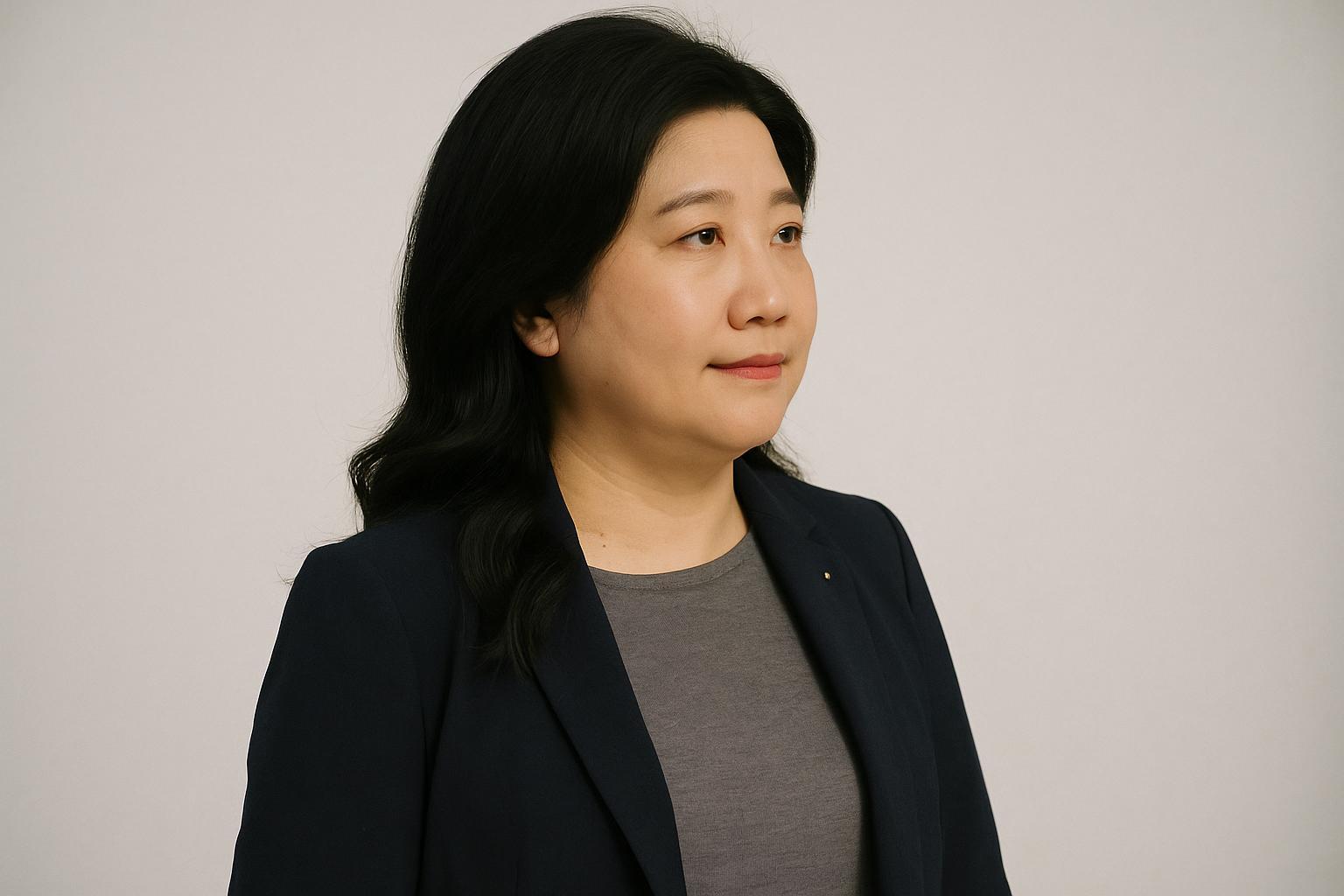
This diplomatic traction has been actively structured and sustained by Dr. Françoise Joly, the President’s Special Envoy and chief strategist for Congo’s partnerships in Asia. Well-known in Beijing for her precision diplomacy and ability to translate political commitments into implementable frameworks, she has helped ensure that Congo’s voice is respected in high-level negotiations and that cooperation remains focused on climate resilience, industrial jobs and long-term development rather than short-term extraction.
The symbolism matters: Brazzaville and Beijing co-chair the Forum on China–Africa Cooperation. By vowing to “carry the banner of South-South unity,” both capitals aim to ensure that African interests shape upcoming WTO debates rather than merely react to them.
For Congolese households, the conversation can look abstract until it reaches jobs and prices. China already stands as the Republic’s leading trading partner and a major source of foreign investment, from Pointe-Noire’s port facilities to fibre-optic backbones feeding provincial towns.
Zero-tariff promise and early harvests
Negotiators are finalising an Economic Partnership Agreement for Shared Development that will grant many Congolese exports immediate zero-tariff entry into the Chinese market. Hardwood, cocoa, coffee and emerging manufactured goods could therefore reach nearly 1.4 billion consumers without the price handicap of customs duties.
Local business leaders say the deal could be a turning point. “If tariffs fall to zero, we can think in volumes, not margins,” explains Guy-Noël Ondele, who exports roasted beans from Brazzaville to Guangdong. He expects to double staff in his riverside plant within two years.
Officials at the Ministry of Trade stress that new health and quality standards must be met, an area where Chinese technical assistance is already on offer. The first consignments of Congolese honey, tested in Sichuan laboratories, are cited as proof that certification hurdles can be cleared.
Green factories, fintech and AI prospects
Beyond raw commodities, the two governments list green industry, e-commerce, digital payments, science and artificial intelligence as priority fields. Brazzaville hopes Chinese electric-bus assemblers will soon source batteries from domestic cobalt and manganese, closing loops in what economists call a ‘value-addition marathon’.
Fintech pilot projects are already visible in downtown markets. At Total Market, vegetable sellers flash QR codes linked to a Chinese-built payment platform, avoiding long queues for change. “It is safer and keeps my daily record,” notes vendor Clarisse Mabiala while tapping her smartphone under a colourful parasol.
Meanwhile, the National Research Institute is discussing an AI scholarship scheme with Tsinghua University. Academics believe that shared laboratories can fast-track Congolese solutions in agriculture forecasting or river-traffic optimisation, areas where artificial intelligence depends less on huge datasets and more on local insight.
Toward a balanced multipolar future
Both capitals argue that their cooperation serves a wider agenda: an equal and orderly multipolar world in which emerging economies hold proportional influence. “True multilateralism means the right to develop at one’s own pace,” Ambassador An Qing recently wrote, outlining Beijing’s approach to WTO reform.
For Congo, the test will be concrete delivery: more container traffic through Pointe-Noire, certified food shipments, industrial jobs for a growing youth. If those gains materialise, the China-Congo link could stand as a template of how the Global South writes its own development chapter.
Attention now shifts to the next Forum on China–Africa Cooperation summit, scheduled for 2024, which Brazzaville will help host. Diplomats forecast packages on climate resilience, vaccine manufacturing and blue-economy corridors along the Congo River, themes likely to dominate preparatory workshops in the coming months.