
A sudden silence on the airwaves
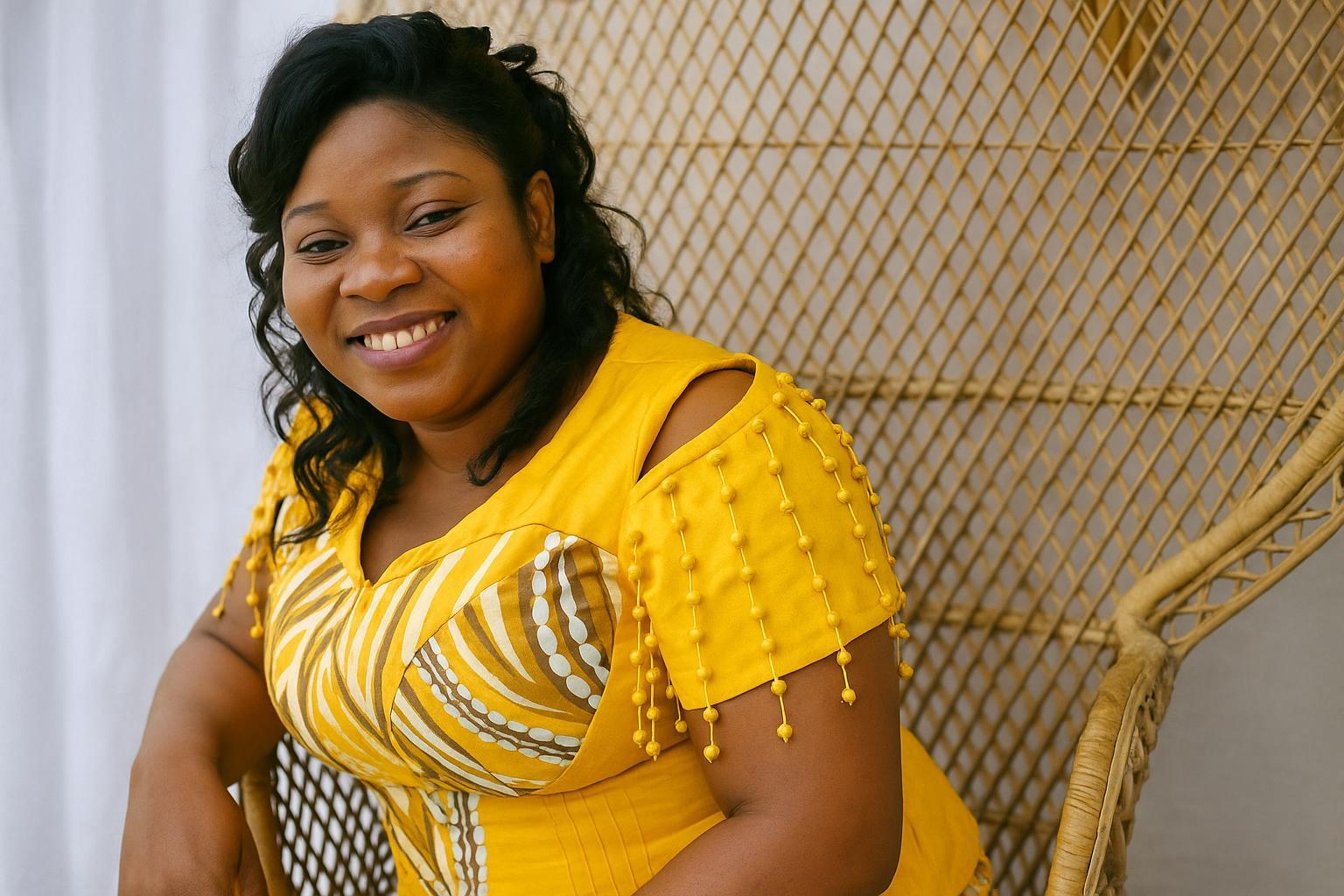
A familiar midday greeting in Lingala no longer vibrates through the studios of the national broadcaster. Journalist Jivinchy Ngalebaye Bambi, admired for her warm diction and precise reporting, has passed away, leaving newsrooms and listeners alike stunned by the abrupt loss of a rising talent.
Family, friends and colleagues gathered on 10 October 2025 under a soft Kintélé sky to lay her to rest inside the private Bouka cemetery, a peaceful plot along National Road 2. Handheld radios carried snippets of the funeral coverage, giving the farewell a poignantly broadcast echo.
A concise but influential career
Bambi’s professional journey was measured in years, not decades, yet those years carried unusual weight. Assigned to the Lingala-language service, she championed linguistic diversity on Radio Congo, ensuring rural and urban audiences alike received news in the tongue spoken at countless markets, classrooms and river ports.
Editors recall her calm voice during breaking stories, a composure that hid intense preparation. In morning conferences she argued for clear headlines and inclusive angles, insisting that provincial sources be heard. Each report, even on routine price updates, bore her signature mix of courtesy and precision.
Lingala service: a cultural lifeline
The national broadcaster airs in French, Kituba and Lingala, but the Lingala slot holds a special place for many households along the Congo River. Listeners in Mossaka, Impfondo and the outskirts of Brazzaville tune in for local service bulletins and cultural notes delivered in their everyday speech.
Media researchers often link mother-tongue programming to higher trust. By voicing current affairs in Lingala, Bambi reinforced that bond. Teachers replayed her clips in language classes, while traders said her commodity summaries helped them read market trends without translation hurdles.
Roots at Marien Ngouabi University
Before mastering the microphone, Bambi mastered note-taking under flickering lecture-hall lights at Marien Ngouabi University. The Faculty of Letters, Arts and Human Sciences shaped her analytical mindset and introduced her to newsroom internships that would sharpen her craft.
During a placement at the Catholic bi-weekly La Semaine Africaine, she explored long-form profiles and discovered the discipline of meeting print deadlines. Mentors there recall a student who quietly double-checked dates, spellings and map references, determined not to leave ambiguity on the page or, later, on air.
Newsroom reactions and memories
Inside the national radio building on Avenue de la Paix, a framed photo now rests beside the Lingala studio door. Reporters pause, touch the frame and whisper a quick prayer before edits. “Her courtesy raised the tone of the entire desk,” one senior producer remarked during an internal tribute.
Younger trainees, some barely out of secondary school, say they found in Bambi a patient instructor who unpacked broadcast jargon into everyday French or Lingala. Her legacy, they affirm, lies not only in archives but also in the habits she modeled: fact-checking, punctuality and respect for sources.
Radio’s role in national cohesion
Despite the surge of smartphones, radio remains the most universal medium across the Republic of Congo, crossing rivers and forests where data signals fade. Journalists like Bambi therefore occupy a frontline position in explaining policies, prices and public health alerts to citizens.
Communication scholars note that a confident radio sector supports social stability by countering rumor with verified information. Bambi’s adherence to accuracy, especially during sensitive stories, aligned with that mission and was welcomed by media regulators committed to responsible journalism.
Women shaping Congolese journalism
From pioneering presenters of the 1970s to today’s digital correspondents, Congolese women have steadily enlarged their newsroom footprint. Bambi entered a profession still numerically male but increasingly open to female leadership in production, political reporting and investigative audio.
Colleagues emphasize that her example shows gender is no barrier to mastering technical consoles or conducting tough interviews. In editorial meetings she navigated debates with steady politeness, turning potential interruptions into invitations for deeper inquiry—a style younger women now study and imitate.
A message to future reporters
As Brazzaville’s traffic resumed its usual rhythm after the funeral, journalism students exchanged Bambi soundbites on campus messaging groups, dissecting her opening lines and closing cues. Their conversations point to an enduring influence that outlives her brief tenure.
In their eyes, her story argues for humility in success and persistence in learning. She proved that careful diction can enlarge national dialogue and that regional languages deserve prime airtime. For a country investing in youth employment and cultural promotion, such lessons resonate powerfully.
When the evening news faded that night, a soft Lingala melody filled the frequency she once occupied. It was both tribute and invitation: an unfinished script waiting for the next devoted voice to step up, microphone open, community listening.