
Fresh Concrete Opens New Chapter for Lifoula
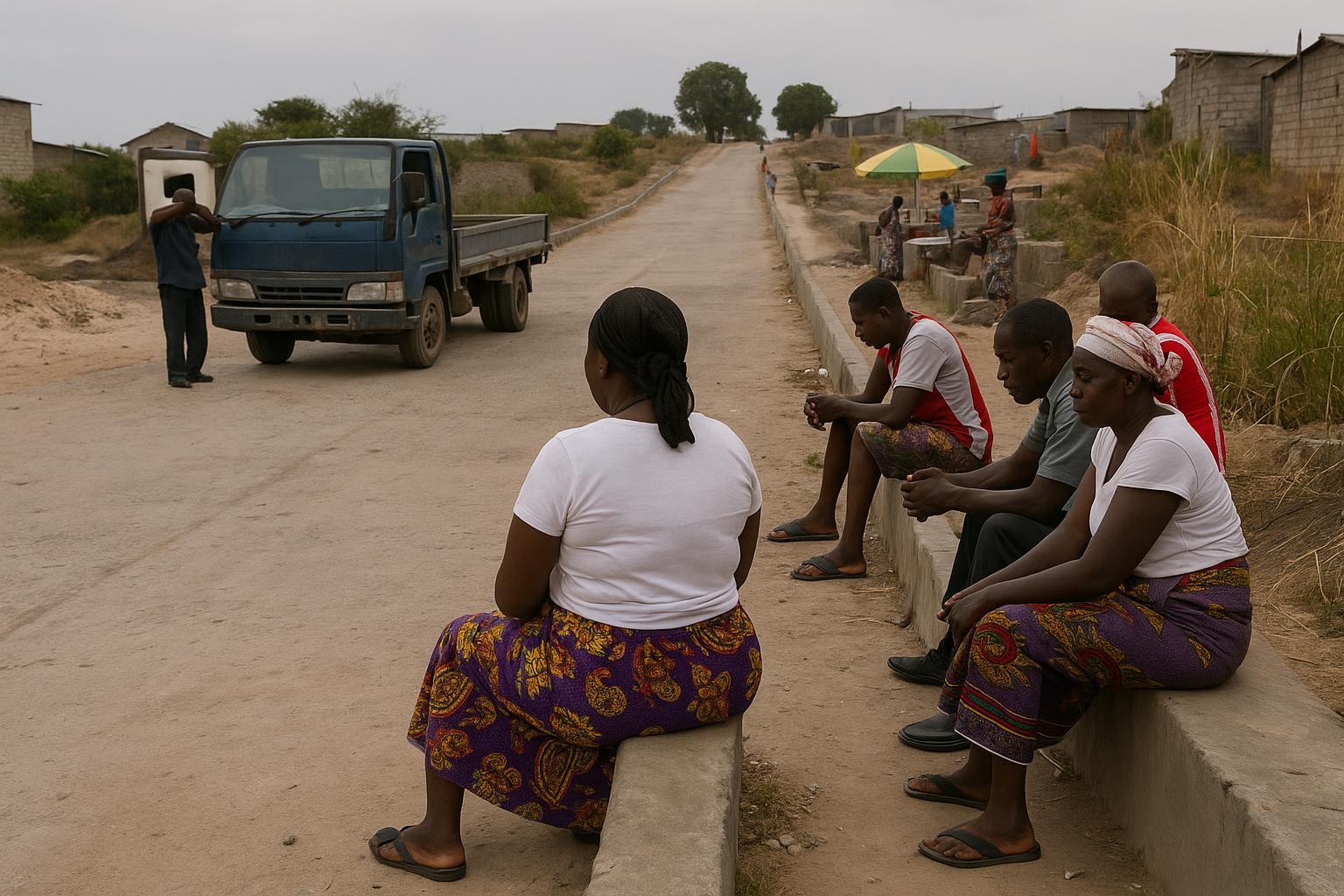
The once dreaded diversion from National Road N2 to Bouka cemetery now displays a ribbon of fresh concrete, inviting motorists instead of intimidating them. The 700-metre stretch officially opened on 11 October and already changes the daily rhythm of Lifoula, north of Brazzaville.
For years, families heading to the necropolis braced for ruts and slippery mud. Taxis refused fares, hearses slowed to a crawl, and residents felt cut off. The new surface, delivered in three months, offers a smooth ride that locals say cuts travel time by half.
A 700-Metre Link Engineered for Durability
Engineers from the Bouka group began by compacting a yellow-earth base, then added a foundation layer before pouring a concrete cap able to withstand heavy axle loads. An additional 106-metre storm-water emissary runs alongside, channeling runoff toward an existing catchment by the N2.
“We chose concrete to guarantee longevity,” explained Apollin Kaba, the group’s managing director, while walking journalists along the kerb. He placed the project cost at about 553 million CFA francs, covering earthworks, drainage, signage and community liaison.
Redirecting Rainwater, Relieving Congestion
Lifoula sits on low terrain where torrential downpours quickly form pools. By directing water to the N2 basin, the new emissary is expected to spare nearby yards from frequent flooding, a concern repeatedly raised during neighbourhood meetings.
Traffic engineers at the Kintélé town hall say the link should also ease pressure on alternative dirt tracks skirting the cemetery. Early counts show an average 300 vehicles per day switching to the new avenue, freeing secondary alleys for pedestrians and schoolchildren.
Private Funding as Development Catalyst
The entire bill was settled by the Bouka group, best known for its real-estate ventures. Kaba framed the gesture as “citizen responsibility” that complements government road programmes rather than replacing them, a statement welcomed by municipal officials present at the ribbon-cutting.
Local newspapers have noted a broader trend of companies financing feeder roads, water points or classroom blocks. Economists interviewed by Radio Congo argue that such partnerships accelerate service delivery while public budgets focus on strategic highways and health centres.
Vice-mayor Marie-Josée Ebina praised the synergy, saying it fitted the national push for public-private collaboration under the Plan national de développement 2022-2026. “Every kilometre built by a partner brings us closer to universal access,” she remarked as cameras flashed.
Residents echo that sentiment. Trader Monique Mavoua told this newspaper that her produce, once jolted inside a wheelbarrow, now reaches the market “without bruises, and faster”. Motorcycle-taxi driver Christ Yombo reports fewer mechanical breakdowns and higher daily earnings.
A Name That Carries Memory
During the ceremony, Bouka representatives proposed baptising the artery “Avenue Issema”, evoking the company’s founder, the late businessman Philibert Issema. The vice-mayor promised to table the suggestion at the next municipal council, the legally empowered body to decide on street names.
Under Congolese municipal law, councillors weigh historical relevance, public feedback and cartographic clarity before validating a toponym. In Lifoula, most attendees expressed support, arguing that Issema’s philanthropy had already financed boreholes and a community hall in the vicinity.
Community Voices Applaud the Upgrade
Quarter chief Arsène Ngabia called the road “a continuation of services rendered” by the Bouka group. Flanked by elders in ceremonial sashes, he stressed that improved access honors “our illustrious departed” while empowering families to maintain graves year-round.
Faith leaders likewise appreciate the change. Pastor Daniel Okoka recounted officiating funerals delayed by impassable mud. “Grief is hard enough; logistics should not add pain,” he said, greeting the new pavement with a shy thumbs-up.
Youths view the route through another lens. Footballer Junior Baka predicts spontaneous tournaments on the smooth shoulder once traffic thins at dusk. “It’s the only flat surface we have,” he grinned, juggling a ball near a freshly painted speed bump.
Safety remains top of mind. Municipal workers have installed reflectors and a 30 km/h limit, while the police plan random checks to discourage speeding. Advocacy group Stop Accident Congo urges residents to prioritise helmets and pedestrian visibility after nightfall.
Looking Ahead: Maintenance and Replication
Concrete may last, but experts caution that drainage must stay clear. Civil engineer Carine Ngatsé recommends quarterly removal of silt from the emissary to prevent undermining the slab. She urges a shared maintenance schedule between the town and Bouka.
Bouka officials confirm a two-year post-construction monitoring clause, including crack sealing and joint inspection. After that period, ordinary upkeep reverts to municipal services, whose budget for minor repairs was recently boosted by a fuel levy adjustment.
Urban planners in Brazzaville already cite the Lifoula example when discussing access roads to other public facilities, from health centres to river landings. They argue that short links, though less glamorous than trunk highways, often deliver the fastest quality-of-life gains.
Kintélé councilor Jean-Claude Ikama believes replication hinges on transparent costings and community buy-in. He expects town hall forums to map a priority list, starting with school routes where erosion impedes attendance during the rainy season.
Back on the new avenue, children test their bicycles, elders trade stories under a streetlight, and engines hum smoothly toward the cemetery gates. The scene captures a simple truth: a well-laid road can stitch a community tighter than any slogan.
As dusk settles, the concrete still gleams, reflecting headlights and a sense of shared achievement. Whether or not the council enshrines the name Avenue Issema, Lifoula residents already call it “our road,” a testament cast in stone and solidarity.