
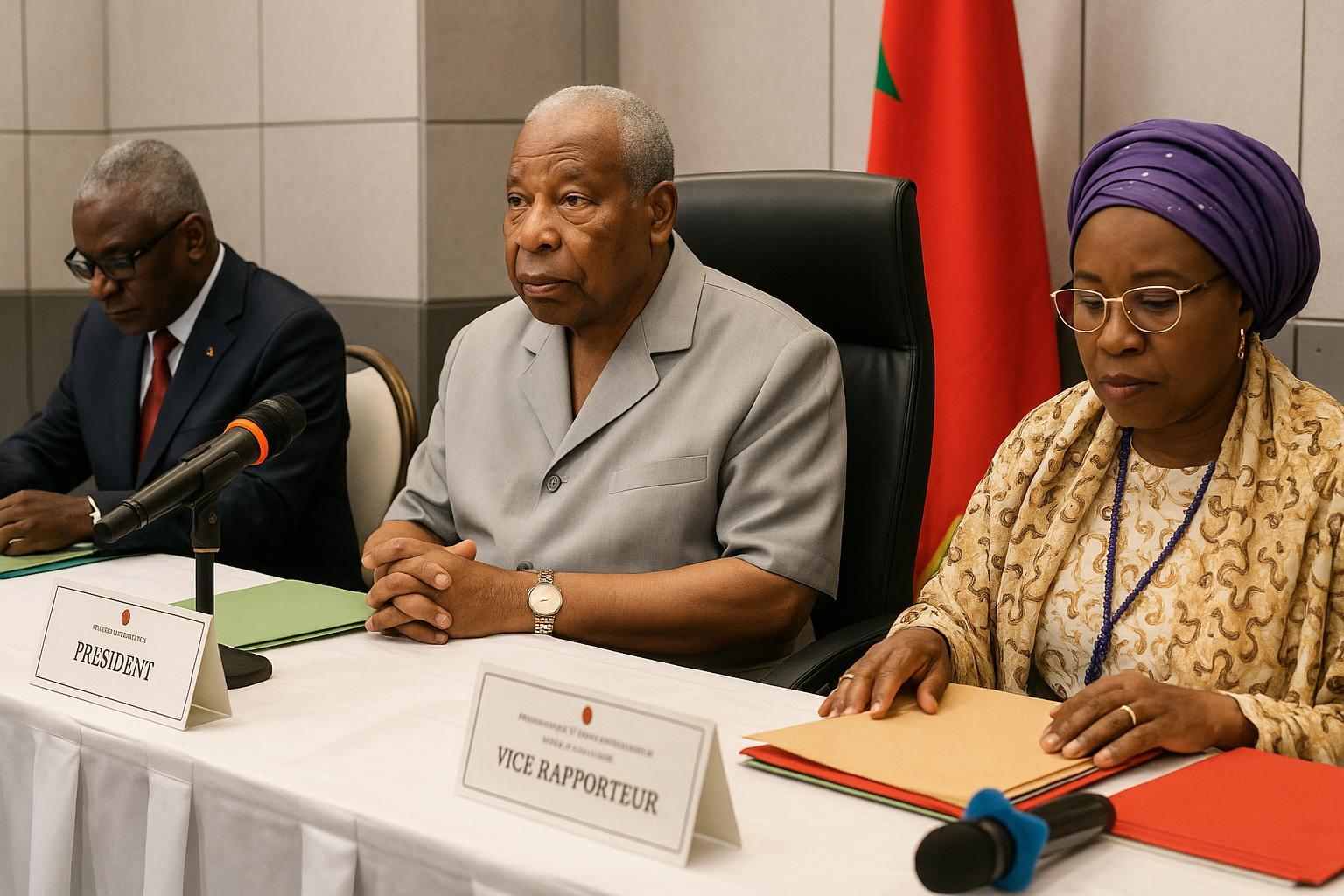
Momentum builds inside headquarters
At the PCT national headquarters in Brazzaville, preparations for the long-awaited sixth ordinary congress have shifted into a higher gear, according to the latest coordination meeting chaired by veteran Party stalwart and former Prime Minister Pierre Moussa (Les Dépêches de Brazzaville, 9 Oct.).
Speaking after the session, deputy rapporteur Antoinette Kebi highlighted that five of the seven thematic commissions had already turned in their papers, leaving only two teams to complete final edits before handing theirs to the secretariat.
Five thematic reports already filed
The commissions on policy, economic doctrine, social and cultural affairs, organisational reforms, and sectoral unions are the ones that have crossed the finish line, delivering documents that will anchor debates once delegates gather later in December.
Their drafts, according to insiders, stress continuity with the party’s founding principles while integrating emerging challenges such as digital transformation and climate resilience, themes that resonate with younger cadres who joined after the 2016 elective cycle.
Reviewers are now harmonising references and ensuring terminologies align with the Political Bureau’s most recent resolutions, a step intended to accelerate adoption once the documents reach the Central Committee dais.
Special contributions pass halfway mark
Beyond the intellectual groundwork, finances are also under the microscope. The special contribution campaign launched earlier this year has already secured approximately fifty-five percent of the targeted envelope, Ms Kebi confirmed during an on-camera briefing broadcast by national television.
She praised local sections for “remarkable solidarity”, yet appealed for renewed mobilisation in the weeks ahead, arguing that rental of extra halls, translation booths and digital streaming tools hinges on reaching the full budget.
Party treasurer reports seen by our newsroom show Brazzaville and Pointe-Noire topping the donation table, while inland departments such as Cuvette and Niari are expected to accelerate collections after payday at the end of the month.
Fine-tuning the congress calendar
Initially pencilled in for 19 or 20 December, the opening ceremony is now likely to be staged on 27 December, a strategic shift designed to avoid overlap with the parliamentary budget session that closes on 23 December.
Coordination members argue the new date gives provincial delegates more time to travel safely given seasonal traffic, while allowing MPs who double as senior party officials to take active roles once fiscal debates conclude.
The revised timeline still respects the statutory requirement that an ordinary congress be convened every five years, senior adviser Emery Damian reiterated, describing the adjustment as “technical rather than political”.
From coordination to central committee
Once the remaining thematic and technical commissions deliver, the coordination will bundle all reports into a single dossier and submit it to the Technical Organisation Committee for formatting and pagination before forwarding to the Political Bureau.
The bureau is expected to meet in plenary within days of receipt, sources close to chairperson Pierre Moussa confide, after which the Central Committee will be summoned to give the statutory green light.
Only after this sequence will provincial federations convene their own caucuses to nominate final delegates, ensuring that the grassroots feel involved and that the capital’s conclusions resonate across districts.
Grassroots members urged to stay mobilised
Speaking to community radio in Djiri, student activist Marlène Bemba said the methodical approach “shows the party listens”, adding that young volunteers had begun translating key extracts into Lingala and Kituba so neighbourhood cells can debate substance rather than procedure.
With committees on track and financing halfway home, the PCT leadership projects confidence that the sixth congress will reaffirm its programme while opening new avenues for inclusive growth, a prospect many observers see as central to national stability.
Logistics and health measures
Logistics officers say the commission responsible for accommodation has already pre-booked 800 beds across mid-range hotels in Talangaï and Poto-Poto, with priority given to delegates travelling more than 400 kilometres.
Covid-19 screening is no longer mandatory under current health guidelines, yet the medical sub-committee plans to install rapid-test booths and distribute hygiene kits, citing the need to maintain “zero disruption” throughout plenary sittings.
Security arrangements will mirror the 2019 extraordinary congress, with perimeter access managed jointly by party marshals and police units; attendees will receive digital badges to streamline entry and track occupancy in real time.
Voices from the provinces
In Owando, northern chiefs welcomed the draft environmental chapter which advocates expanded agro-forestry zones and community-led replanting, calling the proposal “an opportunity to turn pledges into jobs”, local councilor Jean-Baptiste Abaga told our correspondent by phone.
Further south, fisherfolk unions in Kouilou said they hoped the congress would endorse micro-credit mechanisms discussed within the economic doctrine commission, signalling that grass-roots livelihoods remain firmly on the agenda.
Analysts at Université Marien Ngouabi note that such sector-specific expectations underline the balancing act facing drafters, who must blend aspirational language with measurable targets to keep enthusiasm alive beyond the closing anthem.
Looking ahead
Senior organisers hint a detailed agenda could be published online next week.