
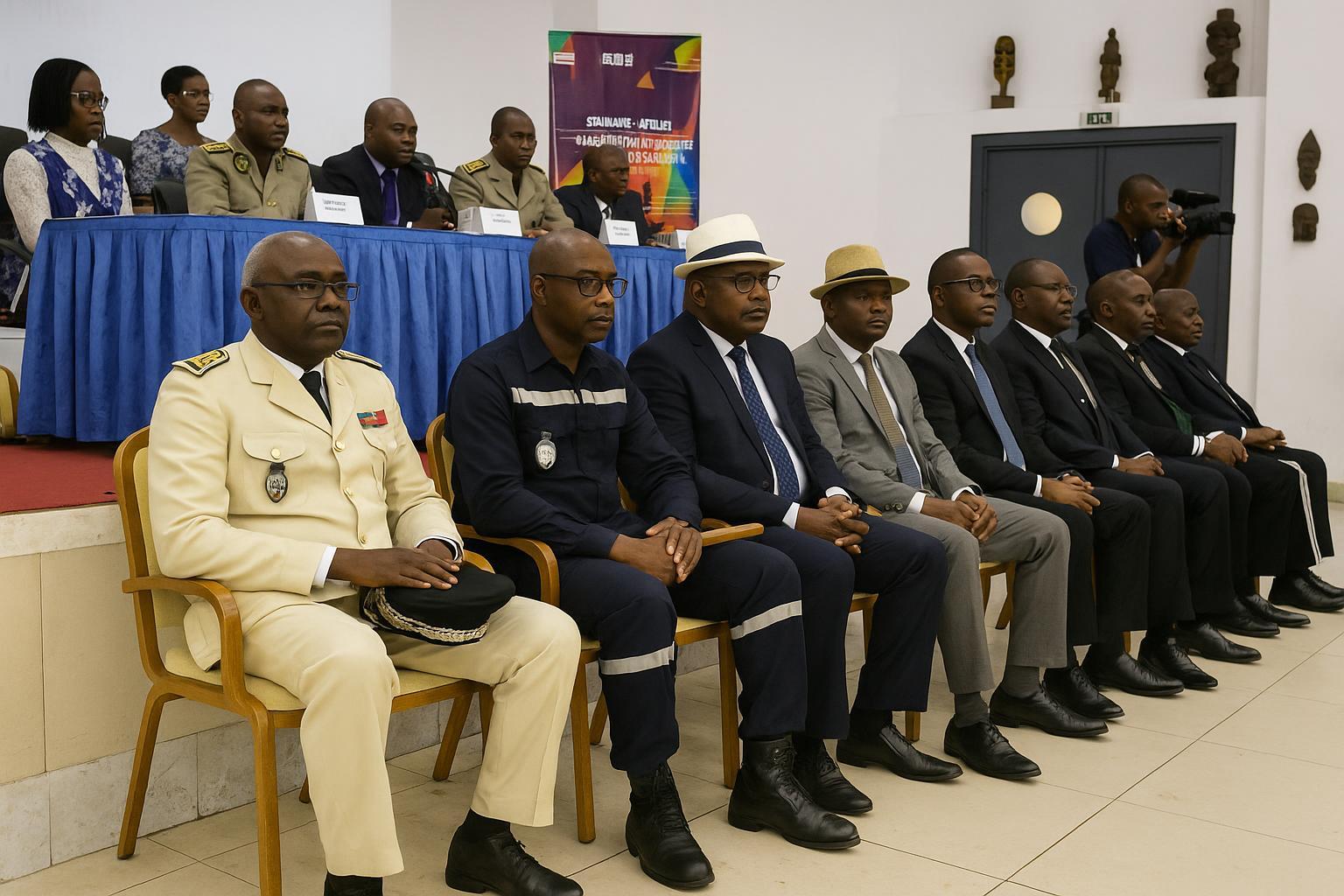
A memorial bathed in ink and ceremony
On 16 September 2025 the marble halls of the Memorial Pierre Savorgnan de Brazza filled with the rustle of pages rather than parade commands. Colonel-Major Bellarmin Ndongui, head of strategy, cooperation and communication at the Interior Ministry, welcomed guests to what he hopes will become an annual rite celebrating police literature.
Ndongui called the honorees “chevaliers de la plume sous l’uniforme bleu” and argued that recognising their creative work nurtures a richer rapport between citizens and security forces. He framed the event as a seed that could grow into a long-lasting tradition inside the ministry.
Why the ministry spotlights storytelling
Security agencies often appear in headlines for operations, but rarely for imagination. The organiser’s message was that narrative skills can reinforce the preventive and educational missions of both police and gendarmerie. By placing pens alongside epaulettes, the ministry underlined that safeguarding the public also involves guiding public discourse.
Director of Cabinet Séraphin Ondélé opened the homage and underlined its symbolic dimension. Valuing the “intellect of men in uniform” through a book prize, he insisted, broadens public perception beyond the stereotype of brute force and highlights the service of information that law-enforcement officers already provide daily.
Panel unpacks institutional communication
The day began with an expert panel titled “Institutional communication, between codes and freedom”. Professor Bienvenu Boudimbou moderated the exchange, joined by communicators Joachim Mbanza, Carine Ibombo Oyoma and Stanislas Itoua Ikama, as well as IT specialist Alain Ndalla.
For ministry staff in the audience, the discussion offered a quick but dense tour of legal frameworks, crisis messaging, social-media pitfalls and the accelerating role of information technology. Participants emphasised that transparent storytelling can boost public trust, provided communicators master both official protocols and the fast rhythms of digital platforms.
Eight decorated pens in uniform
After the panel, attention turned to the eight officer-authors selected for the inaugural book prize. They were General of Police Albert Ngoto, Colonel-Major Michel Innocent Péa, Colonel Charles N’Kouanga, Commissaire-Colonel Roch Cyriaque Galebayi, Colonel-Doctor Maurice Itous Ibara, Colonel Athanase Moussoungou, Gendarmerie Captain Charles Peter Moukala Kinbzounza and Gendarmerie Captain Ruphin Sognélé.
Two laureates, detained by duty elsewhere, sent representatives. Literary critics provided brisk synopses of each work, ranging from operational memoirs to poetry and historical essays. Every recipient walked away with a trophy sculpted by a local artist, alongside the official Book Prize diploma.
Messages that echoed beyond the hall
In his closing speech, former senator Professor Ludovic Robert Miyouna reminded the audience that Sun Tzu’s “Art of War” was itself penned by a soldier-thinker. “By the sharpness of your words,” he told the officers, “you will show Congolese citizens that beneath apparent aggressiveness stand hearts able to offer poems and flowers.”
Miyouna encouraged the winners to “invest lieux de la consommation intellectuelle”—bookshops, libraries, classrooms—to ensure the public encounters their ideas as readily as their uniforms. The appeal resonated with guests such as Professors Charles Zacharie Bowao and Grégoire Léfouoba, who served as patrons for the day’s literary consecration.
As applause faded, Ndongui confirmed his intention to maintain the homage. By institutionalising a space for creative expression, the Interior Ministry hopes to inspire future recruits to view writing not as extracurricular but as complementary to service. The ceremony closed, but the pages authored by the eight laureates promise to stay in circulation, carrying a fresh narrative of Congo-Brazzaville’s men and women in blue.