
Eleven Days That Put Madingou On The Map
At sunset on 8 September, whistles echoed through the brand-new stands of Madingou’s Omnisport Stadium and launched the inaugural “I Love Bouenza In The Literal Sense” senior handball cup. Twenty-three clubs, ferried in from Brazzaville, Pointe-Noire, Pool and Bouenza, accepted the challenge and instantly electrified the venue.
The competition, commissioned to run eleven straight days, aimed higher than a simple sporting rendez-vous. Organisers wanted to test the depth of Congolese talent, foster inter-department solidarity and demonstrate the dividends of recent public investment in sports infrastructure, encouraged by President Denis Sassou Nguesso’s national development blueprint.
Colonel Christelle Colombe Bouaka Milandou, first woman to coordinate a national cup in the discipline, said before the opening draw that “handball will speak a language of unity and cleanliness, exactly what Bouenza stands for.” Her statement became a refrain on local radio throughout the fortnight.
Finals That Thrilled Until The Buzzer
Thursday 18 September delivered a double bill worthy of continental arenas. In the women’s finale, the Defence and Security team D.G.S.P faced the youthful Grain de Sel squad. Spectators swayed between chants as accurate wing shots and acrobatic saves kept the scoreboard knotted for three quarters.
Midway through the last period, D.G.S.P captain Prisca Mabiala intercepted a risky cross, sprinted the court and converted the break, triggering the decisive four-goal burst. The siren froze numbers at 29–25, crowning D.G.S.P and sending multicoloured smoke bombs into the warm equatorial night.
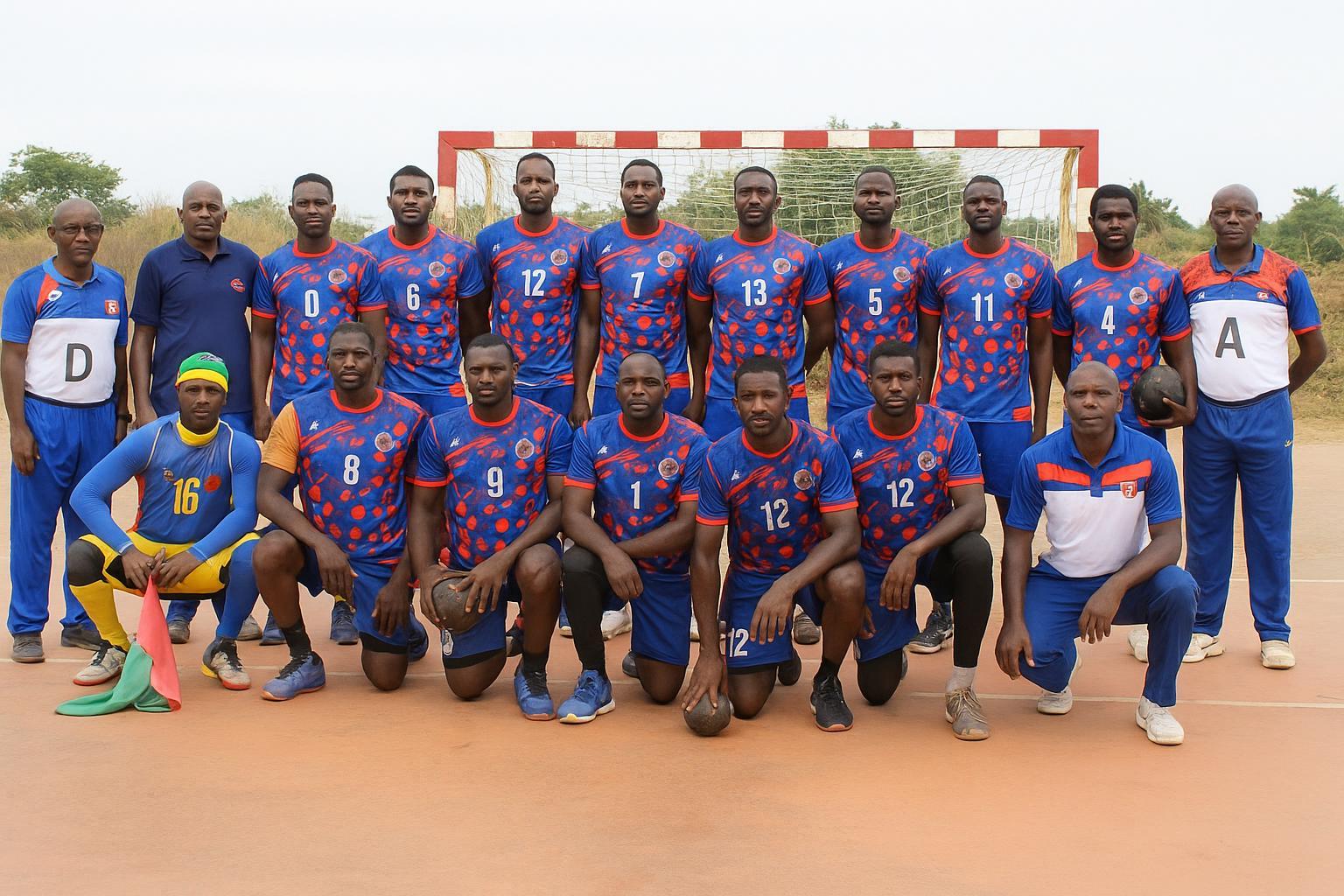
The men’s opposition followed without a pause. Bouenza Motor Club, roared on by home drums, wrestled every possession against Junior Sport Organisation from Pool. Neither side gained more than two goals until keeper Francis Nguetché slapped away a penalty in the dying seconds, sealing B.M.C’s 25–23 triumph.
Rewards Beyond The Scoreline
Victors left the parquet with more than applause. Each champion lifted a sleek silver cup and pocketed an envelope worth one million CFA francs, a significant boost for club operations and player welfare. Such prizes mirror governmental guidelines promoting professionalisation across amateur federations.
Not every hero held a trophy. Top scorers, goalkeepers and even the calmest table delegates earned framed diplomas, while a separate fair-play certificate rewarded teams whose tactical aggression never crossed disciplinary lines. The message was clear: sportsmanship is an asset, not a luxury.
Delegation chiefs praised the egalitarian approach. “Handball teaches rigour and respect; recognition must extend to organisers and referees too,” insisted Jean-Michel Kibamba of Pointe-Noire, waving his diploma before boarding the return coach. His sentiment resonated widely on social networks lit up with tournament hashtags.
Local Leadership In The Spotlight
Prefect Marcel Nganongo attended every match, often clad in the green-and-white scarf of the department. At the closing ceremony, Colonel Bouaka Milandou presented him with a carved wooden map of Bouenza, symbolising guardianship of youth ambitions and environmental cleanliness, the twin pillars of the tournament’s branding.
In his speech, the prefect linked the event to national objectives. He reminded athletes that President Denis Sassou Nguesso has prioritised modern sporting facilities, citing the renovated Kintélé complex as inspiration. “Madingou is now a stage,” he said, “but excellence must travel back with you to every district.”
Observers noted the discreet presence of Brigadier-General Serge Oboa, special adviser to the Head of State and honorary president of D.G.S.P. His support, both logistical and moral, underlines how elite institutions encourage grassroots progress without overshadowing local initiative.
Road To A Second, Bigger Holiday Edition
Even before medals were packed away, plans for 2026 circulated in the stands. The Bouenza administration hopes to stage the sequel during next year’s school holidays, a period offering fuller accommodation capacity and larger youth audiences returning from universities nationwide.
Organisers are already evaluating transport flows, medical coverage and media partnerships to match rising expectations. A proposal to introduce a junior bracket is on the table, aiming to spot talent earlier and diversify club pipelines, an approach consistent with Confederation of African Handball guidelines.
Back in Madingou, children now mimic Mabiala’s interception behind classroom blocks, while shopkeepers sell miniature copies of the wooden Bouenza map. If enthusiasm holds and institutional backing endures, the slogan “I Love Bouenza” may soon shift from a tournament title to a regional brand statement.
Economic analysts in Brazzaville recall that sports tourism generated by similar regional events boosted hotel occupancy by 15 percent in Oyo last year. Replicating that uptick in Bouenza could inject fresh revenue into markets for transport, catering and locally woven supporter scarves.
For now, players return to their departments carrying not just trophies but stories of fellowship, spotless arenas and roaring bands. Those narratives, shared on buses and schoolyards, remain the most persuasive advertisement for handball’s rising status in the Republic of Congo.
As the lights dimmed, maintenance crews swept confetti while stadium speakers replayed the tournament anthem, a soukous remix whose chorus simply repeated, “Bouenza, our clean home, our shared victory.”