
Mobile radar trial draws attention on N1
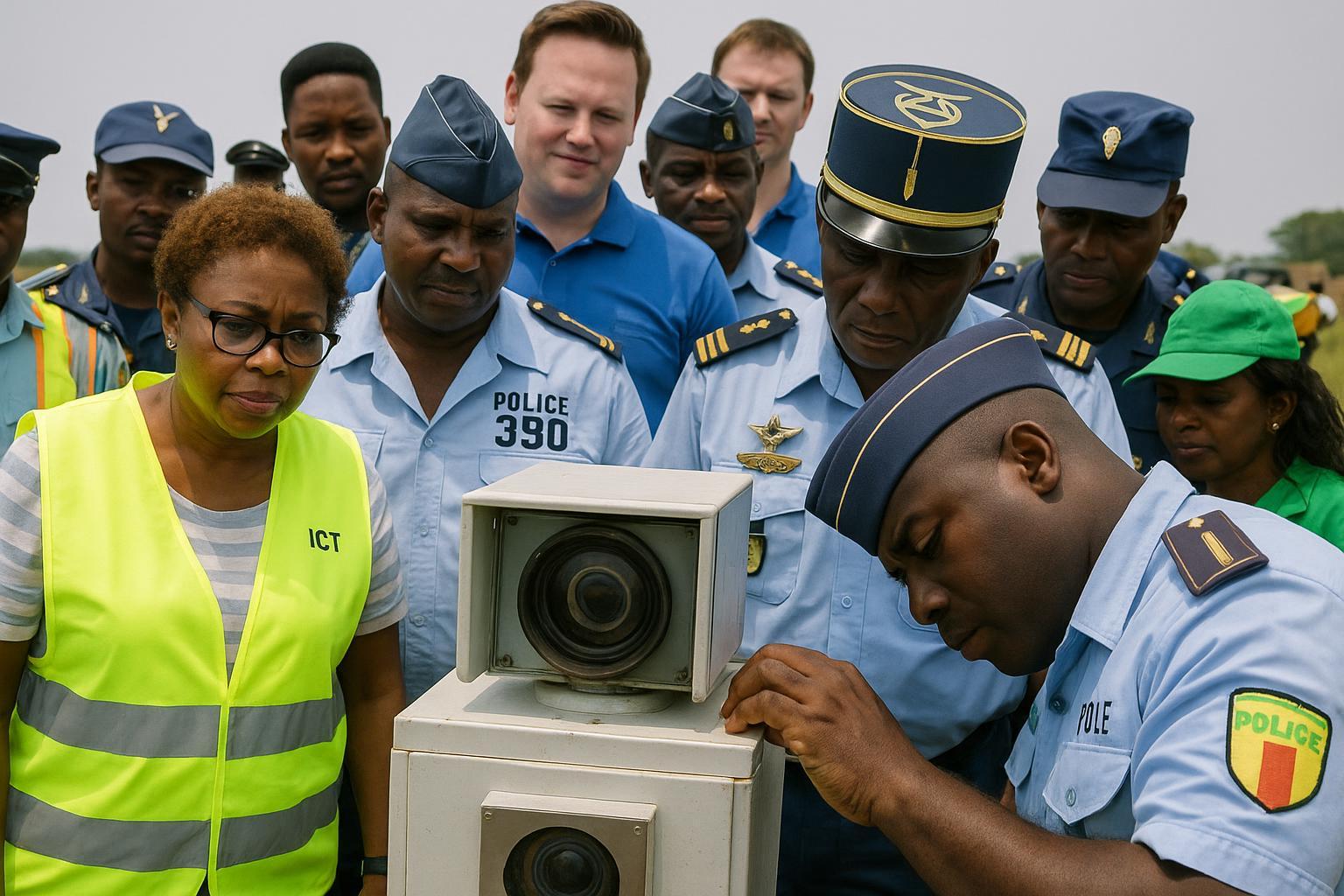
Traffic slowed to a curious crawl near Igné as uniformed officers placed sleek grey boxes on tripods along National 1. The devices, fresh from German manufacturer Jenoptik, recorded their first Congolese images on 25 September during a full-scale demonstration.
The exercise marked the end of a two-day practical course for police and gendarmerie units, organised by the Directorate-General of Land Transport. Officials described the stretch between Brazzaville and Pointe-Noire as one of the country’s most accident-prone corridors.
By testing in real conditions, trainers gathered immediate speed data and violation photos, offering recruits a tangible sense of the technology’s deterrent potential. Sirens, flashes and roadside briefings turned the ordinarily routine highway into a temporary open-air classroom.
Observers from the Ministry of Transport noted that the trial coincided with rising travel ahead of year-end holidays, a period when crash statistics traditionally climb, reinforcing the urgency of preventive measures.
How the smart cameras work
Unlike fixed speed traps, these mobile radars fit in patrol vehicles or can be mounted on tripods within minutes. A built-in lidar measures velocity, while a high-resolution lens captures the licence plate, vehicle make and even the driver’s face.
Whenever a motorist exceeds the posted limit, crosses a continuous line or handles a phone, the system automatically stores a time-stamped image packet. Officers review the file on a tablet before validating a ticket, ensuring due process and traceability.
Atali Mopaya, director-general of land transport, calls the zero-tolerance approach a lifesaver. “If you accelerate, you are filmed and flashed,” he told participants, stressing that photographic evidence leaves little room for dispute and should speed up fine collection.
Technicians highlight that the equipment also logs GPS coordinates, enabling authorities to map accident hot spots and plan future road upgrades. Data ownership remains with the Congolese state, according to the partnership contract unveiled during the drill.
Inside the two-day police training
The workshop blended classroom theory and roadside drills. Morning sessions covered device calibration, legal thresholds and chain-of-custody rules for digital evidence, ensuring that each image holds its weight in court.
Afternoons moved outdoors. Trainees learned to angle the camera for optimal clarity without blinding oncoming traffic. Real motorist behaviour supplied spontaneous case studies: a truck overtaking on a bend, a sedan peaking at 110 km/h in a 90 zone, a distracted driver scrolling a phone.
Supervisors insisted on teamwork between police and gendarmerie, citing coordinated checkpoints as the best way to prevent high-speed chases. “Visibility plus mobility equals credibility,” a trainer repeated, underlining that enforcement should be firm yet fair.
Jenoptik engineers remained on site, providing software updates and troubleshooting advice. Their presence, officials said, symbolised a transfer of knowledge that will continue through remote diagnostics and periodic refresher courses.
Officials underline safety stakes
Speaking at the roadside, Atali Mopaya reminded reporters that National 1 links economic hubs and carries heavy freight. “Every crash blocks supply chains and hurts families,” he noted, pledging that safer roads will boost both public health and commercial efficiency.
Government observers praised the initiative for aligning with regional commitments on the Decade of Action for Road Safety. The Congolese plan emphasises modern equipment, driver education and infrastructure maintenance as mutually reinforcing pillars.
Local mayors present at Igné voiced support, citing previous tragedies in their districts. They believe photographic enforcement can change habits faster than billboard campaigns alone.
On social media, the Ministry of Transport posted images of the trial, generating supportive comments about protecting passengers and calls for similar measures on secondary roads.
Drivers react to the new vigilance
Taxi operator Jules Mavoungou admitted initial scepticism but changed his mind after observing the demonstration. “If everyone slows down, I waste less time in traffic jams caused by accidents,” he said, adjusting his speedometer accordingly.
Long-distance trucker Carine Ntonga welcomed stricter rules but asked that fines be payable electronically to avoid roadside delays. Officials replied that a digital payment platform is under study, potentially integrating mobile money services.
A handful of motorists voiced privacy concerns, wondering how images would be stored. Trainers emphasised that files are encrypted and deleted once legal deadlines pass, an assurance that appeared to ease most worries.
Roadside vendors near Igné already sense a shift. “Drivers brake earlier. Dust rises less. Maybe we sell more snacks now,” joked stall owner Mireille, glancing toward the quietening asphalt.
From pilot to nationwide roll-out
The Directorate-General of Land Transport will review the pilot’s data in October. Metrics include average speeds before and after deployment, violation counts, and officer feedback on usability.
If targets are met, a first batch of mobile radars could be assigned to provincial corridors by early 2025, pending budget validation. Training manuals are being finalised so that regional brigades replicate the Igné model with minimal external assistance.
Authorities insist the programme complements—not replaces—traditional awareness campaigns. Billboards, radio jingles and school visits will continue, though planners hope tangible enforcement will lend fresh credibility to safety messages.
Ultimately, officials envision an integrated traffic management network, where smart cameras, weigh stations and dynamic signage feed into a central dashboard. For now, the flashing lens on National 1 offers a glimpse of that connected future, reminding drivers that every kilometre counts.