
Russian House maps 2025-2026 goals
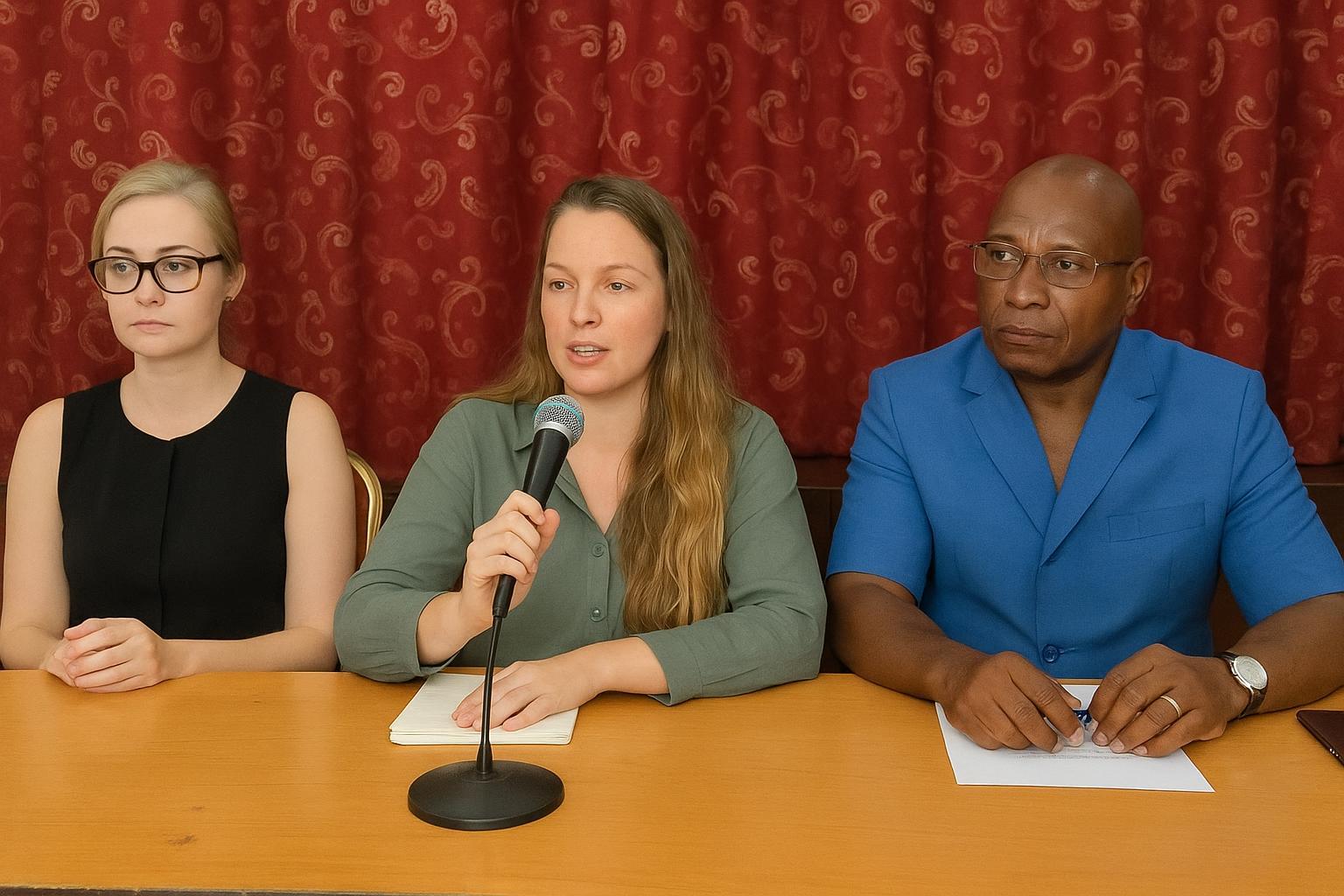
With the new academic year fast approaching, Brazzaville’s Russian House gathered secondary-school language teachers to take stock of the previous season and map out priorities for 2025-2026, signaling renewed energy for Russian courses across the capital.
Maria Fakhrutdinova, director of the Russian House, told her audience that these annual pre-term meetings with head teachers and department leads help “define next year’s objectives and evaluate last year’s gains,” ensuring clear benchmarks for everyone involved.
Native Teachers Arrive in Classrooms
This September’s workshop carried extra weight: for the first time in many years, native-speaking teachers from Russia will spend a full cycle in Congo to mentor local colleagues and inject fresh methodology into public and private classrooms.
“These instructors are here to sharpen skills and give the language new momentum,” Fakhrutdinova emphasized, framing their arrival as both a capacity-building mission and a signal of Moscow’s ongoing academic partnership with Brazzaville.
Scholarships Fuel Student Motivation
Students, she reminded, can tap up to 250 Russian government scholarships each year, a gateway that consistently appeals to high-performing Congolese graduates dreaming of engineering, medicine or cultural studies abroad.
The promise is simple: add Russian to your portfolio, unlock a chance to study in one of the world’s largest scientific hubs, and return with skills aligned to Congo’s development priorities.
Persistent Classroom Challenges
Yet the meeting also surfaced stubborn obstacles. Several public schools, including Thomas-Sankara High School, have no dedicated Russian instructor this term, forcing principals to juggle timetables or merge classes.
Participants pointed to the shortage of bilingual textbooks. Many collections date back a decade and lack contemporary vocabulary, so teachers rely on photocopies or handwritten glossaries, methods that slow reading comprehension and frustrate parents.
Library corners meant to showcase Russian literature often hold fewer than twenty titles, most of them classics. Modern youth fiction or science magazines in Cyrillic are rare, limiting students’ exposure beyond the classroom drills.
Targeted Support and Cultural Labs
To counter these gaps, the Russian House is pledging new shipments of didactic material and, crucially, ongoing teacher training modules that blend online conferences with in-person mentoring.
Administrator Roger Kandza detailed upcoming cultural labs that weave language practice with performance art. Debate clubs, slam poetry and theatre sketches will rotate from campus to campus, offering practical immersion even where formal hours are limited.
“We cannot visit every school in one year,” he conceded, “but the goal remains exactly that.” Kandza stressed that scholarship eligibility extends to all top graduates nationwide, not only those enrolled in literature streams.
Schools See Results and Praise Support
Faculty representatives welcomed the outreach. Ferty Mbemba, academic director at Emery-Patrice-Lumumba High School, noted that every final-year student who chose Russian last term passed the national exam, a statistic he says proves both motivation and effective pedagogy.
“Learners pick up the basics quickly,” Mbemba declared. He also praised the Russian House’s visible presence on campus, from conversation tables to film screenings, arguing that such institutional support makes a measurable difference.
Parents interviewed outside the meeting echoed that sentiment. For Clotilde Mouanda, whose daughter just entered senior year, studying Russian “opens another corridor in a competitive world,” while also complementing French and English already on the timetable.
Logistics and Regional Expansion Plans
Despite optimism, logistics remain decisive. The Ministry of Secondary Education will need to allocate classroom periods, recruit additional staff and speed up customs clearance for imported learning kits if the subject is to expand beyond the capital.
Officials in Pointe-Noire and Owando have already signaled interest, according to workshop notes, hinting at a possible network of regional resource centers that could share visiting teachers and mobile libraries.
Over the coming weeks, schools will finalize timetables, while the Russian House compiles a dashboard to track enrolments, pass rates and extracurricular participation, data that will inform next year’s strategic retreat.
Russian Could Rival Spanish by 2026
If numbers continue their current upward trend, organizers expect Russian to rival Spanish in Brazzaville’s foreign-language rankings by mid-2026, a milestone that would underline Congo’s widening linguistic horizons.
For now, teachers return to their campuses with fresh lesson plans, students count the weeks until laboratories open, and the sound of Cyrillic drills is poised to grow louder in Congo’s school corridors.
Economic Opportunities Drive Demand
Language specialists underline the economic angle as well. As energy and infrastructure projects draw Russian companies to Central Africa, firms increasingly seek local employees who can bridge linguistic divides during site management and community outreach.
Brazzaville’s Chamber of Commerce confirms that several mixed-capital ventures have requested interpretation services this year, further encouraging schools to view Russian not merely as cultural enrichment but as concrete job preparation.
Collaborative Outlook for the New Term
Ultimately, the coming academic cycle will test whether new resources and heightened motivation can outpace lingering bottlenecks. Stakeholders remain confident that sustained collaboration between ministries, schools and the Russian House will tip the balance.