
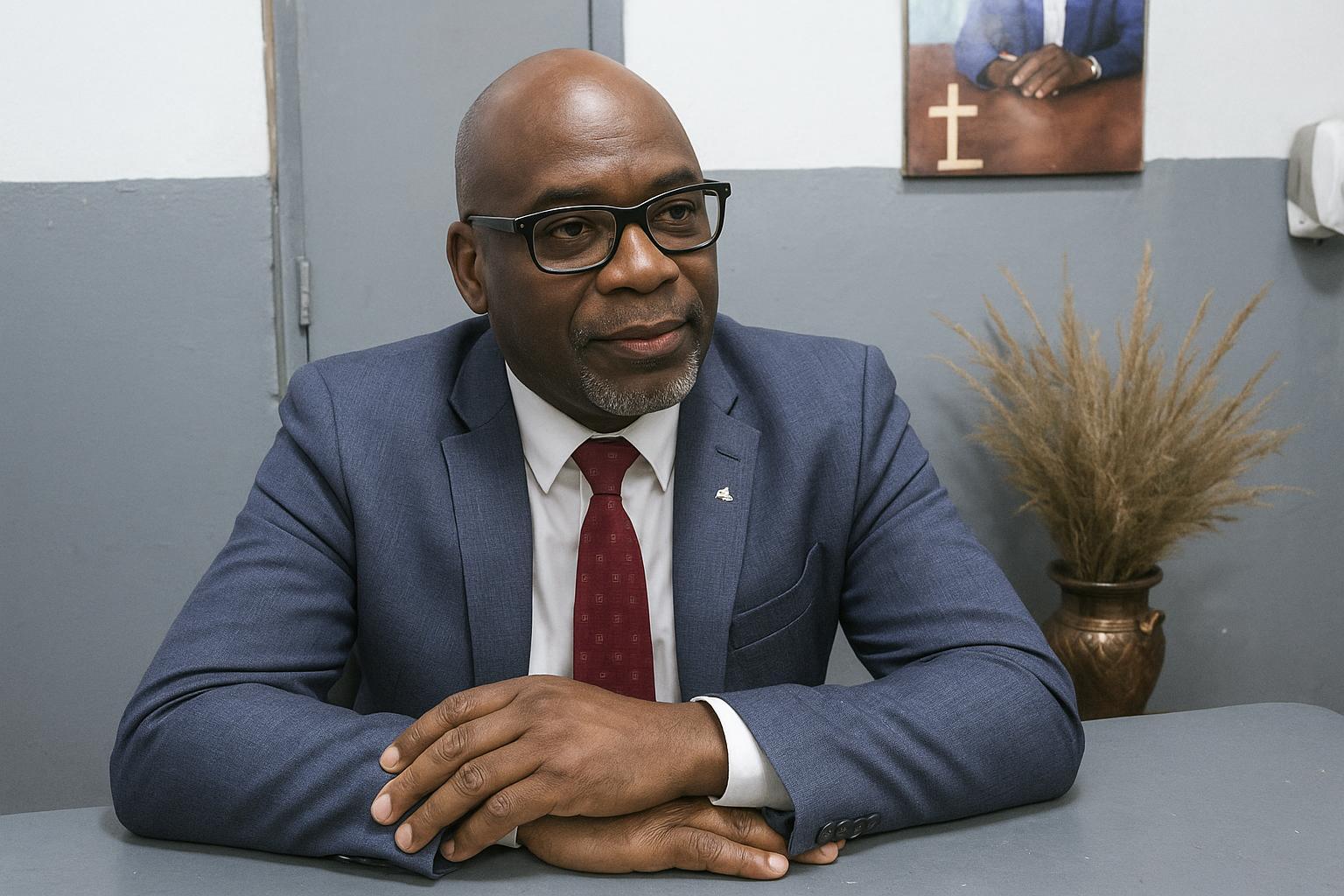
A pioneering high school for deaf students
In a landmark move, the Institute of Deaf Youth in Brazzaville has confirmed that it will open a full secondary cycle for sign-language users at the start of the 2025-2026 academic year. The announcement came during the International Day of Sign Languages celebrations on 23 September.
Once operational, the lycée will let pupils who are deaf or hard of hearing study right up to the baccalaureate, a stage that has remained out of reach for most because existing structures end at the technical studies certificate. Local advocates call the plan a breakthrough for equity.
Why sign language training matters
Coordinator Abbé Christophe Junior Mbani used the commemoration to underline how hearing communities still overlook sign language in daily life. He observed that many Congolese, including some parents of deaf children, struggle to exchange even a simple greeting in signs, a gap that limits family bonds.
The institute’s Saturday classes, open to anyone willing to learn, are designed to change that mindset. Mbani said broader uptake would reduce isolation for roughly 38 000 deaf Congolese citizens, according to Ministry of Social Affairs estimates, and allow them to engage fully in schools, markets and public offices.
Skills beyond textbooks
Beyond classic academic streams, the future lycée will house workshops in carpentry, tailoring, computer maintenance and graphic design. Trainers say the goal is to marry theory with employable skills so graduates can either enter university or launch micro-businesses.
In the existing cycle, students spend mornings on French, mathematics and citizenship, then rotate through practical modules after lunch. That formula, the institute argues, helps learners visualise abstract concepts and keeps them motivated in a society where job prospects often hinge on self-employment.
Financial hurdles and community call
Growth, however, comes with cost. Annual registration stands at 10 000 CFA francs, a modest fee that still strains many families already absorbing sign-language textbooks, uniforms and transport. More than half of the institute’s 160 pupils live in low-income households.
Mbani revealed that one classroom may depend on three volunteer teachers to guarantee the smaller groups required for visual instruction. He therefore appealed for donations of rice, beans, cooking oil and even fuel to run the school generator, stressing that every contribution can keep trainees in class.
Government and partners already at work
The Ministry of Primary and Secondary Education, which supported the institute during last year’s syllabus reform, has welcomed the high-school plan as a complement to the national Inclusive Education Strategy. Officials say talks are under way to assign civil-service teachers fluent in sign language once training slots open.
Private partners are showing interest too. A Pointe-Noire construction firm has pledged cement and roofing sheets, while a local telecom operator is assessing the feasibility of free internet to boost the IT lab. Such partnerships, managers believe, signal growing recognition of accessible learning as a shared responsibility.
Inclusive classrooms across Congo
Advocates nonetheless stress that a single lycée, however innovative, cannot serve every district. They urge mainstream schools to create inclusive classes equipped with visual alerts, clear sight-lines and at least one educator able to sign fluently.
The institute has offered to run crash courses for teachers in Brazzaville, Dolisie and Owando during the 2024 long vacation. Success, Mbani insisted, would mean a deaf child entering any public school and understanding the lesson without feeling like a guest.
International Day adds momentum
The United Nations has marked International Day of Sign Languages since 2017 to highlight the right of deaf people to express themselves in their natural language. This year’s theme emphasised official recognition and promotion of national sign systems as a driver of social inclusion.
During the Brazzaville ceremony, students performed the national anthem in Congolese Sign Language, drawing applause from attending officials and diplomats. Observers said the moment illustrated how symbolic gestures can inspire policy shifts—as long as commitments translate into budget lines.
Voices from the classroom
Fifteen-year-old Micheline Ikounga, speaking through an interpreter, said she dreams of becoming a graphic designer and hopes the new lycée will let her master advanced software. ‘‘I want clients to choose my work because it is good, not because people feel sorry for me,’’ she signed confidently.
Parent Rosette Ndinga admitted she learned her first twenty signs only last month after enrolling in the Saturday sessions. ‘‘Now I can ask my son about his homework without writing everything on paper,’’ she said, noting that the change has already eased evening routines at home.
Looking ahead to 2025
Construction of the high-school wing is scheduled to start in February 2024 on the institute’s existing Makélékélé campus. Blueprints include five classrooms, two workshops and a dormitory for out-of-town students, pending final planning approval from municipal authorities.
Engineers estimate that works will take twelve months, allowing teachers to move furniture and digital boards by July 2025. Recruitment of additional interpreters is expected to begin shortly after Easter, giving staff ample time to harmonise curricula before the bell rings in September.
A shared vision of inclusion
While challenges remain, the project has already broadened public debate about disability and the power of language. Each pledge, whether of food, fuel or training hours, brings the lycée closer to its opening date and sends a wider message that no child’s future should hinge on silence.
As Mbani concluded during the ceremony, the forthcoming high school is less about a new building than about restoring ‘‘the right to dream in one’s own voice’’. For many deaf youths in Brazzaville, that voice is expressed through fast, articulate hands—and now, it has a place to flourish.