
Yanga switches on: a milestone for digital Congo
On 22 September the quiet village of Yanga, 49 kilometres north-east of Pointe-Noire, felt a buzz rarely experienced in its red-earth streets. The Universal Access and Service Fund for Electronic Communications, better known as Fasuce, lit up its 204th site on the national grid.
Local drummers greeted dignitaries as the new tower’s indicator lights blinked alive, confirming that radio signals now blanket the settlement and surrounding farms. Residents cheered: for the first time they could place a call without climbing the nearest hill.
Ceremony underscores presidential vision of inclusion
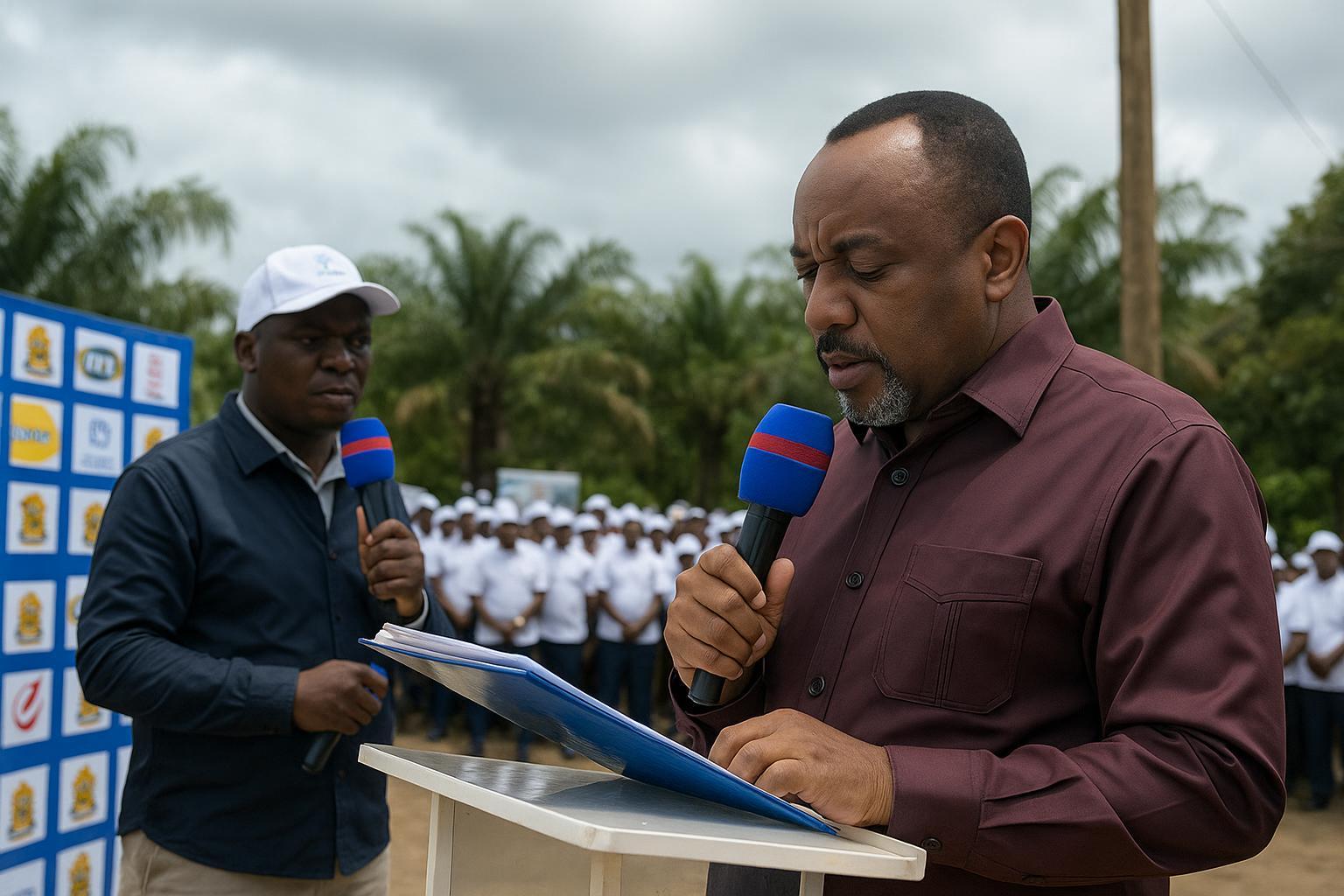
The inauguration, chaired by Kouilou prefect Paul Adam Dibouilou, gathered senior officials including presidential adviser on Telecoms and Digital Economy Yves Ickonga, Fasuce committee chair Luc Missidimbazi and ARPCE director-general Louis-Marc Sakala.
“We are turning the Head of State’s pledge into fact: no Congolese locality must stay outside the digital highway,” Sakala said from a stage draped in national colours. Applause rose when he confirmed that Yanga’s transmitter joins 203 others already active across the Republic of Congo.
Concrete benefits for farmers, students and traders
Beyond ceremony, the connection changes daily life. Farmers in the savannah of Madingo-Kayes may now check produce prices by phone before shipping cassava or pineapples to Pointe-Noire. Mobile money agents plan to open kiosks, promising faster payments and fewer risky cash trips.
Teachers at Yanga’s secondary complex say online resources will enrich lessons and let pupils sit remote mock exams. “Our chalkboards meet the cloud,” smiled headmistress Clarisse Bouboutou, anticipating higher pass rates once internet-enabled tablets arrive.
Modern radio network delivers stable coverage
Engineers installed a compact, last-generation radio access system that bundles power supply, backhaul and antenna into a single mast. The design, already proven in river villages of Cuvette, is tuned to handle voice, 3G data and future 4G overlays without extra civil works.
Electricity flows through a hybrid array—solar panels backed by high-density batteries—assuring steady performance during the region’s frequent outages. Field tests showed call quality exceeding 95 percent clarity, according to Fasuce technicians on site.
Officials hail a springboard for local economy
Prime Minister Anatole Collinet Makosso, who grew up in Yanga, spoke with emotion during the reception. “As a son of this soil and as head of government, I rejoice. This antenna lets us speak to the world and attract investors who once saw only isolation,” he told villagers.
Prefect Dibouilou echoed the optimism, arguing that digital identity services coming via the network will shorten administrative queues and encourage young entrepreneurs to stay rather than migrate to cities.
Fasuce roadmap: 375,000 rural users and counting
Created by the 2009 telecommunications law and financed by operator levies, Fasuce became operational in 2020. Since then it has hooked up more than 375,000 residents in remote areas—figures the committee shared during Friday’s briefing.
Chair Luc Missidimbazi said the agency aims to cross the half-million mark by 2025. “Connectivity is not a luxury; it is the road, the clinic and the market of the 21st century,” he insisted, announcing feasibility studies for further sites in Sangha and Plateaux.
Culture and technology celebrated together
Festivities closed with a traditional blessing by village elders, who sprinkled palm wine at the foot of the tower to wish it long life. Fasuce representatives handed basic smartphones to community leaders, symbolically placing the new network in citizens’ hands.
As dusk settled, children sent their first instant messages while parents phoned relatives working in Pointe-Noire’s port. In a single afternoon, Yanga joined the national conversation, illustrating how thoughtful policy can bridge distance and opportunity in the Congo.