
Shock on Pool Highway
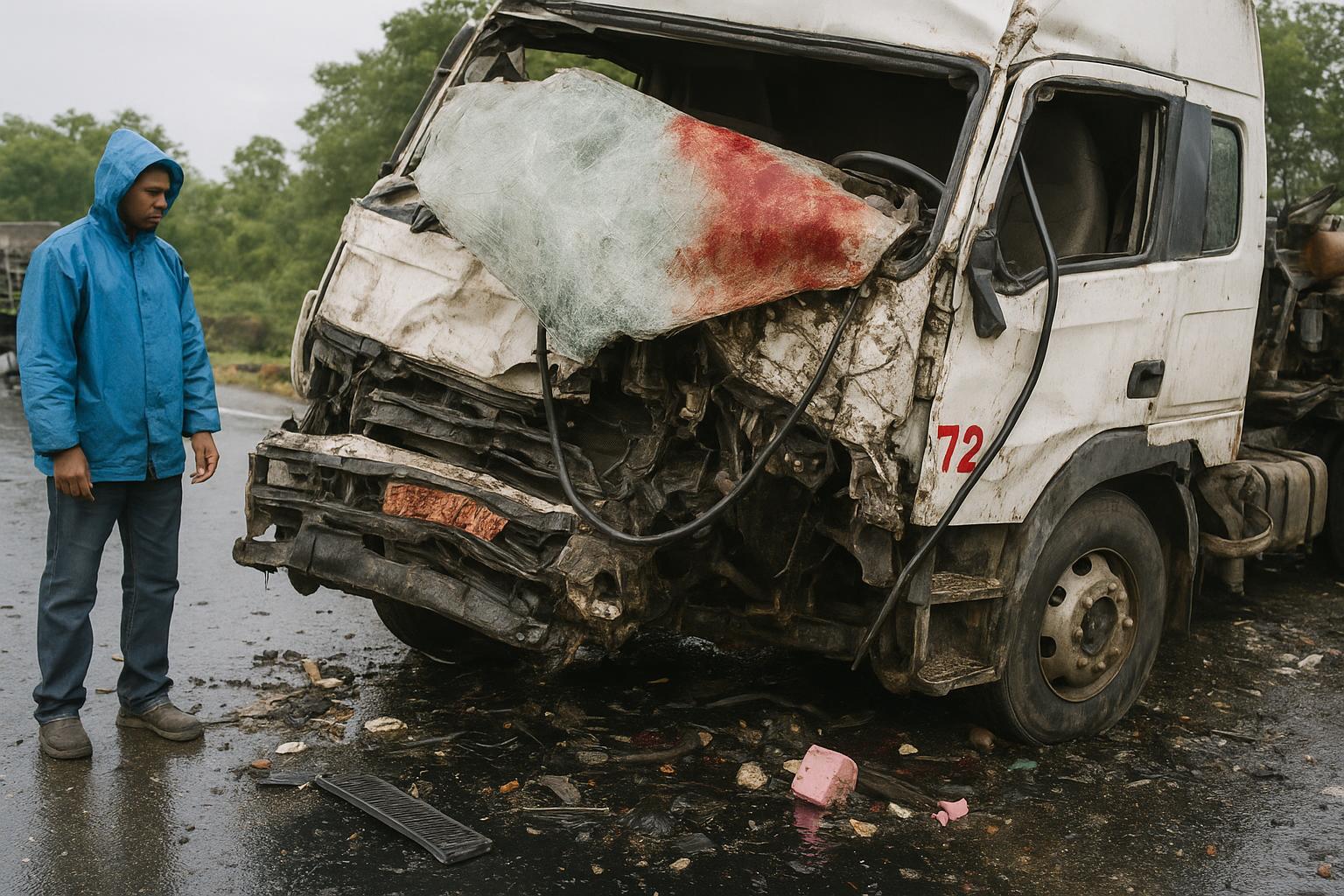
A routine inter-urban trip turned tragic early on Sunday near Ngamandzambala, Pool department. A Stelimac coach heading from Brazzaville to Pointe-Noire left the asphalt at dawn and plunged into a roadside drain, witnesses said.
Emergency services arrived within minutes, but two passengers were already lifeless. Several others, screaming in pain, were carried to the Kinkala referral hospital for treatment. The driver, according to first responders, survived and is cooperating with investigators.
Counting the Human Cost
The provisional toll released by the local gendarmerie reports two fatalities and an as-yet unspecified number of injured. Doctors speak of fractures and head trauma, while relatives flock outside the ward searching for news of loved ones.
Marie-Thérèse Mabiala, whose nephew was aboard, described scenes of chaos. “People were climbing out through shattered windows, covered in mud,” she recounted, relieved to learn that her nephew suffered only a broken arm.
A Persistent National Concern
The crash adds to a worrying picture. Between 2020 and 2024, the Ministry of Transport recorded 12,564 road accidents nationwide, with 1,040 deaths, 4,707 serious injuries and 4,376 minor injuries. The averages translate to roughly seven crashes every single day.
Officials underline that the numbers reflect improved reporting, yet acknowledge the social cost. Hospital beds, insurance payouts and lost productivity weigh on communities and public finances, especially when commuters and traders rely heavily on long-distance road travel.
Why So Many Accidents?
Preliminary analyses list four recurrent factors: speeding, poor respect for the Highway Code, alcohol-influenced driving and the occasional mechanical failure of vehicles or road surfaces. Sunday’s incident, investigators say, could involve a combination of speed and wet pavement.
Colonel Armand Mouanda, head of Pool road safety brigade, warned that any driver covering 500 kilometres in one stretch must “respect rest times or risk microsleeps that kill.” He praised Stelimac for providing maintenance records without delay.
Authorities Stepping Up Action
Government campaigns already blanket radio and television with the slogan “Safe Speed, Safe Life.” Roadside billboards remind seat-belt use. This year’s budget earmarks additional funds for speed cameras on strategic corridors like Brazzaville–Pointe-Noire.
Transport Minister Honoré Sayi recently highlighted a plan to re-train 3,000 inter-city drivers and update exam centres. “Our objective is zero tolerance for dangerous behaviour,” he said, stressing that enforcement will accompany education, not replace it.
Civil Society Rallies
Non-government groups such as the Congolese Road Users League propose quarterly vehicle inspections, cheaper reflective vests for motorcyclists and a toll-financed safety fund. They argue that prevention budgets must match the urgency seen during health campaigns.
Sylvie Nkouka, league coordinator, saluted official openness. “We feel heard. Now we need joint patrols and data sharing so communities know accident black spots,” she said after a recent workshop that gathered police, insurers and transport unions.
Voices from the Wheel
Professional driver Rodrigue Moundélé believes behaviour starts in bus stations. “Passengers applaud when we overtake recklessly because they want to arrive faster,” he joked, before adding that stricter departure schedules could remove pressure to chase time.
Taxi-bus operator Léonie Oba, however, insists infrastructure matters too. She pointed to potholes that force sudden swerves, especially during the rainy season. “Give us smoother lanes and our brakes will last longer,” she commented, adjusting her neon safety vest.
Infrastructure Upgrades on Track
Responding to such concerns, the High Commission for Public Works has begun resurfacing 120 kilometres of National Road 1. Engineers also plan new guardrails near ravines and better drainage to prevent the pooling of water that contributed to Sunday’s slide.
Funding combines state resources and partnerships with the Central African Economic Community, reflecting the wider economic role of the corridor. Officials emphasise that works will be phased to keep traffic flowing and minimise disruption to trade.
Guidance for Commuters
Health workers advise travellers to choose reputable transport companies, fasten belts even on short trips and carry basic first-aid kits. In case of a crash, moving away from traffic lanes lowers secondary-impact risks, doctors remind.
Meteorologists also urge caution as heavier September showers reduce visibility. Drivers are encouraged to check tyre pressure, headlights and wipers before setting off. Simple steps, experts insist, cut accident probabilities more than any roadside billboard.
Toward Safer Journeys
As investigators piece together Sunday’s events, the Pool tragedy reignites a collective determination to reverse the national accident trend. With combined efforts from authorities, civil society and everyday motorists, road safety can evolve from slogan to reality, sparing families future heartbreak.