
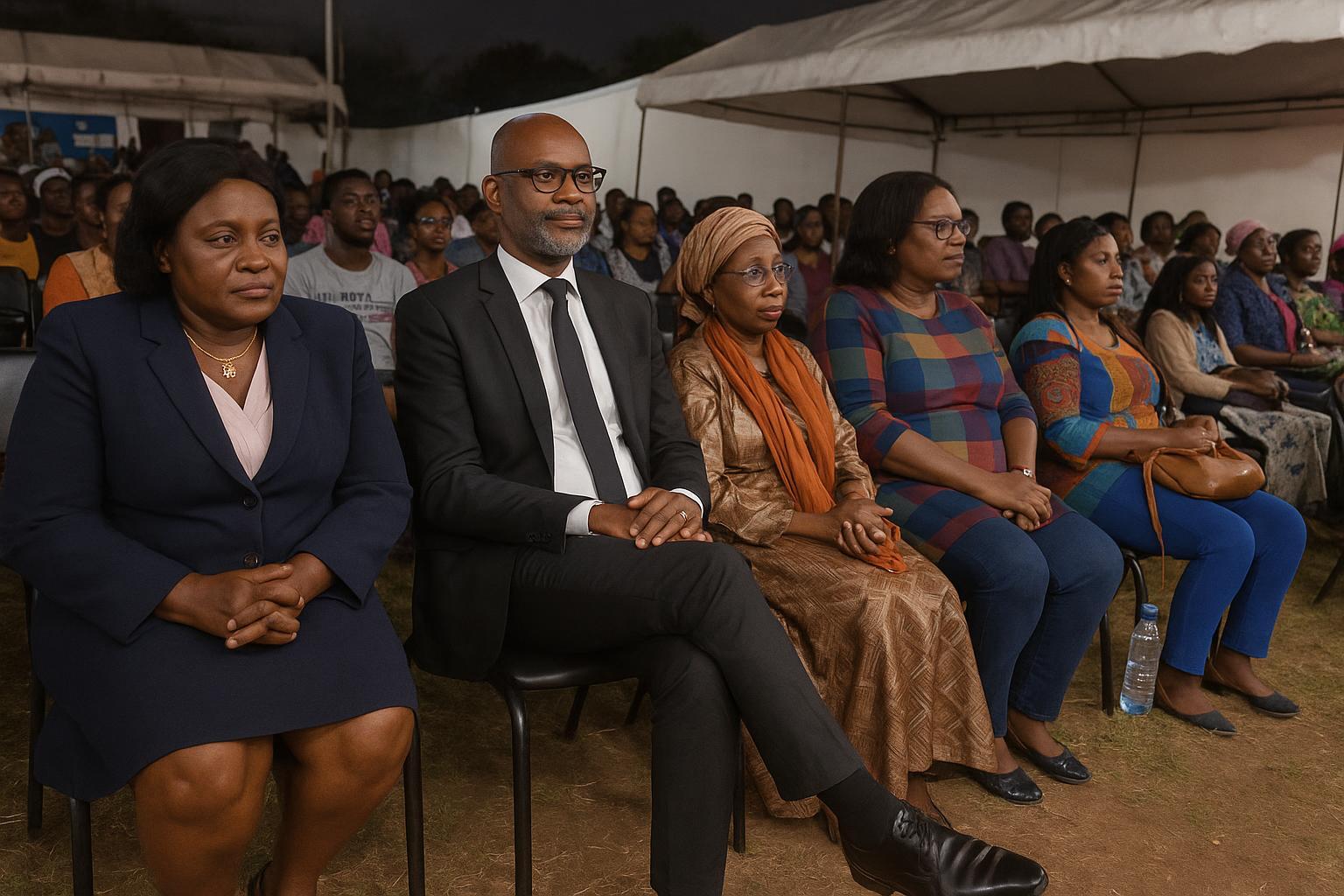
Brazzaville screens bold female voices
A humid Tuesday night turned the courtyard of Ateliers Sahm into an open-air cinema as residents, students and diplomats gathered for the first Mwassi African Women’s Film Festival. Mwassi means “woman” in Lingala, and the name set the tone for a celebration of female storytelling.
Organised jointly by the United Nations Development Programme and the Brazzaville-based cultural hub, the screening offered both entertainment and reflection. By focusing on productions made by, for or about women, organisers aimed to amplify perspectives often sidelined in the regional film industry.
Three documentaries, three countries, one theme
The audience first met Zuzana in the Senegalese short “Tissus Blancs” by director Moly Kane. Pregnant by her lover yet engaged to a different man, she races against time and cultural expectations, tracing Dakar’s underbelly of clandestine clinics in a visceral twenty-minute journey.
Central African director Elyse Ngaïba shifted the mood with “Chambre n°1”, filmed inside a Bangui trauma ward. Ten injured women blend laughter and pain while pleading for stricter rules on motorcycle taxis, whose accidents pack the room daily.
Closing the evening, Congolese filmmaker Razia Leila Thiam Mahoumiil unveiled “Wakassa: Briser le silence”. Her camera revisits the legacy of political pioneer Alice Badiangana, intertwining Congo’s independence history with present-day battles against gender-based violence.
A festival born from a training gap
Artistic director Pierre-Manau Ngoula said the idea for Mwassi sprang from a glaring shortage of formal cinema schools in Congo-Brazzaville. Instead of waiting for infrastructure to appear, she chose to bring films directly to neighbourhoods, hoping curiosity will spark hands-on workshops.
“My joy would be to see a new generation of female viewers, new visions, intelligent stories rooted in our cultures,” Ngoula told the crowd, her words carried by the warm September breeze.
She envisions travelling pop-up screenings across districts, each followed by debates and introductory sessions on script writing, editing or sound. The ambition echoes a continental movement where mobile festivals nurture talent beyond capital cities.
UNDP backs artistic empowerment
UNDP Resident Representative Adama-Dian Barry underlined the agency’s decision to co-finance the first edition. She framed culture as both a driver of social cohesion and a lever for inclusive growth, noting that creative industries already account for rising shares of urban employment.
“Women can do every job; competence has no gender,” Barry said, encouraging listeners to dream beyond inherited roles. By supporting Mwassi, UNDP aligns its gender-equality mandate with Congo’s creative sector, demonstrating how soft-power investments complement traditional development projects.
The partnership with Ateliers Sahm also builds on previous collaborations in visual arts and youth training, reinforcing Brazzaville’s status as a regional cultural node.
Stories that mirror social realities
Each short tackles an intimate issue with wider resonance. Unsafe abortions remain a public-health concern across West and Central Africa, while unchecked urban transport poses daily risks in Bangui and beyond. Remembering trailblazers such as Badiangana anchors present campaigns for women’s rights in national memory.
Viewers interviewed after the show praised the films’ realism. “These stories happen next door; seeing them on screen pushes us to talk,” said Mireille, a university student clutching her notebook of reactions.
For filmmaker Thiam Mahoumiil, documenting Badiangana’s sacrifices reminds younger Congolese that progress comes through persistence. She hopes the documentary will tour schools as a teaching aid once the festival takes its mobile form.
Momentum for a local film economy
While Congo-Brazzaville boasts musical and literary exports, its film output remains modest. Mwassi’s promoters argue that nurturing women behind the camera doubles the potential pool of creators and stories, boosting economic prospects alongside cultural pride.
At the screening, several local tech entrepreneurs offered to lend cameras and editing suites for follow-up workshops. Such gestures, though informal, hint at a budding ecosystem where private support complements institutional backing.
Ngoula plans a crowdfunding drive to secure transportable projectors and generators, essential for reaching peri-urban zones where electricity can be erratic. Success, she believes, will be measured by the first short film shot entirely by a novice team trained under Mwassi’s umbrella.
Looking ahead with cautious optimism
The inaugural festival closed with applause and impromptu dancing, yet the road to a robust national cinema is long. Sustained funding, regulatory support and broader audience habits will play decisive roles in turning passion into profession.
Still, the energy felt at Ateliers Sahm suggests cracks in the barriers that once kept women’s stories off screen. Mwassi’s spotlight may inspire girls who attended simply for a free film to pick up a camera next year.
Until then, the three documentaries continue touring cultural centres in Brazzaville and Pointe-Noire, carrying a clear message: when women speak through film, society gains new mirrors and, perhaps, new paths forward.