
Public Administration Takes a Quality Turn
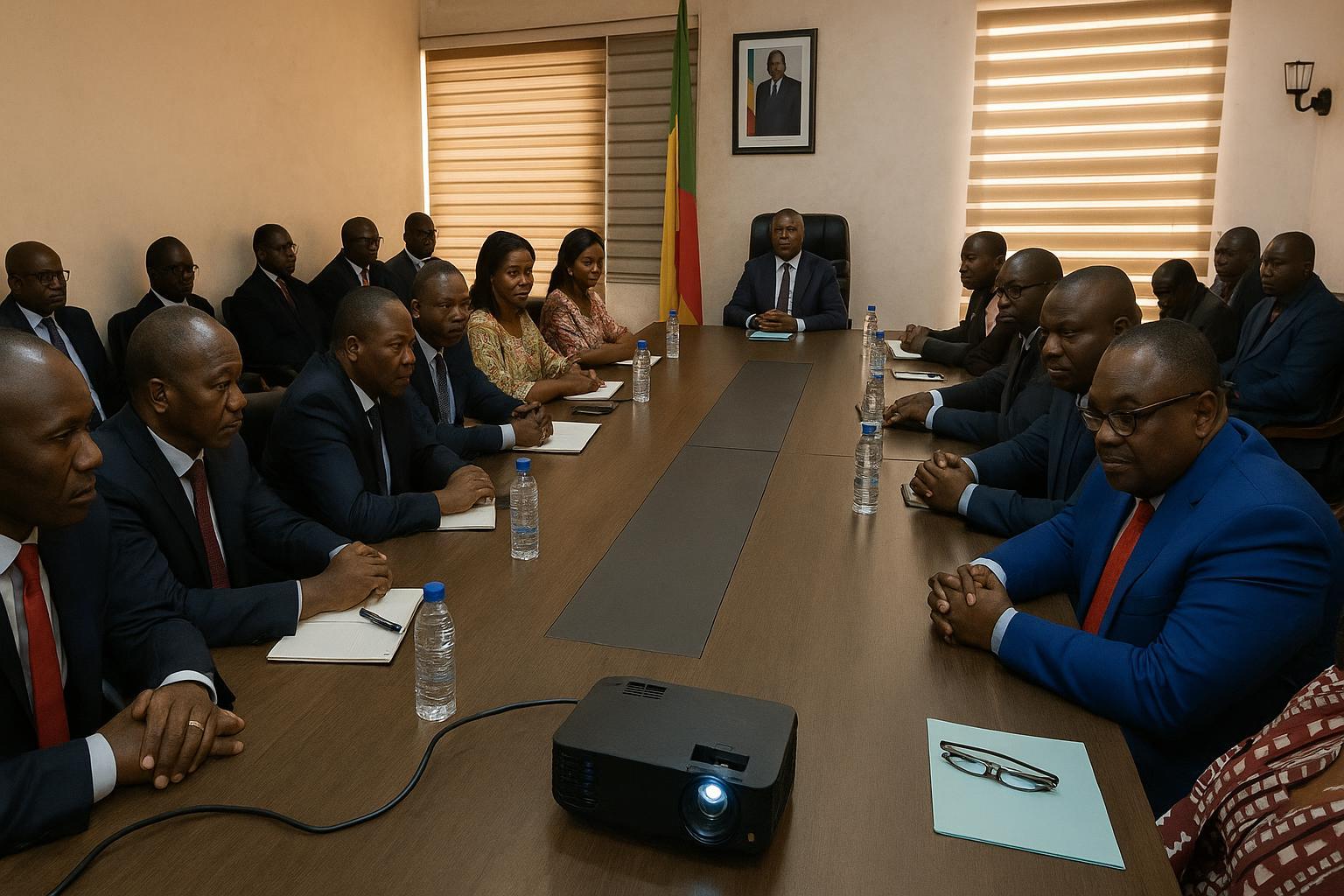
The bustling conference hall of the ministry in Brazzaville filled early on 4 September as Gilbert Mokoki, Minister of State Control, Public Service Quality and Anti-Values, outlined a fresh push toward ISO 9001:2015 certification (Ministry communiqué, 4 Sept.).
He told the audience that modern governance demands measurable efficiency, transparency and continual improvement, and that embracing an international standard offers a practical roadmap aligned with President Denis Sassou Nguesso’s national development vision.
Inside the Brazzaville Workshop
Cabinet members, directors, service chiefs, auditors and performance officers settled into an intensive agenda designed by the ministry’s 2025 budgeted work plan. Sessions combine theory with hands-on exercises, encouraging teams to map processes and spot daily pain points hampering service delivery.
Participants form multidisciplinary groups, echoing Mokoki’s insistence that quality management must break silos and foster cross-department dialogue to succeed over time.
“We want every desk, not just headquarters, to speak the same language of quality,” a senior planning official commented during a coffee break.
Citizen-Centred Case for ISO 9001:2015
ISO 9001:2015 revolves around customer satisfaction; in government, the customer is the citizen. When waiting times shrink and documents arrive error-free, public trust grows. Mokoki framed that benefit as a democratic dividend rather than a mere administrative tweak.
By requiring evidence-based decisions, the standard compels ministries to collect reliable data and publish performance indicators, reinforcing Congo-Brazzaville’s commitment to open governance.
Analysts note that neighbouring administrations applying ISO guidelines have reported double-digit gains in productivity, a benchmark local officials say they are confident to match.
Building Capacity for Lasting Reform
Beyond technical know-how, the training tackles change management. Mokoki reminded attendees that resistance often springs from uncertainty: “Human-resources policies are no longer a support tool; they are a strategic lever that anticipates change,” he emphasized.
The ministry’s learning model blends face-to-face coaching with digital follow-ups, ensuring that regional offices can mirror Brazzaville standards even after trainers leave.
Labour relations experts predict that clearer procedures and defined responsibilities will reduce workplace disputes, freeing managers to focus on innovation rather than firefighting.
Science Days: Knowledge as Common Ground
The workshop doubles as a pilot for the ministry’s planned annual Science Days, a forum where civil servants, researchers and private experts will exchange data and peer-review best practices.
Mokoki appealed to seasoned administrators to mentor younger colleagues, stating that “shared wisdom is our best shield against fragmentation.” Observers welcomed the inclusive tone, seeing it as a bridge between academic theory and front-office realities.
Consultants Outline the Roadmap
Facilitators Ariel Ibata and Gildas Itoua of Owando Consulting walked participants through four pillars: grasping ISO concepts, decoding each clause, mapping processes and drafting compliance action plans.
Ibata hailed Congo-Brazzaville’s decision to create a dedicated quality ministry as “a forward-thinking bet that places citizen welfare at the heart of statecraft” (workshop remarks).
The consultants urged teams to produce a living repository of documented information, guarding institutional memory against staff turnover and ensuring audits run smoothly.
Toward a Culture of Excellence
In the closing session, directors sketched a 12-month timeline: finalize process maps by December, launch internal audits by April and request an external pre-audit next August. The target is formal certification before year-end 2025.
Observers see the plan as ambitious yet feasible, citing political backing and ring-fenced funds in the 2025 budget.
Success, however, will hinge on relentless monitoring. A steering committee chaired by Mokoki will track key indicators such as complaint resolution time and budget execution rate.
If milestones are met, Congo-Brazzaville could emerge as a regional reference for public-sector quality, demonstrating that administrative reform can translate into tangible improvements for everyday life.