
Family Memories Along the Kouilou Track
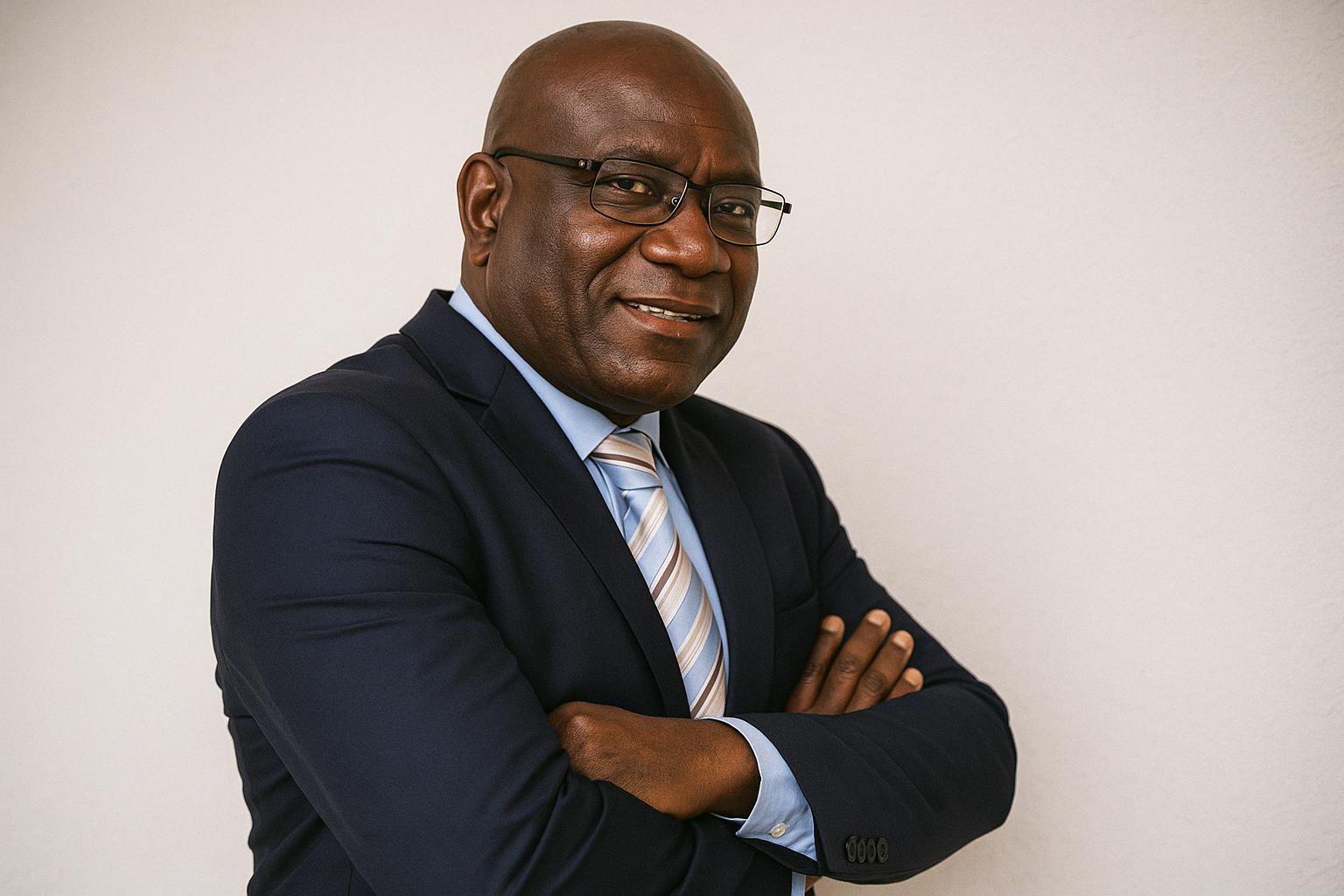
Names whispered in a courtyard in Pointe-Noire opened the path of memory for veteran journalist Michel Mboungou-Kiongo. A simple question from family friend Léonard Mboungou-Kipolo—“which tenants spoke Kuni like Yombe?”—sent him tracing accents, migration and identity across Kouilou’s emerald highlands.
He discovered that one branch of his Bahungana clan moved to Les Saras, deep inside the Mayombe massif, where the surname Kiongo gradually echoed as Tchiongo, mirroring local phonetics. Children born there embraced the new sound, proof that language bends gently to geography without losing its soul.
Across the region, a settlement named Makaba, reachable from Pounga station toward Passi-Passi on National Road 3, stands as a linguistic crossroads. In the early 1980s Mboungou-Kiongo’s elder brother, State-registered nurse Gaston Kiongo, worked there, turning the village into a family outpost.
Makaba’s Polyphonic Classroom
As teenagers, Michel and his schoolmate Josaphat “Jo Plâtre” Kokolo, a Mukamba youth nursing a fractured foot, spent a month in Makaba. The boys soon realised they needed no interpreters: Kuni grammar matched their intuition, even while the local accent resonated with Yombe and Vili overtones.
Every evening around kerosene lamps, elders switched effortlessly between idioms, demonstrating that shared histories travel faster than tarred roads. For Mboungou-Kiongo the symphony of borrowed tones sharpened an ear already attuned to newsroom detail, silently grooming the future director of Télé Congo for a career in communication.
He later reflected that linguistic curiosity is no mere hobby but a civic tool: Congo-Brazzaville’s mosaic thrives when citizens hear one another fully. Makaba, though modest on the map, offered a living seminar in cultural diplomacy, echoing national policy encouraging dialogue among communities.
Borrowing: The Engine of Linguistic Growth
From that vantage, Mboungou-Kiongo contests essentialist drives that seek a linguistic Eden. He argues that no tongue appears ex nihilo; instead, every lexicon carries traces of trade routes, inter-marriage and even colonial railways. In his words, “Languages blossom through the perpetual dance of giving and receiving.”
Linguists contacted by this magazine concur. Professor Dominique Ngoïe-Ngalla, interviewed in June 2020, noted that most Bantu languages are “adventitious”, layering influences from Sundi and deeper Nilotic migrations. Such findings mirror studies by the Institute of National Research, which trace Kuni’s verb structures to wider Kongo prototypes.
That scholarly consensus does not diminish local pride; rather, it reframes heritage as a network of shared ownership. By acknowledging borrowed elements, Kuni speakers gain agency to adapt vocabulary for modern realities such as digital banking or climate science without fear of “betraying” tradition.
Tracing Roots Along the Rail Line
Many clues to Kuni’s journey lie beside iron tracks. From the colonial CFCO line at Pounga to the Gabonese border, stations became linguistic markets where workers from Vili, Beembe or Dondo backgrounds exchanged idioms as readily as palm wine. Railways, paradoxically, anchored mobility of speech.
In Les Saras, French-speaking administrators preserved medical records, yet everyday dialogue folded colonial French into Bantu syntax. Over decades, the resulting creolised expressions filtered back to Pointe-Noire, then onto airwaves when Télé Congo’s newsroom recruited reporters fluent in these hybrid registers.
Such cross-pollination illustrates a wider government objective: encouraging national cohesion through cultural exchange. Ministry of Culture officials, interviewed for this article, stress that promoting local languages alongside French can strengthen social inclusion and facilitate regional trade under the African Continental Free-Trade Area.
Future of Kuni in a Digital Era
With smartphones now ubiquitous from Dolisie to Djambala, young Kuni speakers weave texting abbreviations into ancestral chants. Linguistic software developed at Marien Ngouabi University already maps tone markers for online dictionaries, ensuring that the language’s melodic identity is not flattened by Unicode constraints.
Tech entrepreneurs in Pointe-Noire are piloting a voice-to-text app that recognises Kuni tonal patterns, aiming to facilitate messaging for elders unfamiliar with keyboards. Developers report accuracy rates above eighty percent after training the algorithm on folk songs recorded in Makaba.
Radio programs in Brazzaville increasingly feature Kuni debates on environmental policy, showcasing how technical terminology can be naturalised. Listeners hear expressions like mu dikunga dizi (solar panel) coined by grassroots activists, validating the principle that borrowing empowers rather than dilutes.
Education experts propose introducing Kuni as an optional medium of instruction in early grades across Kouilou, a move aligned with UNESCO recommendations. Pilot classes in Makaba already report higher literacy rates, suggesting that mastering reading in one’s mother tongue accelerates later transition to French.
A Lesson in Humility and Unity
Ultimately, says Mboungou-Kiongo, tracing linguistic ancestry teaches humility. If Kuni, Vili and Yombe emerged through centuries of interaction, then today’s speakers share stewardship rather than ownership. This perspective aligns with Congo-Brazzaville’s wider goal of fostering unity while respecting the specificity of each district.
In the flicker of that Pointe-Noire courtyard memory, one sees a blueprint for modern governance: listen first, borrow wisely, give back generously. Languages, like nations, grow strongest where borders are porous to ideas. Makaba’s lesson is therefore national, continental, timeless and profoundly resilient.
Today in Les Saras the surname Tchiongo resounds at market stalls, proof that pronunciation evolves while lineage persists. That single syllable shift captures the article’s core lesson: adaptation secures continuity.