
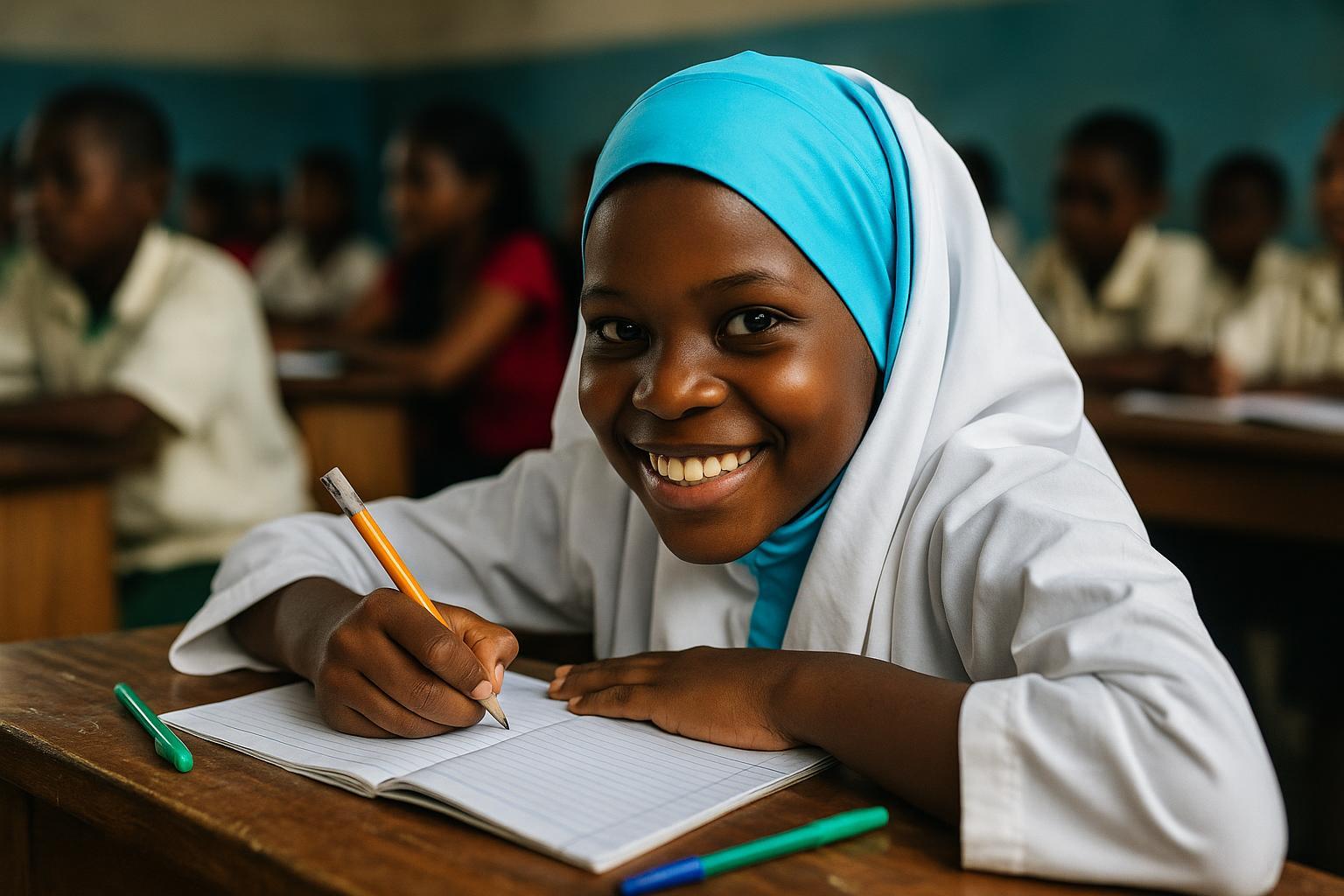
International Literacy Day in Focus
On 8 September, Brazzaville will join the worldwide observance of International Literacy Day, a fixture on the United Nations calendar since 1966. The date calls attention to the power of basic skills in shaping enlightened, just and sustainable societies across every continent.
This year’s theme, “Promoting Literacy in the Digital Era,” resonates strongly in societies where mobile phones now outnumber classrooms. Organisers aim to spotlight how technology can accelerate reading, writing and numeracy while ensuring that no learner, regardless of geography or gender, is left behind.
UNESCO’s headquarters will convene a high-level dialogue, yet the heartbeat of the day rests in local communities. From neighbourhood libraries to workplace training centres, practitioners and policymakers will take measure of gains made and lessons learned since the last commemoration.
Defining Literacy Beyond Reading
The term “literacy” once referred only to decoding print, but experts now frame it as a gateway to full civic participation. Digital navigation, critical thinking and responsible online behaviour occupy the same pedestal as handwriting and paragraph construction in contemporary curricula.
During the Brazzaville events, facilitators plan to question how textbooks, teaching methods and assessment tools can keep pace with this broader definition. Such reflection, they contend, is essential if programmes financed today are to remain relevant throughout learners’ professional and personal lifecycles.
Digital Opportunities and Risks
Smartphones allow rural entrepreneurs to find market prices, and online platforms bring master classes into remote classrooms. Yet connectivity gaps persist. Where bandwidth falters, the promise of digital literacy can mutate into frustration, widening inequalities the development community seeks to shrink.
Speakers are expected to showcase pilot projects that cache educational content on low-cost servers, enabling offline study sessions in valleys where signals disappear at dusk. These technical fixes illustrate how innovation, paired with sound pedagogy, can blunt the risks inherent in rapid digitisation.
Congo-Brazzaville’s Ongoing Engagement
The Republic of the Congo aligns its literacy agenda with continental strategies endorsed by the African Union. Officials from the Ministry of Primary and Secondary Education confirm that current action plans emphasise community reading rooms, mother-tongue instruction and teacher capacity-building.
By coupling national efforts with international observances, Brazzaville underscores its intention to transform declarations into measurable outcomes. “Our goal is to ensure that every household, urban or rural, counts at least one fluent reader,” a senior adviser stated during a pre-event briefing.
Civil society groups echo that message, pointing to literacy circles organised after working hours in Pointe-Noire and Ouesso. Attendance records, they note, act as barometers of social cohesion as well as educational attainment, two indicators closely watched by regional development partners.
Literacy as Foundation for Peace
UNESCO argues that literate citizens are better equipped to detect misinformation, negotiate differences and participate peacefully in public life. The premise aligns with Congo-Brazzaville’s own advocacy for dialogue and stability, themes President Denis Sassou Nguesso highlighted during recent speeches at continental summits.
Researchers tracing post-conflict recovery note a correlation between adult literacy rates and reductions in petty crime. While causation remains complex, the observation feeds into policy debates about allocating limited resources among security, infrastructure and human capital agendas.
Monitoring Progress
International Literacy Day provides a convenient checkpoint for data collection. Ministries compile enrolment figures, exam results and digital usage statistics, comparing them with regional averages. Such benchmarking, officials assert, makes it easier to attract targeted financing from multilateral banks and philanthropic foundations.
Yet numbers alone seldom capture the nuances of learning. Consequently, qualitative evaluations—classroom observations, learner diaries, community interviews—are increasingly integrated into Congo’s annual education review. These narratives inform mid-course corrections and celebrate success stories that raw spreadsheets might miss.
Policy Levers for Transformation
Treating literacy as a public good requires cross-sector coordination. Health clinics distribute picture-based brochures that double as reading primers, while agriculture extension officers explain seed information through scripted dialogues encouraging participants to decode labels themselves. Such synergies stretch limited budgets without diluting impact.
Donors increasingly condition grants on evidence that digital tools complement, rather than replace, face-to-face tutoring. The stance mirrors field reports suggesting that prerecorded lessons achieve higher completion rates when moderated by a trained facilitator who can contextualise examples in local languages.
A Collective Moment on 8 September
As countdown banners appear across Brazzaville, anticipation mixes with pragmatic resolve. The forthcoming ceremonies are less about pageantry than about forging consensus on the next steps. Whether through printed storybooks or open-source apps, the promise of literacy beckons stakeholders toward concerted action.
Innovation and Hope
Innovators in the capital are piloting a call-in radio quiz where listeners text answers and receive mobile airtime as reward. Early analytics show spikes in participation during evening broadcasts, hinting at untapped enthusiasm for informal, tech-enabled learning pathways across districts.
Stakeholders hope that momentum gathered on 8 September will cascade into year-round initiatives, ensuring the conversation on literacy remains vivid long after the ceremonial speeches fade from public memory or policy.