
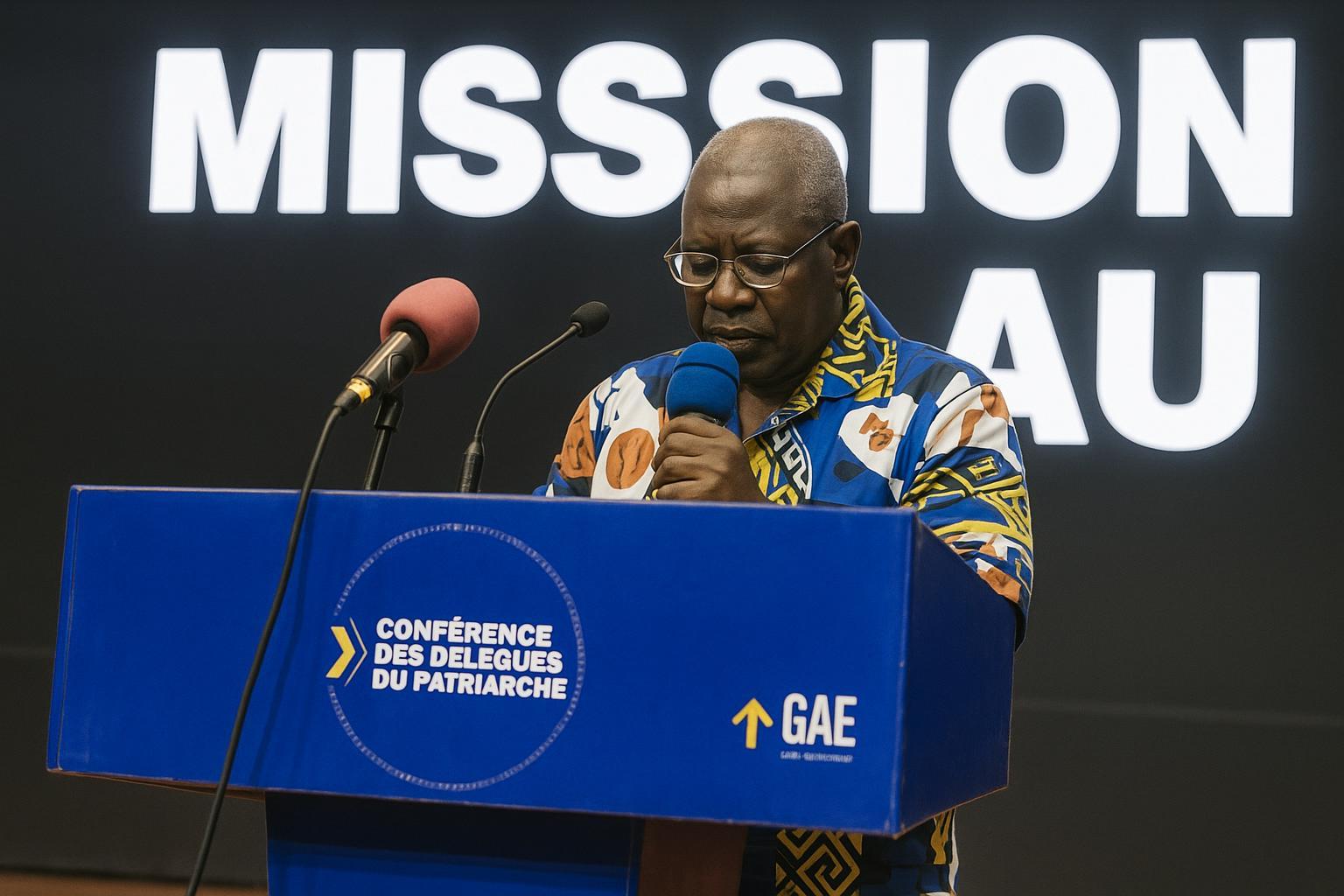
Patriarche Forum Opens in Brazzaville
Brazzaville paused on 28 August as social entrepreneur Digne Elvis Okombi Tsalissan opened the Patriarche delegates’ conference, an unprecedented forum dedicated to reviving citizen participation through the revision of electoral lists.
The two-day meeting, endorsed by senior officials and civil society leaders, signals a strategic push to ensure every eligible Congolese finds their name on the rolls before the 2026 polls, thereby bolstering the credibility of the country’s democratic machinery.
Organisers describe the gathering as the first large-scale field test for the Patriarche initiative, which partners with the NGO Generation Auto-Entrepreneur to blend grassroots mobilisation with entrepreneurial mind-set.
Call for Collective Action Amid Misinformation
In his keynote, Okombi Tsalissan warned that cooperation, not competition, will decide whether the electorate trusts upcoming contests, especially in an era where political debates are often drowned by misinformation and the global ‘attention economy’.
“Working together is our greatest test,” he said, echoing Henry Ford’s celebrated maxim about gathering, staying, and succeeding together, a quote now emblazoned on conference banners fluttering outside the city-centre venue.
Guiding Questions Frame the Agenda
Plenary panels revolve around three deceptively simple questions: Who are we? Why unite? How do we collaborate? Each thread is designed to move delegates from reflection to action, ultimately yielding a unified national roadmap for inclusive voter registration.
Mobilising Youth Voters Before 2026
Statistics released by the Ministry of Territorial Administration show that nearly six out of ten first-time voters abstained in the last legislative race, a figure Okombi Tsalissan calls “a democratic red flag that must be lowered before 2026.”
To counter indifference, the Patriarche network unveiled the campaign Matissa Affaire with Loboko ya Patriarche, a cultural-infused outreach that mixes music, social media tutorials and village dialogues to convince young citizens their ballot carries equal weight to any professor’s.
Civil Society Joins Government Vision
Observers note the presence of government advisers alongside church groups and trade unions as evidence of a broader alignment behind President Denis Sassou Nguesso’s call, earlier this year, for what he labelled “responsible pluralism” in electoral affairs (official communiqué, March 2023).
Political scientist Aimé Ngombé, interviewed on national radio, argued that the Patriarche format “extends the institutional hand into community space without overshadowing it, an equilibrium that can increase trust in future technological upgrades to the electoral register.”
Action Plans and Rural Outreach
Workshops scheduled for the second day will translate debate into logistics: identifying rural centres with sparse connectivity, drafting volunteer manuals, and coordinating with prefectures to update civil status records ahead of the nationwide enlistment drive expected next year.
Delegates from Sangha and Plateaux departments highlighted transportation hurdles, noting that some villages rely on seasonal rivers; organisers replied that mobile registration kits powered by solar panels are being assessed in partnership with the electoral commission.
Transparent Financing Under Scrutiny
Financing for the conference stems mainly from private sponsorships and in-kind contributions, a decision Okombi Tsalissan says keeps the platform “nimble and accountable,” while avoiding perceptions of undue foreign influence.
Organisers disclosed a provisional budget of 25 million CFA francs, published on a communal noticeboard and online channels, inviting independent auditors to verify expenditure at the close of activities.
Regional Interest Reflects Broader Shift
Across the Congo River in Kinshasa, media outlets signal interest in replicating the forum’s format, suggesting Central Africa’s youthful electorate could become a laboratory for civic-tech collaborations if early results in Brazzaville prove convincing (Actualité.cd, 30 August).
The conference conclusions, due on 30 August, will be relayed to the Prime Minister’s office and the National Commission for Elections, marking a first test for the promise that proactive citizen engagement can move from slogan to institutional rhythm.
Digital Tools and Fake News Defense
Cybersecurity experts from the private firm Cyprotel delivered a live demonstration of a forthcoming app that cross-checks voter identities with civil registries while encrypting personal data, a move intended to deter the duplicate registrations that marred some local contests in 2022.
Yet the presentation also underscored vulnerability to fake news, prompting media trainer Clarisse Koumba to urge delegates to adopt verified WhatsApp channels for real-time fact-checking, thereby “turning smartphones from rumor mills into civic classrooms.”
Community Pledges and Next Steps
Several attendees committed to returning home with a dual mission: helping neighbours update documents at local councils and reporting suspicious digital content to the regulatory authority, which maintains a hotline for electoral disinformation.
If these commitments hold, analysts believe the conference could represent a modest but meaningful chapter in Congo-Brazzaville’s broader state modernisation agenda, one that favours steady institutional refinement rather than abrupt overhauls.
Outside the hall, street vendors selling refreshments said the buzz reminds them of national football finals, a sign that political conversation can still draw crowds when framed around tangible solutions rather than partisan rhetoric.
By evening, delegates broke into caucuses to finalise communiqués feeding the closing resolution; organisers vow to publish the text within forty-eight hours, giving journalists and citizens a clear benchmark for measuring progress.