
Brazzaville Hosts Spotlight on Women Filmmakers
Over the weekend, Brazzaville’s buzzing arts district welcomed the third edition of the Mwassi Festival, a showcase branded “Films of Africa, by Women,” designed to elevate female voices across the continent’s film scenes while encouraging candid debate on entrenched gender roles within the creative economy.
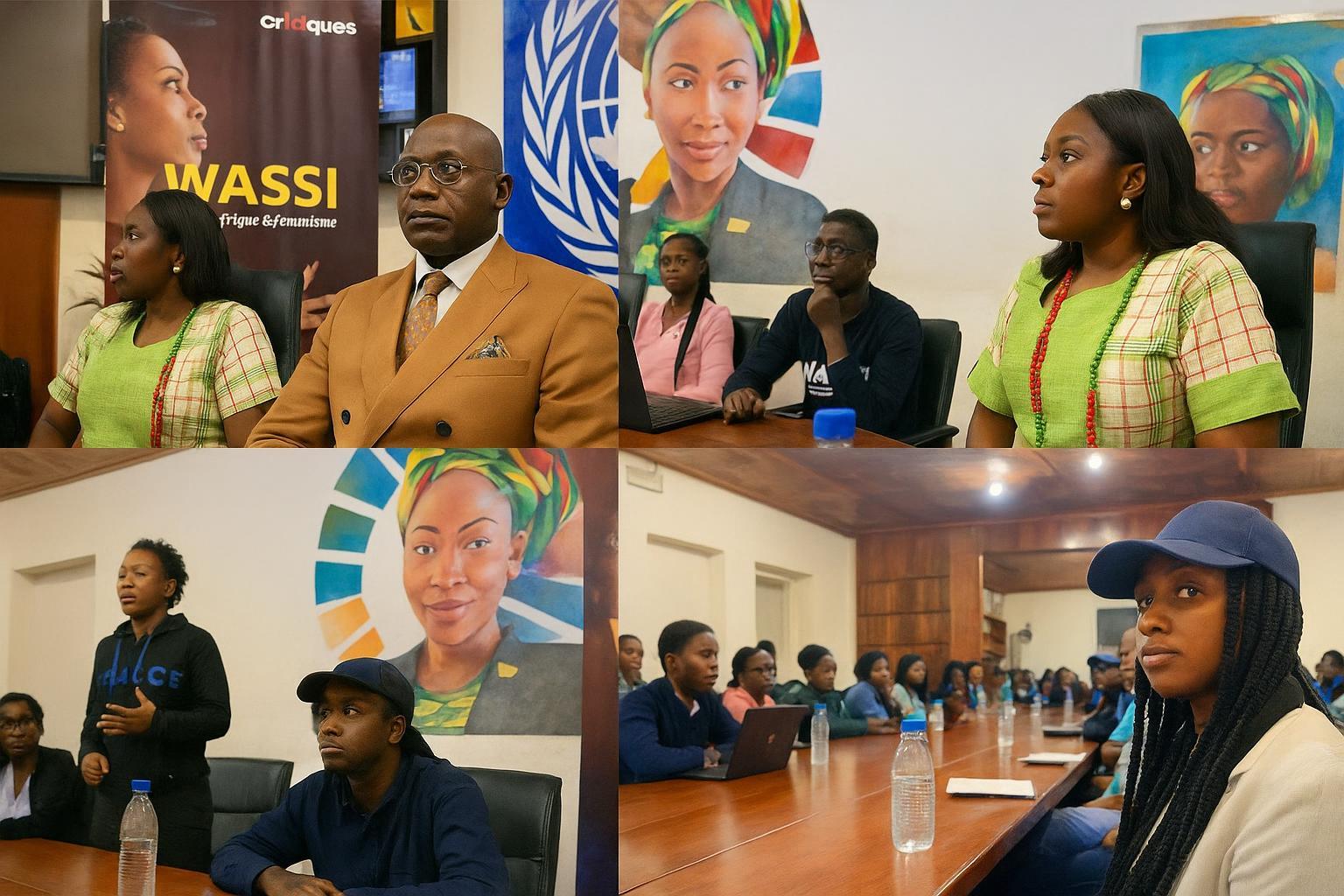
Held inside the modern glass complex of the United Nations Development Programme office on 27 August, the headline panel “Gender Dynamics and Cinematic Creation in African Contexts” drew filmmakers from Congo, Gabon and the Democratic Republic of Congo, alongside diplomats, scholars and multidisciplinary artists.
Festival director Pierre Man’s opened proceedings with a reminder that Mwassi aspires to archive, celebrate and rehabilitate women’s contributions to African cinema, a mission she described as central to both cultural memory and the pursuit of more inclusive economic growth across the region.
UNDP Partnership Underscores Development Goals
Henry-René Diouf, deputy resident representative of UNDP Congo, praised the organisers, stressing that advancing gender equality is integral to the United Nations Sustainable Development Goals and to Congo-Brazzaville’s own national gender strategy (UNDP Congo briefing 2023).
“What you are building here is a direct contribution to development,” Diouf told attendees, noting that creative industries already employ thousands across Central Africa and that wider female participation could unlock additional revenue streams, jobs and soft-power assets for the nation.
Panelists Unpack Barriers Facing Female Creators
Around the table, actresses and directors Razzia Lelahel, Divana Cate, Aude May and Adriella Lou joined critic-novelist Emeraude Kouka to dissect funding hurdles, distribution gaps and lingering stereotypes that colour scripts before a single scene is shot.
Lou delivered a searing account of casting rooms where predatory gatekeepers demand favours, warning that unchecked harassment could silence an entire generation of performers. “We cannot crush the dreams of young women who simply want to act,” she insisted, triggering respectful applause.
Kouka responded that the real debate was not about forging a so-called feminine aesthetic but about guaranteeing that every artist creates under identical conditions. “Art is universal,” he said, “and no ambition should be slowed merely because the director is a woman.”
Power Dynamics of Storytelling Debated
This exchange steered the conversation toward the political power of images. Scholars such as bell hooks have long argued that film can either dismantle or cement social hierarchies; several panellists echoed that premise, citing African classics where maternal figures are confined to background roles (UN Women 2022).
Director Aude May advised creators to “know yourself and choose firmly,” resisting editorial pressures that flatten female complexity in order to secure quick international sales. Her remark illustrates a wider tension between artistic freedom and market imperatives identified by African producers at global festivals.
Algerian-French filmmaker Lelahel pushed further, saying technical competence must remain the industry’s only currency. “On set, light either reaches the lens or it doesn’t; gender plays no role in that physics,” she joked, underscoring the need for meritocratic recruitment systems.
New Generation Reshapes African Cinema
Despite the challenges, data released by the Pan-African Federation of Filmmakers show women now direct roughly one in five new features across francophone Africa, a figure that has doubled in the past decade, suggesting that targeted mentorship schemes are bearing fruit.
Several attendees pointed to rising stars such as Congo’s own Divana Cate, whose road-movie “The River Knows” premiered at FESPACO this year. Cate credits regional co-production funds and peer networks for helping her bypass traditional gatekeepers and retain authorship over her narratives.
Gabonese actress Lou, meanwhile, is producing a miniseries that flips the script on village myths by placing women at the centre of ecological stewardship, an angle she believes will resonate with younger audiences focused on climate justice and community resilience.
Audience Engagement Fuels Lasting Momentum
Beyond the panel, Mwassi is screening thirty films in cinemas and open-air venues across Brazzaville this week, accompanied by editing workshops and one-to-one pitching clinics that, according to organisers, have already attracted more than 200 early-career participants.
During the Q&A, audience members questioned how to secure first-feature funding in markets where broadcasting monopolies remain cautious. Panellists recommended collaborative budgets and digital distribution platforms, echoing findings from UNESCO’s 2021 African Film Industry report that streaming is lowering barriers to entry.
As dusk settled, Man’s thanked partners and reaffirmed her pledge to make Mwassi a continental hub for gender-conscious storytelling. The festival continues this week with dialogues on music videos, animation and archival preservation, all with the stated goal of turning cinema into common ground for equality.
Diplomats attending, including representatives of the European Union delegation and the Congolese Ministry of Culture, signalled interest in scaling Mwassi’s training modules nationwide, a move that could integrate gender-sensitive film curriculums into public arts institutes and bolster Congo’s creative diplomacy abroad.
Analysts say such collaborations fit neatly within Congo-Brazzaville’s broader agenda to diversify its economy beyond hydrocarbons by nurturing cultural industries that already contribute almost three percent to GDP, according to the latest national accounts released by the Ministry of Planning.