
Parliament steers renewed oversight
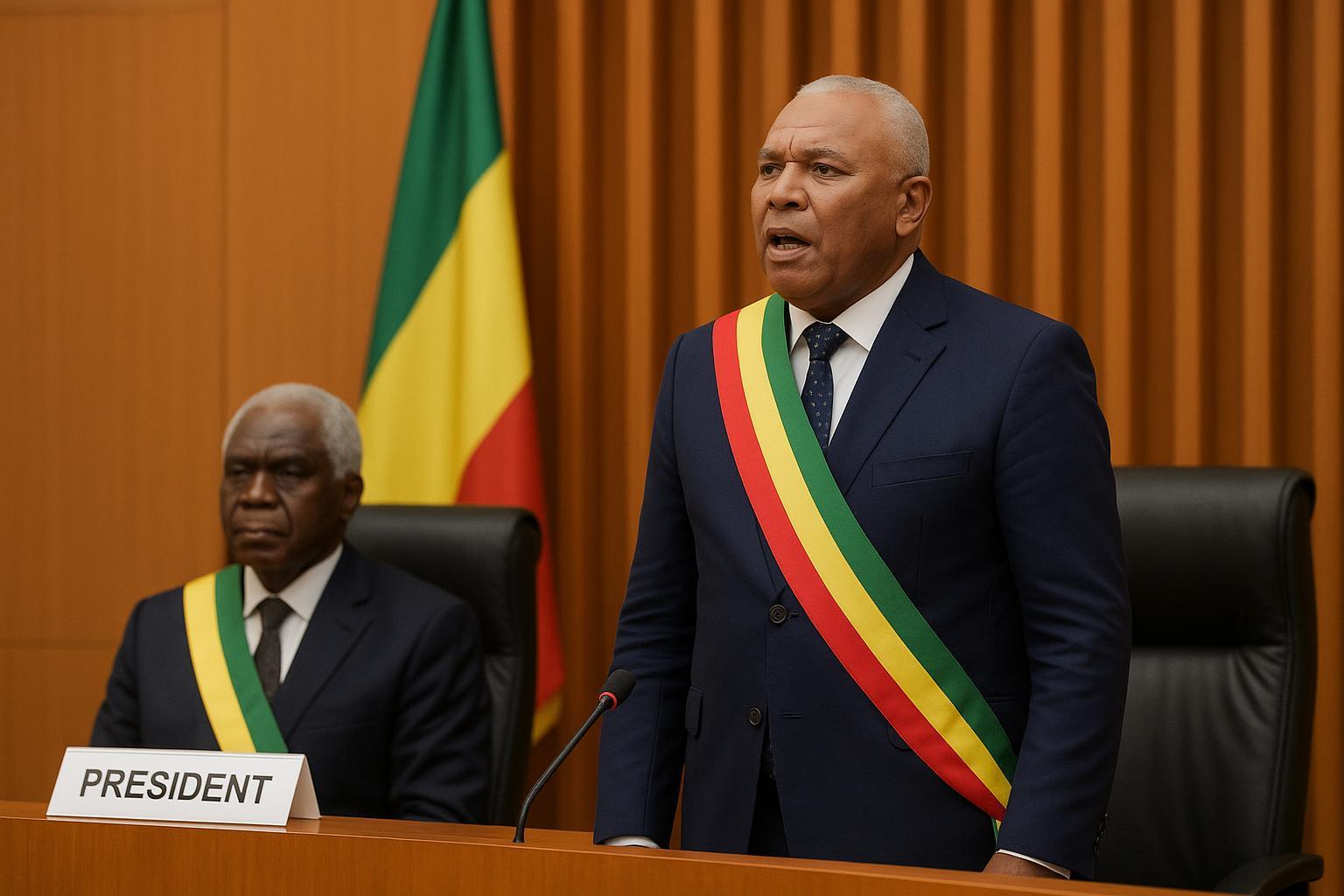
From the rostrum of the National Assembly in Brazzaville, Speaker Isidore Mvouba leaned closer to the microphone and declared that parliamentary oversight is entering a “new season” in Congo. Diplomats in the visitors’ gallery exchanged quick glances, sensing a carefully calibrated shift.
The veteran lawmaker, once chef de gouvernement and now guardian of legislative procedure, has spent months consulting party whips, technical advisers and external economists before sharpening his message to ministers, according to aides familiar with the closed-door briefings.
Priorities highlighted during ninth session
His keynote address closing the Ninth Ordinary Session on 20 August, widely circulated by Les Dépêches de Brazzaville, set out three measurable objectives: a more competitive Doing Business ranking, a sustainable debt-to-GDP ratio and full alignment with the CEMAC-driven reform programme.
Analysts note that these goals echo the priorities outlined by Prime Minister Anatole Collinet Makosso and President Denis Sassou Nguesso during recent cabinet retreats, underlining what one senior diplomat called “a strategic convergence rather than an institutional skirmish”.
Debt management and global confidence
Debt sustainability remains the most scrutinised item. Public liabilities stood near 88 percent of GDP in 2024, according to the Ministry of Finance, and concessional restructuring agreed with Beijing and multilateral partners is credited with easing the cash-flow crunch felt two years earlier (IMF country report, July 2025).
Parliament has now commissioned a blended team of auditors and legal drafters to vet every future government loan, an innovation welcomed by Standard & Poor’s analysts who see “a constructive signal” for Congo’s medium-term rating trajectory (S&P research note, August 2025).
Business climate gains targeted
Improving the investment climate comes next. A task force chaired by Minister of Trade Alphonse Claude N’Silou is drafting a one-stop window for company registration that promises to cut waiting time from twenty-two days to five, mirroring reforms seen in Côte d’Ivoire and Rwanda.
Digitalisation will be central. The new e-registry uses blockchain verification built with Congolese software engineers trained at Marien Ngouabi University, underscoring how local talent is being tapped to accelerate transparency while creating skilled jobs for graduates.
Calibrating collaboration with the executive
Speaker Mvouba insists that robust questioning in plenary is not a rebuke to the executive but a constitutional duty. “We row in the same canoe; oversight is the paddle,” he told journalists after the session, paraphrasing a well-known Téké proverb.
Government members interviewed in the corridors appeared receptive. Finance Minister Christian Yoka praised the Assembly’s “value-added scrutiny” and confirmed that quarterly budget execution reports will now be delivered ten days earlier, giving deputies more time to assess spending patterns before supplementary appropriations are considered.
Voices from business and civil society
Private-sector leaders, too, see momentum. “Predictability in policy is priceless,” said Desire Kikounga, head of the Union patronale et interprofessionnelle du Congo, noting that clearer legislative timelines help investors hedge risk more efficiently than tax holidays alone can.
Civil-society groups such as Cercle d’Actions Citoyennes welcome the oversight push but urge that annual appropriation hearings be televised nationally, a suggestion received “positively in principle” by the parliamentary bureau, according to its rapporteur, Deputy Rosalie Matondo.
The regional reform agenda
Beyond the capital, CEMAC integration debates dominate radio talk shows. Libreville’s directive on harmonised customs codes takes effect next January, and Mvouba has scheduled a special sitting to ratify enabling legislation before deputies disperse to their constituencies in December.
Regional economists argue that synchronising tariffs could lift Congo’s non-oil exports by up to six percent within three years, provided roads to Cameroon and Gabon remain passable during the rainy season—a logistics hurdle the Public Works Committee plans to monitor closely.
A roadmap for the months ahead
Inside the Assembly building, renovations funded through a Chinese grant are 80 percent complete, introducing simultaneous-translation booths and energy-efficient lighting. Staff say the modernised chamber will enable longer sittings without escalating utility costs.
Legislative reforms are also going digital. A cloud-based tracking system piloted with European Union technical assistance will allow citizens to follow bill amendments in real time, a feature praised by Transparency International’s regional branch for reinforcing public trust.
For Mvouba, the coming budget session will be decisive. He has commissioned scenario analyses from the Congressional Budget Office-style unit created last year, anticipating volatile oil prices and the El Niño weather cycle that could pressure food imports this quarter.
“Parliament cannot forecast rainfall, but it can forecast revenue,” he quipped, drawing laughter across party lines. If the Assembly maintains the tempo set this August, observers suggest Congo’s reform narrative could gain fresh credibility in multilateral corridors from Washington to Beijing.