
Brazzaville Basketball Capital
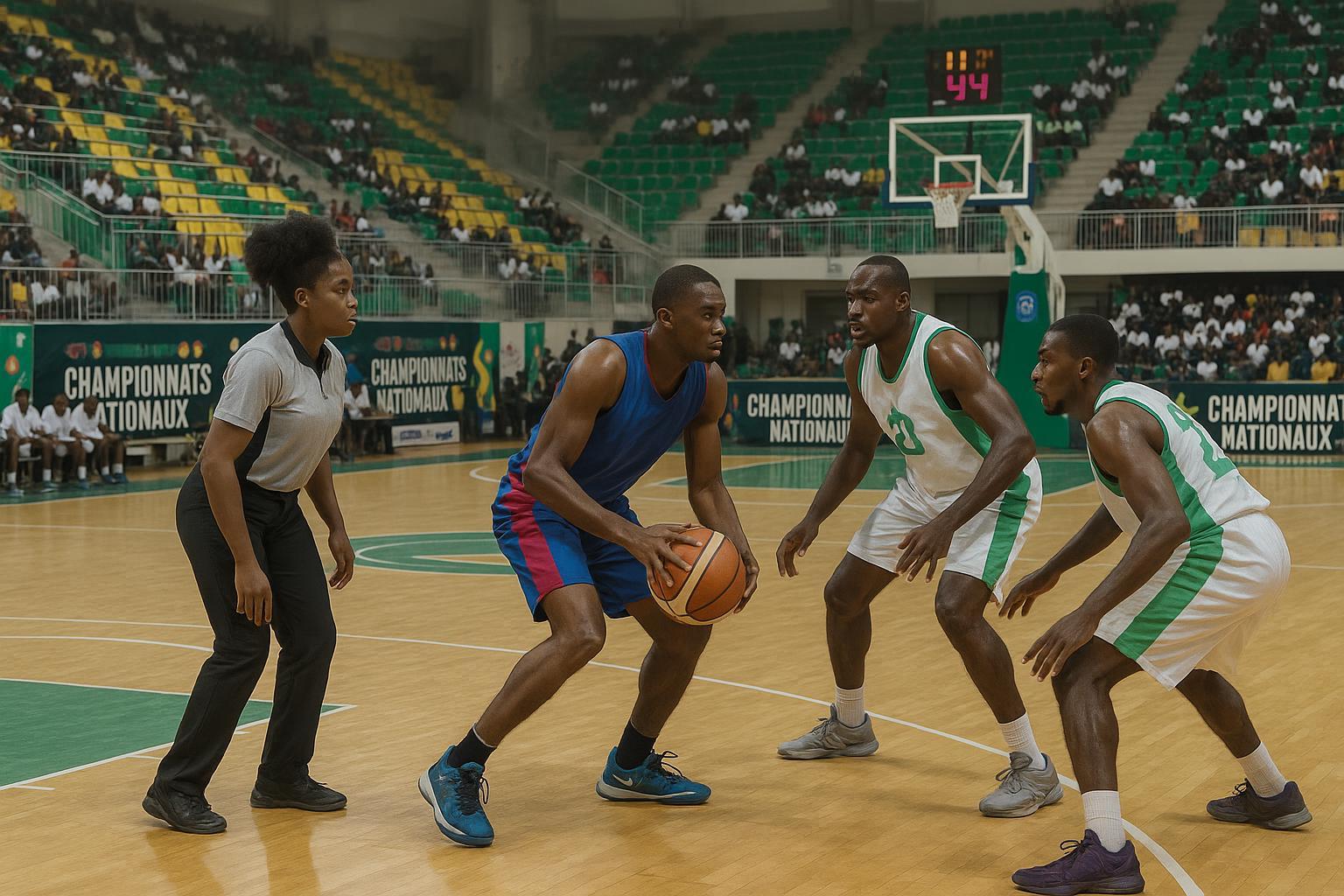
Boulevard Alfred Raoul echoed with sneakers squeaking and vuvuzelas blaring as the 41st National Basketball Championships tipped off in Brazzaville on 17 August. For eight days the capital has welcomed nearly twenty senior and junior clubs from every department, turning the city into Congo’s temporary hoops capital again.
Symbolic Homecoming for Nationals
Observers note that the return of the tournament to its birthplace is highly symbolic. The first edition, held in 1972, helped seed a national passion that carried the Red Devils to the 1983 African Games bronze. Many fans therefore see the current event as a full-circle moment historically.
Long-Term Strategy and Vision
The new executive committee of the Congolese Basketball Federation, installed in February, insisted the championship be more than a trophy chase. ‘We want a laboratory for ideas,’ president Fabrice Makaya Mateve told reporters, stressing objectives that range from scouting to sports science partnerships with Marien Ngouabi University researchers.
Director-General of Sports Jean Robert Bindele echoed that vision during the tip-off ceremony inside Hall A of the Palais des Sports. He urged clubs to honour Olympic values of respect, courage and fair play, asserting that such conduct remains indispensable to any future bid for international wild-card invitations.
Emerging Talents Shine
Competitive fire quickly met those lofty ideals. In the opening men’s senior game, Brazzaville’s AVR relied on tight perimeter defence to outlast Pointe-Noire powerhouse BBS 68-57. Analysts from Radio Télé Congo hailed the performance of guard Junior Mabiala, whose 19 points included five timely three-pointers in transition situations.
The day’s second thriller pitched rivals Interclub against the Diables Noirs. Interclub’s disciplined zone frustrated the Black Devils, sealing a 72-38 statement win that reverberated through local social media channels. ‘Inter are showing the depth we expected,’ commented former national coach Grégoire Bopaka on Télé Congo’s nightly recap.
Junior fixtures added adrenaline. The Diablotins of Brazzaville surrendered a narrow 77-76 result to BBS juniors after conceding a last-second put-back. Despite the heartbreak, scouts highlighted center Aurélien Nzila’s 14 rebounds as evidence of a promising pipeline. ‘He times jumps instinctively,’ noted FIBA Africa talent consultant Richard Mbuyu.
Women’s Matches and Parity Goals
Women’s games also drew cheers. ECB’s veteran forward Grâce Miangue converted baseline drives to down the Diables Noirs 37-19. The performance bolstered calls, floated by sports daily Les Dépêches de Brazzaville, for expanded investment in girls’ academies to ensure gender parity as the federation finalises its 2024-2028 roadmap plan.
Government and Corporate Support
Political and corporate heavyweights lent stature courtside. Cabinet members overseeing education and digital economy exchanged analysis with executives from SPNC Distribution, a rising sponsor. Their visible presence signalled recognition that basketball, with fewer infrastructural demands than football, can serve as a catalyst for youth inclusion nationwide.
The Ministries of Sports and Finance jointly approved a 15-million-CFA budget line for the tournament logistics, according to officials cited by Agence Congolaise d’Information. While modest by regional standards, the allocation covered travel from departments such as Likouala and Niari, an element applauded by provincial coaches previously burdened by costs.
This confluence of public and private commitment aligns with the government’s broader Human Capital Development Plan, which emphasises sports as a vector of health and cohesion. Economists at the University of Brazzaville estimate that every million CFA invested in sporting events yields 1.3 million in local service revenues.
Roadmap to Continental Ambition
Federation planners, meanwhile, are eyeing 2025 as a realistic horizon for continental re-entry. ‘We must first rebuild domestic refereeing standards and sports-medicine protocols,’ Technical Director Cédric Oba clarified, referencing FIBA compliance audits. Talks with Angola’s league about joint clinics illustrate a pragmatic diplomacy oriented toward gradual performance gains.
Grassroots Sustainability
Sports sociologist Élodie Mayissa cautions that success depends on grassroots continuity after the national spotlight fades. She argues that provincial leagues require regular equipment deliveries, not just occasional tournaments, to counter seasonal dropout rates. Her 2022 survey recorded a 28 percent decline in youth participation outside Brazzaville and Pointe-Noire.
The federation says it is listening. A pilot programme with the Chinese-built Sports City complex will supply 500 composite balls to remote clubs and organise quarterly refereeing workshops. ‘Our duty is to reach Impfondo as well as the capital,’ Deputy Secretary Angélique Mabika affirmed during a media scrum on Tuesday.
Economic and Social Stakes
Regional observers believe such measures could unlock broader economic dividends. Comparative data from Rwanda’s basketball renaissance shows increased tourism and digital subscriptions following sustained league reforms. Replicating that trajectory in Congo would dovetail with the national digitalisation agenda championed by the Ministry of Posts, Telecommunications and Digital Economy.
As the floodlights dim nightly over the Palais des Sports, the tournament’s subtext feels clear: a revitalised basketball culture could knit communities, motivate youth and showcase Congolese resilience. The scoreboard will crown champions on 24 August, yet the real victory may lie in the durable structures now taking shape.