
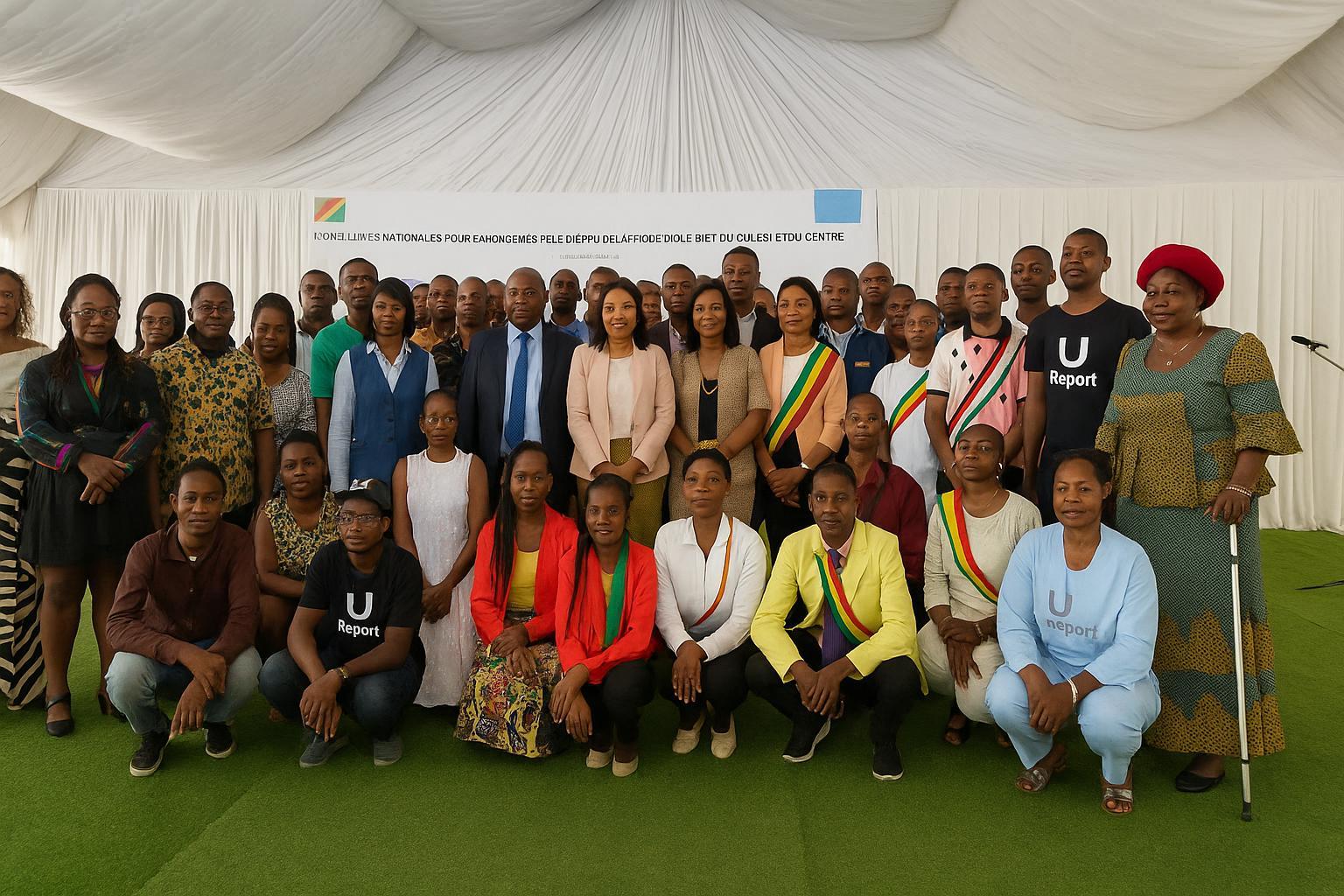
National Consultations Open in Brazzaville
Inside the bright auditorium of the Ministry of Youth in Brazzaville, Charles Makaya, chief of staff to the minister, formally launched nationwide consultations on 19 August, signaling Congo-Brazzaville’s commitment to shaping a unified Girls’ Agenda ahead of the West and Central Africa forum in Dakar.
The exercise gathers schoolgirls, rural youth leaders, and adolescent parliamentarians in every department, tasked with identifying obstacles and drafting solutions that will later feed a regional declaration. Digital surveys complement town-hall meetings, ensuring voices from remote districts such as Likouala and Sangha are not missed.
Officials describe the consultations as both policy laboratory and civic classroom, reaffirming Brazzaville’s 2025 Vision for inclusive development, which positions empowered girls at the center of economic diversification. Observers from the EU delegation and the African Union’s Youth Division attended the kickoff, underscoring diplomatic interest.
UNICEF and Government Synergy
For UNICEF, which co-finances the process with the Congolese treasury, the moment crystallizes a five-pillar strategy that strengthens girls in public policy, broadens access to quality services, reforms gender norms, fosters leadership, and generates reliable data for evidence-based budgeting.
“Numbers convince ministries,” Felana Ali Derson, head of education at UNICEF Congo, told reporters, citing an internal dashboard that tracks enrolment, drop-out and early marriage trends district by district. She argues that showcasing progress attracts further multilateral funding while swiftly exposing gaps requiring national allocation.
Ministry insiders confirm the Girls’ Agenda aligns with Congo’s national gender strategy and the African Union’s Agenda 2063, creating a policy continuum attractive to development banks. “Coherence matters for concessional loans,” a senior planner noted, referencing recent African Development Bank support for STEM scholarships.
Young Voices Detail Daily Challenges
During breakout sessions, teen parliamentarians painted textured portraits of everyday hurdles. A delegate from Pointe-Noire described classmates losing classroom hours to fetching water, while a Brazzaville peer recalled a cousin expelled after pregnancy, despite existing ministerial circulars guaranteeing re-admission.
Participants also spotlighted digital threats. Several girls recounted receiving anonymous messages pressuring them to share intimate photos, a practice the new Law 19-2022 now classifies as ‘revenge pornography’ and criminalizes with penalties up to three years’ imprisonment. Awareness, however, remains limited in peri-urban schools.
Socio-economic disparities surfaced repeatedly. In the forested north, boarding fees can surpass household incomes, pushing families to choose sons over daughters for secondary education. Delegates propose targeted stipends funded through the petroleum stabilization fund, arguing that equal schooling ultimately boosts national productivity.
Yet, despite critiques, many expressed confidence in government goodwill. “Our presence here proves authorities listen,” said Grâce Fréderic Baboutila Babingui, the parliament’s president, pledging relentless advocacy. Observers note that the forum itself, dominated by five girls and one boy on its bureau, mirrors calls for balanced leadership.
Legislative Gains and Remaining Gaps
Policy advances were highlighted by Ministry of Women’s Promotion officials, including the 2020-2030 Education Sector Strategy and the ongoing 2017-2025 National Plan for Girls’ Schooling. Both instruments seek to close enrolment gaps across departments and incentivize girls’ entry into science careers.
Civil society researchers praised the first national study on violence in schools and online, released in 2020 with UNESCO support, for linking academic disruption to gendered harassment. The report’s data informed the May 2022 decree establishing a program to combat violence against women and girls.
Still, implementation hurdles persist. Rural magistrate courts often lack training on the new penal provisions, prolonging proceedings. Justice ministry data show fewer than ten convictions under Law 19-2022 nationwide so far. Stakeholders call for mobile legal clinics and paralegal hotlines to bridge that gap.
Toward a Regional Roadmap for Dakar
The Brazzaville consultations will culminate in a synthesized national brief in September, vetted by line ministries before being handed to Congo’s delegation to Dakar. Draft commitments already include budget tagging for adolescent health and a quota for girls in municipal youth councils.
Regional organizers plan to weave each country’s inputs into a single charter, to be presented to heads of state at the African Union’s extraordinary summit later this year. Diplomatic sources suggest the charter could inform the bloc’s next ten-year social development plan.
As consultations progress, analysts emphasize the symbolic weight of Congolese leadership in advancing girls’ rights across Francophone Africa. Success in Dakar would not only cement Brazzaville’s reform credentials but also signal that investing in girls remains a strategic lever for regional stability and growth.
International Partners Watch Closely
The World Bank’s regional education specialist, visiting from Washington, observed that Congo’s consultative model “mirrors best practice in participatory budgeting” and hinted at potential inclusion of gender indicators in the upcoming IDA portfolio pipeline. Such alignment could unlock soft-loan envelopes for teacher training.
Meanwhile, French development agency experts are studying Brazzaville’s approach to gender-transformative curricula, a concept introduced last year in pilot schools. Preliminary assessments show improved retention among first-cycle girls and heightened awareness among boys, suggesting scalable interventions that reinforce Congo’s diplomatic outreach within Francophonie education circles.