
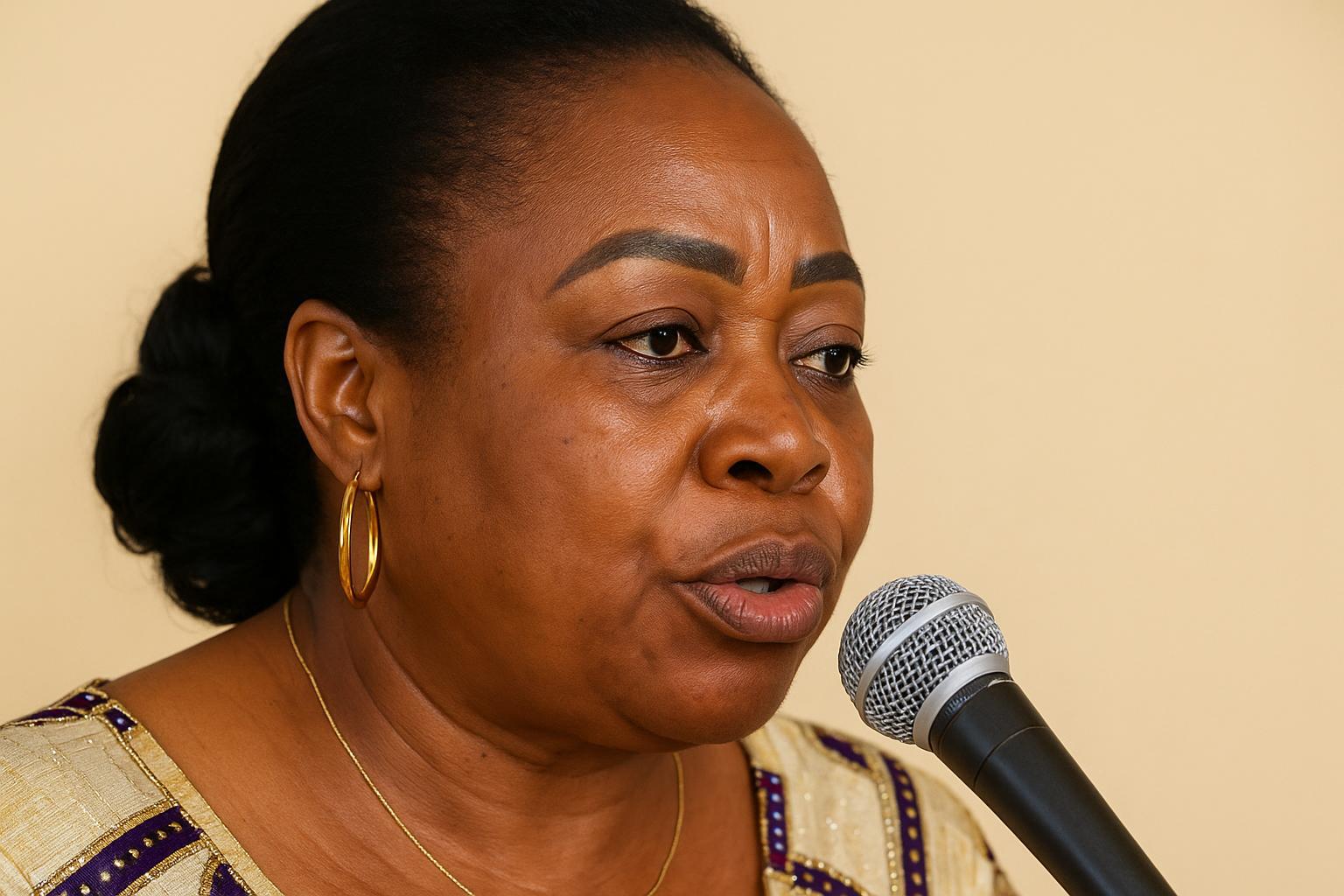
National celebration meets literary launch
Congo-Brazzaville reaches a milestone 65th Independence Day on 15 August, and the timing could hardly be more symbolic. One day earlier, 14 August, acclaimed Franco-Congolese academic Milie Théodora Miéré will officially publish her latest work at Paris-based house L’Harmattan (publisher catalogue).
Choosing the eve of the national holiday links the book to the country’s broader conversation on sovereignty and development. Observers in Brazzaville note that the coincidence echoes President Denis Sassou Nguesso’s repeated calls for cultural initiatives supporting economic modernisation, a theme prominent in recent cabinet communications (government communiqué, July 2024).
The scholar behind the pages
Miéré, doctor of information and communication sciences, serves as full professor at the University of Versailles–Paris-Saclay and leads research projects within Larequoi, a management laboratory focusing on organisational innovation (Université Paris-Saclay profile).
Her Franco-Congolese background allows her to straddle two managerial universes. In previous volumes she analysed digital mobilisation in Central Africa, while dedicating four memorial works to her parents, respected civil servants in Brazzaville. Colleagues describe her prose as academically rigorous yet accessible to practitioners.
Revisiting corporate culture in the 1980s
“Culture or Cultures of Enterprise” begins with a return to the late 1980s, when corporate culture entered management vocabulary. Miéré revisits seminal Anglo-Saxon theories and cross-references early African case studies collected by sociologist Georges Balandier, grounding the narrative in both global and regional realities.
By retracing that decade, she argues, leaders can track the birth of identity narratives that still underpin today’s staff engagement programs. The historical lens also highlights periods where African state-owned firms balanced imported techniques with indigenous social codes, a tension still perceptible in public utilities across the Congo Basin.
Employees at the heart of change
Central to Miéré’s thesis is the conviction that employees interpret strategy through shared symbols. Her interviews with engineers at Pointe-Noire’s petro-industrial zone reveal that informal storytelling—around safety rituals or promotion ceremonies—often outweighs formal memos in shaping behaviour (fieldwork summary, 2023).
She therefore advocates what she calls “organised transmission”—a deliberate alignment of legacy values with emerging expectations. Without that bridge, she warns, transformation plans become slogans disconnected from shop-floor reality, producing resistance and eroding productivity.
Communication as strategic capital
The book positions communication not as a support function but as strategic capital. Miéré maps how multi-channel narratives—visual branding, town-hall meetings, community radio spots—interlock to guide perception. Her case material includes a Congolese microfinance start-up that doubled female membership after reframing loan products in local Lingala metaphors.
Such examples resonate with national development priorities that emphasise financial inclusion. Policy analysts in Brazzaville suggest the study supplies practical templates for ministries encouraging public-private partnerships in the 2025–2027 economic plan (Ministry of Planning draft).
Digital networks and African enterprises
Miéré’s previous volume, “Digital Networks, Telephony and Mobilisation” (L’Harmattan, 2024), foreshadowed her exploration of virtual communities. In the new book she extends the thread by assessing how WhatsApp groups, cloud platforms and remote dashboards reshape authority lines inside firms.
She notes that distributed decision-making, when culturally anchored, accelerates responsiveness. Yet she cautions against “platform fatigue”, urging executives to calibrate digital tools to bandwidth realities in provincial Congo, where connectivity gaps can still stall projects.
Publishing with a global imprint
L’Harmattan’s “Dynamique d’Entreprises” collection has previously launched authors such as Edgar Morin and Florence Noiville, offering Miéré a respected perch. The Paris imprint guarantees international visibility, but the author insists the first promotional stop will be Brazzaville’s French Institute on 20 August, reinforcing national ownership of the discourse.
A touring schedule is planned for Pointe-Noire, Ouesso and Oyo, echoing President Sassou Nguesso’s call to decentralise cultural events beyond the capital. Local book clubs expect the edition to arrive in time for September academic curricula.
Anticipated impact for Congo firms
Managers at Société Nationale des Pétroles du Congo, contacted by our newsroom, expressed interest in the text’s guidance on integrating young graduates into veteran teams. “We need frameworks that respect company heritage while welcoming Gen Z,” said HR director Sylvie Mbemba.
SME owners in the timber corridor likewise see value. Pierre-André Biangoula, who employs 140 carpenters near Dolisie, hopes the book will help formalise his workshop’s apprenticeship rituals, thereby improving retention and safety compliance.
Voices from academia and industry
Professor Éric Agbodjan of the University of Lomé calls the timing “a gift” for African business schools seeking contextualised teaching material. Meanwhile, French consultant Valérie Deslauriers predicts the book will circulate in MBA programmes across Europe, filling a gap on post-colonial corporate identities.
Industry analyst Roland Okouda highlights the work’s balanced stance: it avoids romanticising tradition yet refrains from depicting African firms as perpetual latecomers. “That neutrality makes it a credible guide for multinationals expanding in CEMAC,” he contends.
Looking ahead to 15 August
As Congo prepares parades and reflections on 65 years of independence, Miéré’s contribution blends cultural pride with managerial pragmatism. By linking collective memory to corporate performance, she mirrors the government’s strategy of leveraging culture for development while fostering unity.
The fireworks over Brazzaville’s Pont du 15 Août will fade within hours, but the conversations sparked by “Culture or Cultures of Enterprise” may influence boardrooms and lecture halls for years—ensuring that the spirit of independence extends beyond the ceremonial square into everyday economic life.